From Hobbes to Locke – and back again?

I’m a fan of Deirdre McCloskey, but accept that her writing style is a bit marmite – it’s always clear but she has a rather arch tone which some readers don’t like. Some of her books are also rather long, and the three in her terrific Bourgeois Era trilogy, The Bourgeois Virtues, Bourgeois Dignity and Bourgeois Equality, fall into this camp. They repay the time required, drawing as they do on McCloskey’s extensive reading and research (to get a flavour of how extensive, look at some of her posted course syllabi here).

Now, however, anybody unwilling to commit the time to the whole Bourgeois Era trilogy can read instead this new summary version by McCloskey and Art Carden, Leave Me Alone and I’ll Make You Rich: How the Bourgeois Deal Enriched the World. Where Acemoglu and Robinson’s Narrow Corridor takes inspiration from Hobbes, this book is inspired by Locke, and argues that liberty is the key to the great enrichment of the past two and a half centuries.

At a time when the mood – and reality – of the times is swinging toward state intervention in the economy – and rightly so, given the potentially Hobbesian world to which the combination of market power and pandemic have brought us – it’s all the more important to keep an open mind and take these arguments from economic liberty seriously. Don’t be put off by the blurbs on the back from Stephen Davies of the IEA and Matt Ridley. Besides, the sweep of McCloskey’s historical knowledge is such that the book is just a good read (if you like the tone), and a fraction of the length of the trilogy!

71dsUR2JrTL._AC_UY436_QL65_

A brace of Leviathans

As welcome distraction from the misery of not being able to see any close family at Christmas after all, I’ve read (late, I know) The Narrow Corridor: How Nations Struggle for Liberty by Daron Acemoglu and James Robinson.

The basic argument is well known. Inspired by Hobbes’ Leviathan, they argue that nations experience a dynamic whereby there is a sort of saddle path (a narrow corridor) between not enought government (‘absent Leviathan’) and too much (‘despotic Leviathan’). To stay in the corridor (‘shackled Leviathan’), there needs to be a balance of power between government (which has to be strong enough to be effective) and society (which has to be strong enough to prevent government tipping off the path in either direction. Slightly oddly, they call this the Red Queen effect after the on-the-spot race between Alice (in Wonderland) and the Red Queen – odd because it is never made completely explicit that they’re referring to a dynamic process rather than an adequate balance. I infer the former, but it’s implicit in the examples that make up the bulk of the book.

For there is a whistle stop tour of pretty much all of recorded human history. I’m not sure this works well, although at least the book is only a third of the length of Thomas Piketty’s Capital and Ideology, which came with its own tote bag. I have to confess I started to read the latter but was not distressed to find it quarantined in my office in the March lockdown. The first section of that is all history. It’s fantastic that top economists have discovered history of course, but it’s difficult to get the right focal length – what’s the right amount of detail to inform readers without it becoming classic economic imperialism? I did enjoy reading the book, but personally, I’d have edited down The Narrow Corridor’s capsule histories.

Other quibbles. The book seems to demonstrate the struggle for stability and absence of conflict at least as much as for liberty, despite the subtitle and blurb emphasising liberty only. Hobbes was more in the territory of order versus anarchy. There’s even a hand grenade on the paperback cover. And, having spent most of the book presenting the three Leviathans as exhausting the possibilities (there’s a neat diagram), the ‘paper Leviathan’ is introduced to deal with countries that govern despotically and at the same time incompetently – think some Latin American or African states. And perhaps some formerly-shackled Leviathan countries heading in that direction…..

Having said all this, well worth a read, as well as a useful reminder that there have been dark times before and yet things go on.

41xs2HiqRML._SX324_BO1,204,203,200_


Technology old and new

For the usual kind of slightly random reason, I re-read David Edgerton’s excellent book The Shock of the Old this past week (having read it when published in 2006 as he was an interviewee on an Analysis I was presenting [http://news.bbc.co.uk/nol/shared/spl/hi/programmes/analysis/transcripts/27_07_06.txt]). It’s generally aged very well, and is of course a necessary corrective to technology hype. The main argument is that the history of technology tends to be told as a a breathless account of inventors and shiny new inventions, rather than the more representative but complicated story of economic conditions and uneven diffusion and use. So at any moment in time, many overlapping technologies serving the same basic needs will be in use around the world.  What’s more, the same hype gets recycled. For example there’s a quotation from George Orwell in 1944 complaining that people were over-hyping the ‘death of distance’ due to the airplane and radio, when the same claims had been made before 1914!

It is undoubtedly true that different technologies overlap in use, and indeed there’s quite a large economics literature about diffusion and the need for complementary investments before inventions and innovations deliver productivity benefits.  To this extent, Edgerton is railing against an imaginary foe. He is also very sniffy about the concept of ‘weightlessness’, which he misinterprets as a claim about declining employment shares for primary and secondary sectors of the economy. It is not this, but rather a description of the distribution of value added in the economy, and one that has been borne out fully by trends in the past 2 or 3 decades.

The other point that he seems to me to under-play – oddly, given his emphasis on the importance of contest for the use of technologies – is that they are all social. There are countries unable to provide a reliable electricity supply not only because they are low or mid-income but because they do not have the institutions to support the complex supply arrangements: not just sub-Saharan Africa but also California. Or take the book’s example of the Pill, which it argues is an incremental change in contraceptive technologies. Yes and no. Each of the Pill’s characteristics – women in control, reliable, and not requiring a fitting by a doctor – might seem a small shift from condoms, douches, IUDs and diaphragms, but together they did deliver a compelling new method and a radical change in social relations.

Having said all this, The Shock of the Old is a bracing corrective to techno-hype, something certainly still needed.

41HeTZgQv0L._SX324_BO1,204,203,200_(This is the new edition – I have the old one so haven’t read the new intro.)

Making the impossible happen

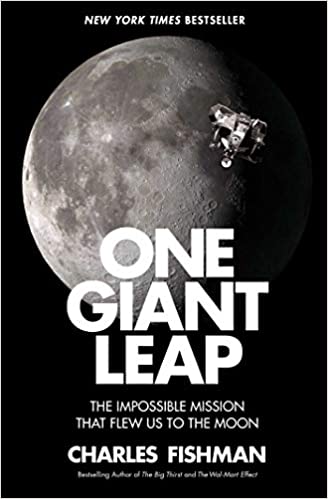
I have totally enjoyed One Giant Leap: The impossible mission that flew us to the moon, by Charles FIshman, out now as a paperback. It covers everything about the Apollo mission, from the Cold War context (the shock of Sputnik and Gagarin) and JFK’s political calculations and Congressional debates, to the practicalities of the science, design and manufacturing, to the lasting consequences for global society. The Soviet lead in space stimulated the US space effort, but Kennedy himself was lukewarm about America being first on the Moon. Fishman argues that the assassination of the President ensured the continuation of the mission because it became a memorial to him.

One key long-term consequence is that the mission to get humans on the moon brought about the digital revolution. Fishman makes a totally persuasive case that NASA was such a large-scale and demanding, perfectionist purchaser of integrated circuits that it ensured they became faster, more reliable and cheaper with every passing year. Transistors had only been around for 10 years but were too large and power hungry for the new performance demands of manned space flight. NASA bought most of the chips made in the US during the 1960s. The first ones cost $1000 each, in 1962 they were under $100 each, in 1963 $15 each and $7.68 by 1965.

The other long-term impact was to turn ‘technology’ from something scary and Dr Strangelove-like to do with nuclear weapons and mutually assured destruction into something benign and aspirational, the challenge of conquering space for all humanity, albeit planting US flags on the Moon. “The race to the Moon … invoked the wonders of science, with about as much drama as could be imagined.”

The sections about managing the huge engineering project across multiple suppliers, manufacturing to the essential high standards, obessing over details, making key design decisions are all totally fascinating. MIT’s Instrumentation Lab was writing all the software – itself a new word in the early 1960s – and this threatened to delay the launch beyond Kennedy’s ‘before the decade is out’ deadline, so complex and crucial was the task. “It was the first of a whole new kind of engineering projects,” Fishman writes. There was no prior know-how about how to run these. Indeed, big, complex software engineering projects all too often still go wrong. Humans got to the moon and safely back because of the attention to detail on the part of NASA engineers.

The Apollo project was made all the harder by the fact that the onboard computer had to fit within one cubic foot, and its memory contained just 589,824 0s or 1s. So its software was – literally – woven by hand. MIT and NASA HQ had tapes and punch cards. On the spacecraft itself, the programs required to get to the Moon, land the Lunar Module, take off again, dock in space with the Command Module, and return to Earth, there was no room for these bulky items. The punch cards were taken to an old textile factory in Waltham, Massachussetts, where women who had woven fabric, or manfactured watches, in previous jobs now wove software into ‘core rope memory’ at special looms. Their old skills made them the only kind of workers with the know-how to weave computer memory. When the women struck for a while in the mid-1960s, everything their supervisors and managers produced until the strike was over, had to be scrapped.

This is the kind of detail that made me love the book. But the wonder of the Apollo Mission is also part of the enjoyment. I have a vague memory of watching Neil Armstrong, sitting in my PJs along with my older siblings; our family had got our first TV for the occasion. I ended One Giant Leap feeling vaguely optimistic as we approach the end of a dreadful year. Human societies can do impossible, wonderful things, with a combination of political vision and support, and engineers.

41p+idgwXrL._SX326_BO1,204,203,200_

Accounting for progress

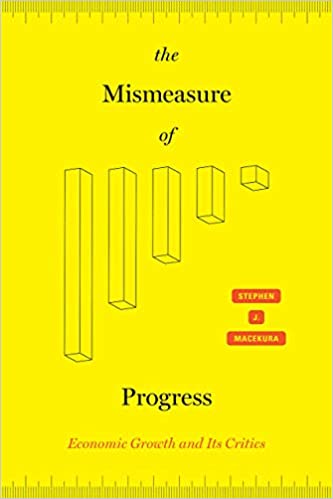
I read Stephen Macekura’s The Mismeasure of Progress: Economic Growth and its Critics in proof, and just enjoyed reading it again now it’s been published. People who know about my work won’t be surprised to hear that this is just my cup of tea. The question preoccupies me as much as it ever did – what counts as progress and how do we count it? – along, increasingly, with the issue of who gets to answer the question.

There are now quite a few books about the limitations of GDP, or history of GDP, or both (eg as well as my GDP: A Brief But Affectionate History, Matthias Schmelzer’s The Hegemony of Growth, Philip Lepenies The Power of a Single Number, Ehsan Masood’s The Great Invention, Brett Chrostophers’ Banking Across Boundaries, and more). So Macekura has this recent literature to build on as well as older classics including Alain Desrosieres and Theodore Porter. What he brings is a unified story about the critics of GDP and the System of National Accounts told from the 1940s on, and particularly including the perspective of the economists and statisticians working on or in developing economies.

That the arcana of economic statistics matter is clear from the start: “Accounting and accountability are closely intertwined,” Macekura writes. His framework is James Scott‘s powerful concept of state ‘legibility’. This makes the imperialist habit clear when it comes to the history of national accounting in the colonies of western powers. As one Colonial Office official put it, the UK had to ‘level up’ its colonies, and would do so by increasing their GDP growth. Hmmm. That term is oddly familiar.

The heroes of the tale in some ways are economists such as Phyllis Deane of NIESR and Dudles Seers, founder of the Institute for Development Studies, for their appreciation that economies are not all the same. The fabric of life in low income countries was profoundly different from the standard framework it was supposed to fit. However, western critics of the focus on economic growth – whether for this reason or because of the increasing concern with environmental limits – were in turn criticised by some economists and others from the countries concerned, who considered that to not prioritise growth was a western luxury. “The Limits To Growth report [1972] prompted a strong backlash from experts in the Global South,” Macekura notes. He goes on to argue that, “Growth critics often sought to replace one set of numbers in governance with another. They mounted a technocratic critique of technocracy that claimed the basic problems of contemporary life could be resolved through the use of socially relevant and more specialized data.”

The book ends with a picture of the critics of growth and of GDP (overlapping but certainly not identical sets) in recent times, flagging questions such as the measurement of the financial sector, as well as the ever-more pressing sustainability issues. He ends with a call for a wider set of metrics but also for enfranchising people to participate in the debate about progress. There is certainly quite widespread interest in matters of measurement, for all kinds of reasons, now. GDP is rapidly losing its legitimacy but the need for the social accounts that enable accountability is more important than ever.

41Y3eeXAhfL._SX331_BO1,204,203,200_