What information, to whom – and do they want it?

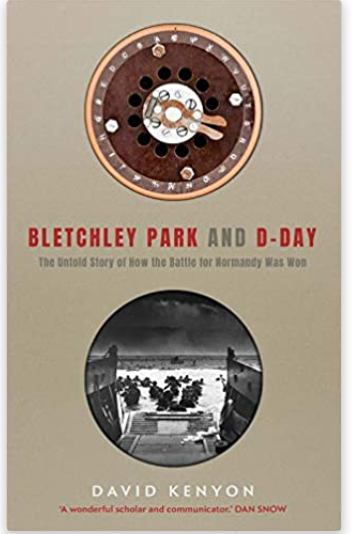
For a bit of variety, I’ve been reading Bletchley Park and D-Day by David Kenyon, who is the Research Historian at Bletchley Park. The broad story of code-breaking at Bletchley Park during World War 2, and the contribution of Alan Turing along with many others, is now well-known. The aspect explored in this book is specifically about the intelligence provided ahead of and during the D-Day landings. This includes a lot of detail about the operation of the various bits of Bletchley Park and other arms of intelligence. In one sense, that makes it a sort of ‘inside the Beltway’ account: who reported to which officer, how the different branches of the armed services related to each other and so on will be details too far for general interest.

However, there is one kind of detail in this book that I found truly fascinating, and that is about how the flow of information was organised: coming into Bletchley Park, within its increasingly large and complex organisational structures, and going out to decision-makers in the UK central command, in the US, and of course in the field before and during the attack. For information flows are at the heart of the challenge of managing any complex organisation. And the ease and cheapness of digital information flows are translating now into a growing gap between businesses and other organisations that can make use of the information and those that can’t.

In other words, it wasn’t all about code breaking. One key role was played by (mainly) women graduates whose job was to provide a weekly Index of what intelligence had been unearthed and send that to the people who needed it. There was so much raw data – decrypted messages – that making sense of its importance became at least as important. These women didn’t have exciting new machines: just their own intelligence, pencils and index cards.

Another interesting point is about willingness to receive the intelligence. General Patton was all in favour but Montgomery was not: he thought the military alone should get the Ultra information and distrusted it because he knew Churchill and others in Government were getting it too. Luckily, he had a subordinate who paid attention to the Ultra messages received.

Anyway, I confess to skipping through some parts but overall really enjoyed the book. I have an appetite for anything about the Bletchley Park story. And what could be more relevant to thinking about information in organisations than an organisation whose whole raison d’ĂȘtre was information?

Screenshot 2022-05-25 at 19.02.08


All the Cs but how many Gs?

The title of Fred Bergsten’s latest book is somewhat misleading: it’s The US vs China: the quest for global economic leadership. But the argument of the book goes against the polarisation presumed in the title. Bergsten’s argument is that while the US and China are bound to compete in some economic domains, they should, and will find they must, co-operate in others. Tackling climate change and ensuring global financial stability are two of the examples of the latter. Indeed, he calls for ‘conditional competitive co-operation’, with the formation of a G2 on issues of global public goods, pandemics and other crises.

This all seems super-sensible. But it also has the flavour of a book from a distant era. Although the pandemic had happened, the Russian invasion of Ukraine had not. Nor at the beginning of 2022 might we have expected both China and the US to seem as unstable internally as they do at this moment, with astonishingly bad covid-exit policies on the one hand and the resurgence of Trumpism in public life on the other, alongside what is going to prove the most serious crisis of capitalism for at least a generation. The (geo)political pack has been not just shuffled but thrown up in the air. (And who had a monkey-pox epidemic on their 2022 bingo card??) At least Bergsten does warn about the dangers of a leadership vacuum, a G0 world, with the 1930s as a spectre of what could be.

The author’s knowledge of the international monetary system is legendary, and this is a terrific book to read for the economic insider’s perspective. Alongside Adam Tooze’s books, particularly Crashed, I now feel as informed as I’m going to be about international monetary matters. But the future now looks even more frightening than the most frightening prospect described here. Screenshot 2022-05-20 at 15.53.40

The end of empire in Asia

I’ve strayed outside my own territory to read a book by a colleague, Underground Asia: Global Revolutionaries and the Assault on Empire by Tim Harper. I’ll start by saying it’s definitely a commitment as the book is 650 pages long (before counting the footnotes). However, I’ve found it completely gripping and was glad to have some long train journeys this week. This is a subject – Asian political and intellectual history from about 1900-1930 – that I knew next to nothing about beforehand. The book ranges across the whole of Asia including China and India, and follows the activists on their travels to Europe and the US, whether voluntary (seeking support) or not (sent into exile). So – to use an awkward metaphor – the book joins up unknown dots. It also completely brings home the immorality of empire, with none of the imperial powers – Britain, France, the Netherlands – coming out of it with any honour as they resisted realising that the days of empire were drawing to an end. The political developments, including the spread of actively revolutionary ideas and movements after the Bolshevik revolution, dominate the narrative; but I also relished the cultural elements of the story, including the popularity of English and French detective novels in the late 19th century or the proliferation of new journals as ideas spread along seaways and railways.

Here’s a longer and more informative review for those who know more about this subject than I do. One blurb on the back, from Peter Frankopan, describes the book as reading like a thriller. It absolutely does. An excellent beach paperback for the summer.

Screenshot 2022-05-14 at 14.05.29


Swimming against the tide

There are some books whose success mystifies me. One was Yuval Noah Harari’s Sapiens, which I tried when it was published and couldn’t get past p50. I tried with Homo Deus recently and got as far as p138 before giving up. Despite my fondness for Big History, I just can’t figure out what it’s about. As far as I can tell, there’s no original body of research underpinning a popular synthesis (unlike, say, Oded Galor’s interesting new book The Journey of Humanity, or a book like Joseph Henrich’s big cultural history The Weirdest People in the World).

But nor is there in Homo Deus a structured synthesis of other people’s work – ample references of course, but what’s the actual analysis and argument? I could cheat and look at some reviews by people who have actually read the whole thing.* But I think 138 pages gives it a fair shot at grabbing my attention, and it has failed, despite the positive blurbs from Jarvis Cocker and Kazua Ishiguro, and the many millions of sales and high profile fans.

No doubt somebody will explain why I’m wrong.


*OK, I cheated. Here’s a helpful review in the LRB by Steven Shapin who read the whole thing, found the argument and sums it up (‘technology has given us the power to reshape ourselves as a species and it’s full of risks’). I get the sense he wasn’t overwhelmed but is politely positive anyway.

71+YEgdMG-L._AC_UY436_QL65_911PEYbv7VL._AC_UY436_QL65_


In thrall to games?

Hidden Games: The surprising power of game theory to explain irrational human behaviour by Moshe Hoffman and Erez Yoeli does exactly what it says on the cover. It’s an interesting strategy (ahem): irrational behaviour turns out to be rational after all! When being over-optimistic about our own abilities, fooling ourselves by only believing social media comments that reinforce our prior beliefs, spinning the truth, or over-spending on costly luxury goods, all these and more behavioural phenomena can be explained as dominant strategies in appropriately described games. It’s all about the Nash equilibria, stupid.

I enjoyed the book on the whole. It’s a breezy introduction to game theory applications, written with a light touch and plenty of anecdotes. An early chapter sets the scene with the classic evolutionary explanation for observed sex ratios, moving on then to the Hawks and Doves game, and of course the Prisoners’ Dilemma features extensively too.

It has always astonished me how few people think strategically at all, such that a read of the classic (1993) Thinking Strategically on how to apply game theory by Avinash Dixit and Barry Nalebuff would help almost anybody. I can remember once observing in a committee meeting (all economists) what the Nash equilibrium in a certain policy situation involving all EU member countries would be, which did my reputation among those colleagues a power of good as this made it obvious what decision our (UK) politicians would take, regardless of any economic advice we delivered.

Hidden Games does some of the same groundwork as Thinking Strategically in its first half, throwing in a brief explanation of Bayes theorem en passant. I found it less compelling when it gets to the second half, explaining the ‘irrational’ as Nash equilibria in various games. Perhaps this is because there are already pretty powerful models, whether cognitive – eg the rule-of-thumb argument about conserving brain energy in making decisions – or economic – classic signalling models. The application of game theory seems more interesting in contexts of collective choices (as in Kaushik Basu’s wonderful The Republic of Beliefs) than in individual decision-making.

Having said that, if you don’t mind the trope about rationalising the irrational, Hidden Games is a very nice introduction to applying game theory to life, an enjoyable read.

41D7N2EMYTL._SX321_BO1,204,203,200_