Interdisciplinary reading

Recently I’ve attended a couple of interdisciplinary events and it’s interesting to see which books are cited by groups of natural scientists, computer scientists, social scientists and humanities scholars when they’re in conversation with each other. Here’s what I noted:

The poems of William Blake

The Poetry and Music of Science by Tom McLeish

41sQCo09PuL._SX317_BO1,204,203,200_

How to Grow a Human, forthcoming by Philip Ball

[easyazon_link identifier=”022665480X” locale=”UK” tag=”enlighteconom-21″]How to Grow a Human: Adventures in How We Are Made and Who We Are[/easyazon_link]

41Ou7JDC+GL._SX329_BO1,204,203,200_A Question of Trust by Onora O’Neill

The Human Use of Human Beings by Norbert Wiener517qXMsSvJL._SX316_BO1,204,203,200_[easyazon_link identifier=”B06XCY5JCK” locale=”UK” tag=”enlighteconom-21″]The Human Use Of Human Beings: Cybernetics And Society[/easyazon_link]

Engineering Rules forthcoming by JoAnne Yates and Craig Murphy

Calling Bullshit, forthcoming by Jevin West

Human Compatible, forthcoming from Stuart Russell

71CZkaKJjPL._AC_UL436_[easyazon_link identifier=”0241335205″ locale=”UK” tag=”enlighteconom-21″]Human Compatible: AI and the Problem of Control[/easyazon_link]

Digital arrivals and deaths of despair

There’s definitely a digital theme in the new crop of books arriving at Enlightenment Towers – the left hand mini-pile here.

IMG_0292On my recent trip to Washington (for a fascinating National Academies/Royal Society discussion on international co-operation on AI, culminating in this public symposium) I read the pile on the right.

The Economics of Artificial Intelligence is a terrific collection, edited by Ajay Agarwal, Josh Gans and Avi Goldfarb. It has sections on AI as a general purpose technology, jobs and inequality, regulation and the implications of machine learning for economics. The cast list of contributors is stellar. It’s far from the last word but a must-read as a starting point.

61bIH+8Vs2L._AC_UL872_QL65_[easyazon_link identifier=”022661333X” locale=”UK” tag=”enlighteconom-21″]The Economics of Artificial Intelligence: An Agenda (National Bureau of Economic Research Conference Report)[/easyazon_link]

Tom McLeish’s The Poetry and Music of Science is a persuasive comparison between creativity in the arts and in the sciences, exploring the parallels between the creative process in music, poetry, art and fiction and the discovery process in the natural sciences. Well, I was persuaded. 51wNUley1XL._SX351_BO1,204,203,200_

[easyazon_link identifier=”0198797990″ locale=”UK” tag=”enlighteconom-21″]The Poetry and Music of Science: Comparing Creativity in Science and Art[/easyazon_link]

Matthew Desmond’s Evicted is a distressing piece of reportorial sociology (Pullitzer-winning), detailing through a handful of specific individuals in Milwaukee the reality of the human crisis and housing crisis in America. The book describes the knot of poverty, drugs, ill-health, appalling housing conditions, impossible for any individual to escape. I was shocked on my recent trip to San Francisco to see the desperate condition of its large numbers of homeless people, literally worse than I have seen anywhere in the world. The conditions described in Evicted are intolerable. I recently heard Angus Deaton talk about his and Anne Case’s work on the ‘deaths of despair’ in the US (and some foreshadowing of a similar if less pronounced pattern in UK data). Given the extreme social inequality in the US, its political disintegration is not surprising. The new Deaton Review here in the UK into inequality may uncover ominous similarities, and it would be good to know how other OECD countries compare/contrast.

41qhBahSGLL._SX323_BO1,204,203,200_[easyazon_link identifier=”0141983310″ locale=”UK” tag=”enlighteconom-21″]Evicted: Poverty and Profit in the American City[/easyazon_link]

Houses for the people

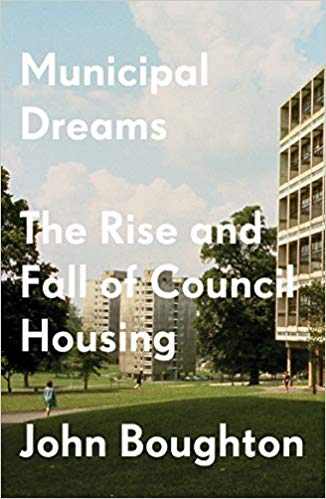
I’m way behind in posting about what I’ve been reading, not least because I’m mid-prrofreading my next book (Market, State and People: Economics for Public Policy, out in early 2020 from Princeton University Press, since you all ask….). One of the recent reads was John Boughton’s Municipal Dreams: The rise and fall of council housing. It’s a particularly timely book as the UK is in the midst of its most severe housing crisis since the post-war years when the populaiton was growing and much of the already poor quality housing stock in cities had been damaged or destroyed. The context is different now of course, but there is nevertheless significant excess demand and huge generational injustice – not to mention that the UK housing market serves a special role of macroeconomic dysfunction.

The book is more or less chronological, telling the story of housing provision at increasing scale by local authorities from the late 19th century to the Thatcher government and then the sale of housing and turn to housing associations as (partial) replacements for council provision. It covers the debate about the architecture of big estates – the controversies about brutalist 1960s tower blocks, the role of that architecture and the giant estates in emerging social problems. Above all, it highlights a key conflict of purpose: was council housing housing for all, or housing for those most in need? If the latter, as governments increasingly came to consider, then perhaps the emergence of “problem” estates was about the wider economic problems rather than the estates or their inhabitants.

The book advocates a return to housing provision at scale by local authorities, although it doesn’t get into policy design. I agree this will be needed. People are less and less able to work in the cities where economic activity of highest value is increasingly concentrating – agglomeration effects seem to be accelerating (see David Autor’s ASSA talk on this). The UK is hobbling its future productivity and ensuring the macroeconomy remains vulnerable to instabilty from house prices. The private market has no incentive to fix the problem as housbuilders and incumbent owners do not want price growth to halt. The state will have to step in & local authorities should be allowed once again to build homes at scale, borrowing against future rents to do so if need be.

Anyway, terrific book, really enjoyed it.

41qHKklQYSL._SX324_BO1,204,203,200_


How to write

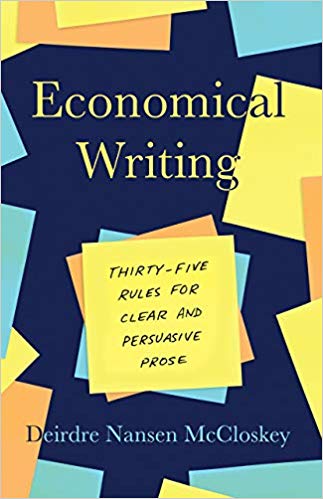
I’ve been on my travels so have a stack of things to post about, but it will have to wait until I’ve waded through the backlog of emails. Meanwhile, though, I polished off Deirdre McCloskey’s Economical Writing: Thirty-five rules for clear and persuasive prose. You don’t have to be an economist to benefit from the book, but it will certainly help many economists – we are not famed for clarity and elegance of expression. I’m a big fan of McCloskey’s writing, although she is something of an acquired taste. But, importantly, she is always a model of clarity.

The book has, as it indicates, a series of short chapters/rules, all good advice. (It’s an update and expanded version of earlier books, with additions on presentations and charts, though advice about the latter is mainly ‘read Edward Tufte’s books’.) It refers to other works and classic advice from authors such as Orwell and Twain. I loved the latter’s: “Eschew surplusage.”

The section that had me cheering was Number 4, being clear. I have long believed that there is nothing in economics that can’t be explained clearly in words; it isn’t string theory after all. “Bad writing makes slow reading,” McCloskey writes. Your reader has to stop and puzzle over what on earth you mean. She quotes Quintilian: “One ought to take care to write not merely so that the reader can understand, but so that he canot possibly misunderstand.” This is harder than it sounds. As the author of several books, I’ve learned that many readers take out of a book whatever thoughts they took into it. Still, what else is worth aiming for if you want to communicate your ideas?

Highly recommended for all who write as part of their work or for pleasure. Pretty much everybody?

[easyazon_link identifier=”022644807X” locale=”UK” tag=”enlighteconom-21″]Economical Writing, Third Edition: Thirty-Five Rules for Clear and Persuasive Prose (Chicago Guides to Writing, Editing, and Publishing)[/easyazon_link]41d9kBQGVVL._SX321_BO1,204,203,200_


Stereotypes and (in)justice

I got very distracted by the list of econ & philosophy books I put together with the help of #econtwitter, so haven’t read much new stuff lately. The exception has been Shadows of Doubt: Stereotypes, Crime & the Pursuit of Justice by Brendan O’Flaherty & Rajiv Sethi, a fantastic and sobering book. The theme is the central role sterotyping plays in the criminal justice system. The dominant emotion in the context of crime and punishment is fear. People are making speedy and often high-profile decisions under conditions of great uncertainty, and often, great fear. In the courts there is inconclusive evidence and conflcting accounts. Stereotypes are in effect rules of thumb that enable people to come to judgments about how to act in the face of a possible crime, how to assume other people will behave, about what might have happened.

Most of the examples in the book are American, where dying while black in an encounter with law enforcement seems to happen all too often. Some are high-profile examples like the arrest of Harvard Professor Henry Louis Gates for trying to get into his own house. One of the arresting officers mused that the events might have gone differently if he, rather than his white colleague, had got to the scene first. It was ever thus, the book records – citing a 1944 Gunnar Myrdal 1book, for instance, which pointed out that most of the whites who killed blacks in the 1930s were police officers. Video recordings are making more the old, constant reality more apparent. As for the prison system, the incarceration for the US is the highest in the world per capita (more than five times higher than China’s and fallingĀ  disproportionately heavily on blacks and hispanics. “Such rates are unprecedented in world history,” the book observes.) However, for all that there are fewer guns and deaths involved elsewhere, and lower rates of imprisonment, there is obviously a racial aspect to policing and punishment in many countries.

The final chapter is called ‘Hope’, a virtue it suggests should be aspired to. I found this a compelling but depressing book, however. As it points out, although we can try to become more self-aware, stereotyping is an inescapable part of human psychology, like so many other psychological heuristics. It is a means of partitioning the complex environment into categories, to aid understanding and our ability to function effectively. My conclusion after reading Shadows of Doubt is two-fold. One, the US is truly exceptional, and not in a good way. I have no idea how that country can escape from its ‘cold’ civil war, which the current presidency is anyway heating up. After all, the injustice of the US ‘justice’ system has been often described.

Two, for the rest of us it is a question of constant vigilance if individuals are to be protected, or to win justice, difficult in fearful and uncertain times. And at this moment the police and criminal justice systems are widely adopting algorithmic decision processes, automating decisions we know to be flawed – both ineffective and unjust. It is not the algorithms that are biased, nor their technical creators, but the system into which they are being inserted. The system needs fixing before it gets automated.

 

51MqWqeedGL