Peter Sinclair

Yesterday evening I learned from his nephew that Peter Sinclair had died after spending some weeks in intensive care battling Covid19. The tide of emails and tweets today, as people heard this sad news, is testament to the overwhelming affection and respect so many feel for him.

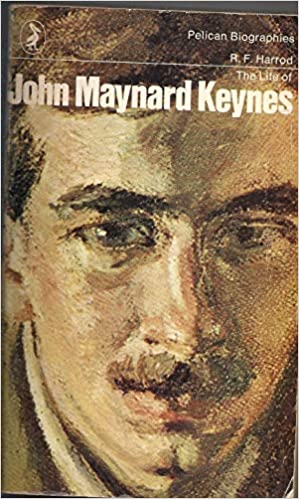
My memories are typical of those people are emailing. I pitched up at Brasenose College, Oxford to read PPE at the age of 17, completely out of my depth socially and intellectually, although pretty sure I was going to become a philosopher and sit in a Parisian cafe all day reading and writing. Peter’s absolute vocation for teaching, his brilliance, his kindness, soon turned me into an economist. He’d sent pre-reading before we turned up – Roy Harrod’s biography of Keynes for instance (this pre-dated the publication of the Skidelsky books). In the first term all his students were driven in batches of four for afternoon tea at the Feathers Hotel in Woodstock. One of our group came from Kenya and Peter tried a bit of conversation in Swahili – my first experience with his knowledge of at least one phrase in every language he’d ever encountered.

In tutorials with Peter, even poor essays were kindly treated – one learned to interpret comments such as, “That’s very, very – very – interesting,” as signalling a terrible error. He was a brilliant teacher. His explanation of different social welfare functions is still vivid in my mind. He eviscerated the inefficiencies of the CAP by pointing out that at the time the EEC butter mountain weighed more than the population of Austria. He responded to any sign of mild student interest in anything by sending one off with additional readings, perfectly pitched, and embracing everything from classics to the latest books and papers. He scheduled one-to-one tutorials over breakfast in the cafe in Oxford market if one was very interested. He knew everything: whenever I’ve discussed any subject with him over the years, he was able to cite the entire literature and send me scurrying off to catch up on all the references. In meetings, he would listen carefully to the discussion then chip in with some deep and important point.

Unsurprisingly, his joy in teaching meant he has taught what seems like half the UK economics profession and a fair proportion of economists elsewhere in the world. This continued through his years as a Professor at Birmingham University and at the Bank of England’s Centre for Central Banking Studies. He was a driving force in the Royal Economic Society’s educational initiatives including the easter school for PhD students. Just before his illness and death he was writing chapters for a new online Office for National Statistics text on economic statistics – Joe Grice, who has known Peter for 50 years since his doctoral days at Nuffield, will shepherd those now.

We celebrated Peter’s formal retirement with a dinner in 2012 hosted by the then CEO of Standard Chartered, Peter Sands, with dozens of economists attending. There will be crowds at his memorial service, when crowds are allowed by this cruel disease to gather again.

For all his decisive influence on my intellectual formation – not just turning me into an economist but shaping my values and world view – I will always remember Peter’s kindness and warmth. It is a patient and loving person who puts up with a long-ago pupil and her young children dropping in for lunch at the Bank of England canteen. He was always genuinely delighted to see people.

Peter was devastated by the death of his first wife, Shelagh Heffernan, after her long illness. We were all overjoyed when he later found such happiness marrying Jayne Ivimey. My heart goes out to Jayne and all Peter’s family.

Peter with former pupil Sir Dave Ramsden in November 2012

Peter with former pupil Sir Dave Ramsden in November 2012

IMG_1259

Peter at the University of Birmingham a few weeks ago

Chaos, tools and thoughts

It has been unsurprisingly hard to concentrate this week, but I did finish Everyday Chaos: Technology, Complexity and How We’re Thriving in a New World of Possibility by David Weinberger. Publishers love thise long subtitles and with one so long you might think there was no need to read the book. This one does the author a disservice. The book is nothing like the giddy Silicon Valley techno-optimistic tract it seems to indicate (and how badly that would have dated in current circumstances). I’d bill it as a follow-up to two much earlier books – The Cluetrain Manifesto of 2000 (of which Weinberger was a co-author) and Kevin Kelly’s 1992 Out of Control.

Everyday Chaos is concerned with the implications of AI everywhere and the always-on internet. It’s broad hypothesis is that the business environment and world more broadly need to take complexity seriously: “At last we are moving from Chaos Theory to chaos practice.” (Chaos Theory being the flapping butterfly in one place causing a hurricane across the world thanks to the non-linear complex dynamics of weather systems.) That means expecting small interventions to sometimes have huge consequences. It implies organisations need to be ‘agile’ (ie flexible), open, less hung up on causality and more willing to live with (shifting) correlations.

It’s particularly interesting on the flexibility of the concept of interoperability, which can be made to build bridges between organisations in different ways. The book advocates a “networked, permeable” view of business rather than the hard boundaries we are used to thinking about. “The knocking down of old walls that were definitional of a business is better understood as a strategic and purposive commitment to increasing a business’s interoperability with the rest of the environment.” Rather than narrowing down to a small number of strategic options, Weinberger’s advice is: “In an interoperable world in which everything affects everything else, the strategic path forward may be to open as many paths as possible.”

The book also reminded me about the very interesting work by Andy Clark and his argument that our tools – pen and paper, whiteboard, screen, spreadsheet – determine how we think (this is a terrific New Yorker profile and here’s a famous paper with Dave Chalmers on the ‘extended mind’). Knowledge is a function of what’s outside our heads. As Weinberger concludes, we are neither an effect of thing (technodeterminism) or nor to we straightforwardly cause things. new tools – machine learning – will end up with us understanding the world in a different way.

Everyday Chaos is also really well written and engaging, so it’s well worth ignoring the airport bookshop packaging. Not that there will be many chances to buy in airport bookstores for quite a while…

61wQKDknEgL._SX330_BO1,204,203,200_

All that we don’t know

What a month – what a week – and much more to come.

Meanwhile, I enjoyed reading David Hand’s new book Dark Data: Why What You Don’t Know Matters. A former president of the Royal Statistical Society, Hand has written an excellent guide to the many reasons for caution in interepreting data. He uses the overall metaphor of ‘dark’ data (like dark matter in the universe) to categorise these pitfalls, which is a nice way of organising a book that could have ended up being a list of the rather varied things statisticians need to worry about. The book ends with a very useful, rather sobering, taxonomy of the 15 data issues a careful empiricist should be aware of.

For example these include missing data we know about; missing data or omitted variables we are unaware of (the unfairly mocked Rumsfeldian ‘unknown unknowns’); sample selection bias; gaming and feedback; fraudulent data; measurement error; extrapolation; counterfactuals; and even the process of scientific discovery. This is still obviously quite a varied collection of issues which does lead to some tangents (such as why Sigmund Freud was not a scientist, how Facebook breached the Nuremberg Convention, and that Randolph Churchill found decimal places mysterious).

IMG_0987

But it is all very clearly and amusingly written so it is an excellent overview of all the potential mis-steps a student (or practitioner) might make, from p-hacking to omitted variable bias, Simpson’s Paradox to the Hawthorne Effect.The final section has some positive suggestions too: linking datasets, replication, RCTs, and anonymisation. A very useful book and one I will recommend to students.

There are limits of course: sometimes the uncertainty is irreducible, as we are learning now.

71g+ZZc6i6L._AC_UY436_QL65_ML3_


Counting people

I was very pleased to receive in the post a copy of Andrew Whitby’s book The Sum of The People: How the Census has Shaped Nations, which I read in a proof copy and wrote one of the back cover blurbs for. I am perhaps peculiarly interested in statistics and the story of statistics, but this book is genuinely a page-turner from the first page of the Preface on.

It’s a broadly chronological account of the history of censuses from the dawn of recorded history (China’s Yellow River region, ancient Mesopotamia) to the present day. It weaves into that the history of technologies for counting people, including for example the story of the BBC’s 1986 900th anniversary version of the Domesday Book – on an aluminium laser disc. As the book points out, the vellum of the original has had greater longevity and it has been digitised.  And of course demographic trends feature too, for example in the ‘population time bomb’ debate of the late 60s and 70s.

Of course, the most interesting aspect is why the cenus matters, which is its relationship with power and money. They are always either political or politiczed. One vivid illustration is the Allied attack on the Dutch population registry in early 1944, which killed around 60 civilians working there but destroyed one in four of the records so a quarter of the identity cards the occupiers asked for unable to be verified. Too late for Dutch Jews, of whom 73% had already been murdered, but very helpful to the Dutch Resistance as the war drew toward its end.

The book ends by observing that the current censuses in and around 2020 – US, UK, China and elsewhere – my well be among the last of the traditional kind where enumerators try to get a response from everyone. The use of administrative records is likely to take over in future. Cost is a major reason, as is evidence of systematic undercounting in some countries. But I must say, the idea of being reliant on big data stored in centralised population registries leaves me a bit uneasy: is this the ideal way of capturing the relationship between individual and state? As the book puts it, “In a time when so much information collection is covert and passive, the census is the opposite: it demands our active attention.” Another human will ring the doorbell. It’s a shame this will surely pass into history.

51EVnYwpepL

What’s wrong – and right – with economics

I didn’t expect to enjoy Robert Skidelsky’s new book, What’s Wrong With Economics: A Primer for the Perplexed, for he has long been forthright about his low opinion of economics and economists; and so it proved.

He makes some good points, nevertheless. Indeed, some I strongly agree with, as do a lot of other economists. For example, many of us would agree about the importance of studying economic history; even some of the nerdiest econometricians and theorists I know devour the big new econ history books. Likewise about the importance of taking into account psychological realism – behavioural economics, hello! (Though standard rational calculation of self-interest often matches reality better – it’s all about the context.) Institutional economics is everywhere now, in the tradition of Coase, Williamson, et al. Lord Skidelsky approves of it (albeit preferring the old institutionalism to the new transactions-cost based approach); he just seems to be under the misapprehension that it’s a neglected part of the discipline.

In sum, there is indeed much here that I and many other economists of my acquaintance agree with. Big ticks to history, institutions, psychological realism, even to acquaintance with sociology or anthropology.

So why did I not enjoy the book? It talks about “the poverty of neoclassical economics under its carapace of techniques.” This is absurd. While certainly there is some excess ‘mathiness‘, technique is a vital thing in any discipline. Even historians have techniques, and models (‘the causes of the first world war’). Does this carapace consist of too much ‘theory’? As Beatrice Cherrier has blogged, there has been a significant shift to applied work in economics, even though its description as the ’empirical turn’ has been over-stated.

But above all, despite insisting on the importance on both economic history and the history of economic thought, the book is ahistorical in its approach to economics. It attacks an economics it labels as ‘mainstream’ or ‘neoclassical’. Whatever it means by mainstream, this isn’t what most economists do. As ever in such critiques, the book only talks about macroeconomics, doesn’t cite a single piece of applied microeconomics, but above all ignores the fact that economics has changed in the past 10, 20, 30 years.

I do think there are serious methodological issues in the present (‘mainstream’) economic paradigm – my next book, Cogs and Monsters, out around this time next year, will be about this.

Meanwhile, What’s Wrong With Economics is concise, clearly and elegantly written and spends half its length demonstrating that the other half is – well, about what’s right with economics.51FqQfM-ouL._SX325_BO1,204,203,200_