Live long and prosper – economists and Vulcans

I’ve very much enjoyed Manu Saadia’s Trekonomics: The Economics of Star Trek. Many economists are fans of science fiction, detective fiction, or both (as I long ago described here) and I’ve long been a fan of Mr Spock, indeed posting this sticker in the front of my copy of Theil’s Principles of Econometrics. Paul Krugman made a similar link in his well-known account of being drawn to economics by Isaac Asimov’s Foundation series.

IMG_4148Trekonomics joins Star Trek: The Human Frontier by Michele and Duncan Barrett as an excellent book about what the franchise says about society. It’s an interesting, enjoyable riff about the economics of the series: the implications of abundance, what work means, the absence of money, the implications of the replicator. I most enjoyed a rant about the anti-humanism of Paul Ehrlich’s 1968 The Population Bomb (and besides, it was completely wrong), and a section about the psychology of people in a society where there is no poverty, and no inequality of access to material resources (reputation and Star Fleet rank being another matter). There is also a chapter about the tragedy of the commons which might well turn up in my teaching next semester. This is a problem not even the wise and benign Federation can solve.

Manu Saadia argues that the calm and rationality of Vulcans, and indeed the humans in later series of Star Trek, are hard for 21st century humans to empathise with. We don’t care about these perfect characters, he writes. Maybe it’s because I’m an economist, but it’s Spock, not Kirk or any of the humans, who is my hero. The Vulcan greeting could be an economist’s motto.

Live long and prosper!

[amazon_link asins=’1941758754′ template=’ProductAd’ store=’enlighteconom-21′ marketplace=’UK’ link_id=’c3f2ab4c-4791-11e7-9c2c-7ffe0943acc4′]

[amazon_link asins=’184159332X’ template=’ProductAd’ store=’enlighteconom-21′ marketplace=’UK’ link_id=’ff84c5a3-4795-11e7-80d4-7d3b75b5e8d1′]

[amazon_link asins=’074562491X’ template=’ProductAd’ store=’enlighteconom-21′ marketplace=’UK’ link_id=’ba207d90-4795-11e7-88bb-1b57a9dc6bf4′]

Things and Beyond

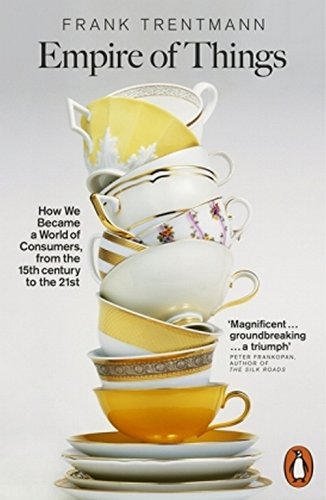
I’ve been reading Frank Trentmann’s Empire of Things: How We Became a World of Consumers, from the 15th century to the 21st, which has taken a while as it’s 600+ pages. It has been an enjoyable read but with two flaws – more on these later.

The book does what it says in the subtitle, drawing on a major research programme, and is truly impressive in its scope and detail. It traces global (and genuinely so although with a strong tilt to the West) trends in consumption through the long sweep of history. It links these trends in behaviour to trends in thought about personal and social ethics, and the individual in the family and in society. It addresses the entire chain of production and consumption from resources to waste. It draws on a wide array of disciplinary knowledge, including philosophy, history, sociology and even some economics.

The book sets up a tension through all of this material: “The view that being and having are opposites … has a very long history. But so has an alternative trajectory that sees people as only becoming human through the use of things.” Among other forces, technology keeps this tension alive over time, as new things keep on appearing. And it’s interesting to see that certain things are particularly compelling – stockings for one. The 17th century knitting framemade better, cheaper stockings possible, and the early national accountant Gregory King estimated in 1688 that 10 million pairs a year were purchased. This reminded me of the tidal wave of nylon stockings sold by Dupont – 800,000 pairs on 15 May 1940, the first day of sale, alone.

Consumption clearly depended on rising incomes, and the book traces a switch to “the creation of value through consumption, not just production” from the 19th century – it argues that consumer society has its roots in the Industrial Revolution rather than as is often argued the post-war boom. There’s an interesting couple of sections – in the light of the way technology is currently blurring the previously sharp consumption/production divide – on the role of consumer durables. I disagree with Trentmann’s suggestion that, “The appeal of goods such as the automatic washing machine was far from self-evident.” He notes that the aggregate time spent on household work was not reduced significantly by such consumer durables – and then observes in passing and ignores the class distinctions. Middle class women were decreasingly likely to have servants and did more of their own housework. Working class women – like my mother and Hans Rosling’s – were truly given hours of time by automatic washing machines. John Kenneth Galbraith (I’m sure he never did an iota of laundry in his life) said consumer durables enslaved women; but even if – as he argued – easier washing meant more washing to have cleaner clothes, why is this not a better outcome?

Turning back to that original tension – does our relationship with things dehumanize us or the opposite? Is consumerism basically bad or good? – I’m with Hume. As Trentmann describes the Humean view: “An encounter with a new object was one way in which intelligence and feeling were inspired and strengthened.” (And isn’t this one of the big questions about AI and consciousness – can intelligences without sense perceptions become conscious?)

The modern no-growther’s disdain for consumption seems to me to be of a piece with the instinct in the past that gave us sumptuary laws. Rich folk thought poor folk should stay in their place, dressing up the restrictions on the purchases the masses were allowed to make in moralising garb. But as Adam Smith put it, it was, “[T]he highest impertinence and presumption for kings and ministers to watch over the economy of private people, and to restrain their expense, either by sumptuary laws, or by prohibiting the importation of foreign luxuries. They are themselves always, and without any exceptions, the greatest spendthrifts in society.” Of course we need to pay far greater attention to resource use and to waste, but it is the affluent who are cavalier about the importance of growing real incomes and consumption – Janan Ganesh in his column today describes them as ‘too-rich-to-care bohemians’.

There is lots to enjoy in Empire of Things, therefore; I’m exactly the kind of reader who likes detail of the sort its pages are packed with.

I would have liked more economics, and more figures. There is a nice section on the mutual interaction of prices and tastes, as with the switch in British taste from coffee to tea in the later 1700s: a chart of tea and coffee prices would have been nice. But I have two bigger criticisms. One is that the book seriously needed an edit. The argument gets swamped in detail and it should have been 25% shorter. Some sections, especially those on non-western trends, fall between two stools – insufficiently detailed in themselves but enough to distract from the flow.

The biggest issue I have, however, is that the book never addresses the distinction between material and non-material consumption. It puts really a great deal of emphasis on the physical nature of consumer goods – and then skips to a discussion of some non-material aspect of consumption such as public health measures or public education, or leisure activities like the cinema. The issue of increased expenditure on services and intangibles is dismissed in just over two separate pages (out of 690), by saying that spending on housing, transport and food combined accounts for the same proportion of the household budget in 2007 as in 1958; and that in the OECD as a whole material consumption rhas continued to rise. Yet people are spending a growing proportion of their incomes on warmth, space, travel, variety, quality, entertainment as they grow richer. The immaterial is embedded in the material, and there is absolutely no reason to be complacent about the environmental footpring of the global economy; but (even knowing I may be biased about this) it is surely a significant development in the history of consumption (albeit a transition of affluence) that value is being created largely by the non-material now? (The forthcoming Capitalism without Capital by Jonathan Haskel and Stian Westlake addresses this.)

Still, it’s probably a good sign when a huge book leaves you more inclined to ask for more rather than wishing there had been less, and the balance tips that way for me despite it being in need of a blue pencil in parts.

41EibbfMxcL


Agents and theorists

There are three books in one in Richard Bookstaber’s The End of Theory, it seemed to me. This compôte is even flagged up in the subtitle: ‘Financial Crises, the Failure of Economics, and the Sweep of Human Interaction’.

One sub-book is a tedious critique of economics, tedious because like all (the many) similar critiques it (a) says ‘economics’ but means ‘macro/financial economics’; (b) assumes economics is a monolithic subject stuck some time around 1980-85, which was indeed the height of the rational expectations, real business cycle approach. Some of the points Bookstaber makes are perfectly valid. Macroeconomists have responded to the implications of the financial crisis for their approach, but not yet enough – this is why the ESRC has funded the new ‘Rebuilding Macroeconomics‘ network. I also agree in particular with his point about economics needing to get to grips better with self-fulfilling phenomena and performativity. But, really, a lot of economists – at least in academia but I think out in the non-ivory tower world too – are now doing exactly the kind of work Bookstaber enthuses about. I’d argue that even when economists are using rational choice equilibrium modelling, or ignoring the radical uncertainty of the real world, it is often done in a knowing way – that is, understanding the assumptions fail, but using the conclusions they lead to as a way of evaluating what is happening and why. Anyway, his complaints about economics are both wearily familiar territory and decreasingly true; economics is and has been changing a lot. In finance specifically, think of Andrew Lo’s new book, Adaptive Markets.

The second element of The End of Theory is a useful mini-survey of some alternative approaches (alternative to rational choice, maximising, equilibrium) models for financial markets in particular: this includes complexity and emergent phenomena, non-ergodic processes, heuristics in decision making, and so on. None of these is novel either – for example, Paul Ormerod’s Butterfly Economics and Why Most Things Fail tackle many of the same areas, Kahneman’s Thinking Fast and Slow was a best seller and Gigerenzer’s heuristics approach is widely discussed among behavioral economists, while Taleb’s books have brought the ideas about radical uncertainty to millions. Still, having these ideas set out again in a concise and accessible way is useful.

The third book-in-a-book is a very interesting approach to an agent-based modeling approach to the financial system, looking back at the 2008 crisis. Here, the author’s expertise shines through. But this section is very condensed – I wished the whole book had been about this and had used the extra room to say more about the complexities of the financial structure and how the agent based approach can illuminate them. For example, the section on the 2007-8 liquidity crisis in US markets is fascinating but condensed. Again, agent based modeling is hardly new, and is even growing more popular in economics, but I found the detail from someone who is an experienced market participant very interesting, although the idea that agent based modelling really spells the end of theory is not really addressed explicitly.

In the end, I wondered what audience Bookstaber had in mind. The final chapter ends, “I’m a frustrated novelist.” He is a indeed a good writer but needs to work on the narrative arc. I’d have thought the three components of this book appeal to at least two different sets of readers; and it distracted at least this economist reader to have the argument keep heading off on a tangent to criticise economics: ‘And another thing,….’. I hope he goes on to write the book starting to emerge from this one diagnosing the past about an agent based future for finance. If this is the right way to model financial markets, what do we do with it?

PS I see The End of Theory is doing well on Amazon, with some 5* reviews, so my perspective may be jaundiced!

Fear, greed, fairness, imagination and finance

I’ve thoroughly enjoyed reading Adaptive Markets: Financial Evolution at the Speed of Thought by Andrew Lo. I should say that, apart from being a distinguished MIT finance professor and the co-author of the classic A Non-Random Walk Down Wall Street, Andrew is an old friend. But this should not put off any readers. This new book will become another essential read for anybody interested in financial markets.

The book aims to do what ultimately all of economics must do, and situate economic decisions and behaviour in the context of our biology and evolutionary history. Behavioural economics and finance have gone some way toward this in introducing the now-familiar heuristics such as loss aversion and framing effects, and herding is a familiar phenomenon in finance models. The issue with these has been how if at all they relate to rational choice models and the Efficient Markets Hypothesis. The Adaptive Markets Hypothesis is a synthesis, proposing that context makes the difference, and when conditions are sufficiently stable for long enough, financial markets are efficient. Otherwise, fear, greed, fairness, imagination – the characteristics evolution has given the human brain – kick in.

The opening chapter starts with a powerful demonstration of the potential efficiency of markets: after the Space Shuttle Challenger tragically exploded on 28 January 1986, a five month inquiry pinned the blame on a part, the O-ring, manufactured by one of four contractors, Morton Thiokol. Yet on the day of the accident, the share price of Morton Thiokol plummeted – the markets knew the company was to blame almost immediately, without the expert verdict: “Somehow the stock market in 1986 was able to aggregate all the information about the Challenger accident within minutes, come up with the correct conclusion and apply it to the assets of the company.”  The decline in its market capitalization – about $200m – was  almost exactly equal to the damages, settlement and reduced future cash flow, a later study found.

But often, of course, financial markets are all too obviously sometimes not efficient. The intellectual challenge is to figure out when they are in which mode. The book voyages through neuroscience, psychology, evolutionary biology and AI to try to answer this. The Adaptive Markets Hypothesis reverses the conventional framing: rather than thinking about a rational benchmark with a set of psychological quirks sometimes kicking in, we are a collection of quirks, but sometimes we can get beyond the heuristics to rational choice.

Frustratingly, although perhaps inevitably, there is no neat list of conditions for being in efficient rather than non-efficient mode: it depends, in particular on having had enough time in stable conditions to learn from experience. But Andrew does hold out hope for the prospects of being able to make better investment decisions – with socially useful outcomes – and being able to manage financial markets better so events like the 2008 crisis are far less likely to recur. In line with the Adaptive Markets perspective, he argues for treating financial markets as an ecosystem (so the interconnections are front of mind), using AI techniques to monitor markets and adjust regulatory instruments such as cyclical buffers. There is an interesting section on the role of technology in finance, including HFT, a technological arms race being one of the predictions of the Adaptive Markets Hypothesis. Currently, he is exploring ideas from biology such as immune responses and ecosystem management techniques. He also recommends introducing a body similar to the National Transportation Safety Board that would analyse market crashes and make recommendations for regulatory change. (One thing not spelled out here is whether this would have to be a global body.)

The book is a thoroughly interesting and enjoyable read. It is not technical, the explanations are super-clear, and there is some excellent story telling. Andrew recounts how in 1986 he and his co-author Craig MacKinlay, presenting at the NBER the work that turned into A Non-Random Walk Down Wall Street, were savaged by discussants from the world of academic finance. Since then, the academic community’s faith in the Efficient Markets Hypothesis has wavered significantly, but it is still the benchmark – as the book says, it takes a theory to beat a theory. I find the Adaptive Markets Hypothesis a persuasive theory, but then I firmly believe economics must be consistent with what we learn about ourselves from the other human sciences. I guess the test will come in the shape of how widely market participants themselves embrace it.41CpHzPtybL


Contradictions of capital

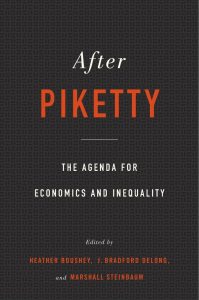
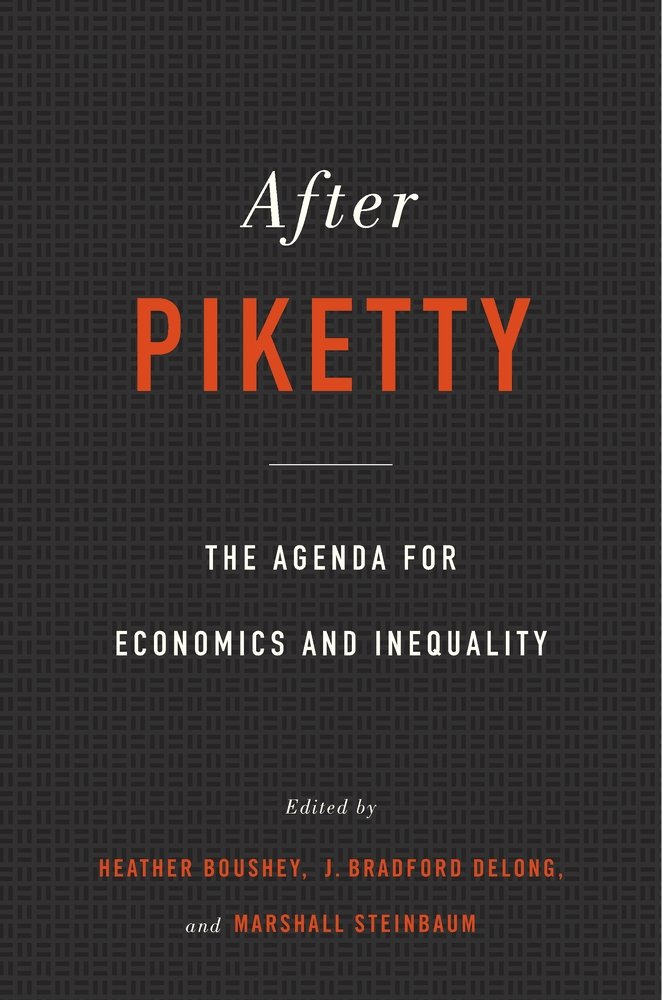
Below is my review of After Piketty edited by Boushey, Delong and Steinbaum, just posted in the Chronicle Review. (The entire Spring Books issue is well worth a look.)

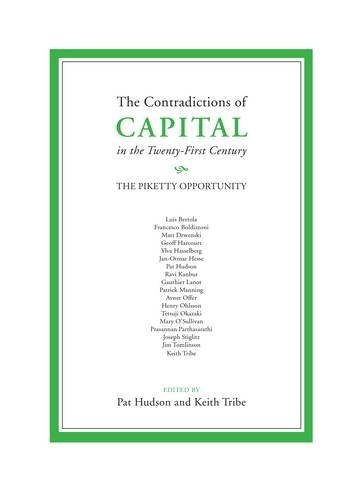
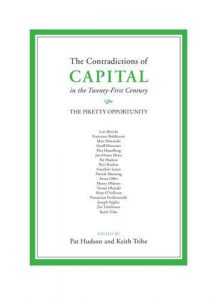
I also recently received another collection, The Contradictions of Capital in the 21st Century: The Piketty Opportunity, edited by Pat Hudson and Keith Tribe. It includes essays by Ravi Kanbur, Joseph Stiglitz, Avner Offer, among others. I haven’t yet read this one, although its take is more clearly historical and global, whereas After Piketty‘s is more inter-disciplinary.41YEl+rJjaL
61yDGMM3rBL


Review of After Piketty: The Agenda for Economics and Inequality edited by Heather Boushey, J Bradford Delong and Marshall Steinbaum

The Chronicle Review

Contradictions of Capital: Taking on Thomas Piketty

By Diane Coyle

For all the influence economics is supposed to have on policy and the character of our societies, not many economics professors make any impression on public consciousness. Fewer still attain Thomas Piketty’s rock star status (well, minor rock star at any rate) following the publication in English of his Capital in the 21st Century[i] in 2014. Piketty captured and gave authoritative confirmation of something many people believed to be the case, given their own experience and observation: that inequality in western economies had increased to a great degree.

Many economists see Piketty’s dedicated effort – with colleagues Emmanuel Saez and the late Tony Atkinson – to put together the data on income and wealth over a long period of time as the main merit of his work. While there is some debate about the figures, this effort is a titanic contribution to knowledge, making possible further study of the trends and causes of inequality.

The essays in After Piketty have a different focus, however: an assessment of Piketty’s arguments about the dynamics of capitalist economies that generate the observed patterns of income and wealth inequality. Some of these perspectives concern the economics, others the links between economic and social or political forces.

Piketty’s empirical observation is that inequality in the western economies declined through the entire middle part of the 20th century, but from around 1980 it had started to increase again, to return to the levels of the Gilded Age. His theoretical argument is that there is an inherent dynamic in the process of economic growth tending to increase inequality, a dynamic halted and reversed in the 20th century by the two cataclysmic world wars, by the post-war welfare state and social market economies (especially in Europe) and by rapid post-war growth. The key point he makes is that when the growth rate slows, the rate of return on capital falls more slowly, increasing the ratio of capital to income and further widening the gap. This is the r>g formula fashionably adorning some t-shirts for a while.

For economists, there is nothing inexorable about this. As Paul Krugman points out in his essay in After Piketty, the theoretical argument depends (among other things) on it being easy enough to substitute machines for workers, and there is no definitive empirical evidence this is so. Devesh Raval points out a number of other problems. Among them, Piketty uses the term ‘capital’ as an abstraction, but the empirical claim that r>g elides physical capital used in production, housing capital, and the human capital resulting in high earnings for some people. Indeed, the share of top incomes coming from earnings (rather than rents and dividends) is a great contrast with the inequality of the early 20th century. Suresh Naidu underlines this point, calling Piketty’s argument “institution and politics free”: “When wealth is understood as police-backed paper claims over resources, rather than the resources themselves, the undemocratic nature of wealth inequality becomes much clearer.” A number of other essays in the volume round out the economists’ (sympathetic) critique of Piketty’s book.

The two subsequent sections cover extensions of Piketty. His collaborator Emmanuel Saez argues for continuing and extending the data collection effort. This is a significant point: phenomena for which the data are not readily available are invisible in political and policy discourse. In many ways Capital in the 21st Century was published much too late. The political consequences of great inequality were already playing out in the anger and division so visible now in politics in the United States and across Europe. Saez makes the point that although there has been significant data collection since the 1960s and 70s on individual incomes, largely through surveys, this statistical approach severs the connection between income distribution and macroeconomic outcomes. Economists in the late 20th century thinking about the economy in the aggregate largely stopped noticing the macro-level inequality trends. There is little reliable data on wealth (as opposed to incomes) at all, and research into wealth distribution and its evolution is correspondingly sparse (as Mariacristina de Nardi and her co-authors point out in their essay).

Filling some of the other research and policy gaps will be crucial for anyone who considers the extent of modern inequality to be problematic. One made visible by the British EU referendum and the US Presidential election is the spatial dimension. Economies have a geography, something economists have until recently been prone to overlook; financial capital is highly mobile geographically and – as Gareth Jones points out here, has also created ‘extra legal’ zones in tax havens where it can safely land. (In a fascinating book, Capital Without BordersHeather Boushey explores in After Piketty the implications for women’s economic and political autonomy of ‘patrimonial capitalism’, particularly given the gender bias of inheritance.

The book ends with some reflections from Piketty himself. He is disarmingly open to critiques of his work: “I would like to see Capital in the 21st Century as a work-in-progress of social science rather than a treatise about history or economics,” he writes. As he argues here, all the social science disciplines are needed for a complete picture. However, the critiques matter, at least to the extent that one thinks the current degree of inequality is unsustainable. Two other recent books point to contrasting possible futures. In his The Great Leveler[iii], Walter Scheidel paints a picture not unlike Piketty’s of an inexorable internal dynamic whereby societies become progressively more unequal, until this provokes a reset through war or revolution. In complete contrast, Tony Atkinson’s Inequality[iv], published the year before his death, presents a wholly pragmatic 15-point list of policy measures to limit and reduce inequality. Taking these together, it is hard to avoid the conclusion that if you do not adopt the Atkinson approach you get the Scheidel outcome. This was exactly the realization that led to the creation of the post-war social contract in the late 1940s.

The editors’ introduction in After Piketty zeros in on this contradiction at the heart of Piketty’s work and its reception: are there fundamental, intractable laws of capitalist dynamics, making garden-variety policy analysis of inequality ultimately futile? Or rather are there, “historically contingent and institutionally prescribed processes that shape growth and distribution?” Capital in the 21st Century does not resolve this; neither do the essays in After Piketty. Perhaps it is a purely academic question, but to the extent that any of us troubled by the new Gilded Age, we have to act as if the second is true regardless.

Diane Coyle is Professor of Economics at the University of Manchester & Co-Director of Policy@Manchester.

[i] Thomas Piketty, Capital in the 21st Century, Belknap Press, Harvard, Cambridge MA, 2014.

[ii] Brooke Harrington, Capital Without Borders: Wealth Managers and the One Percent, Harvard University Press, Cambridge MA, 2016.

[iii] Walter Scheidel, The Great Leveler: Violence and the History of Inequality from the Stone Age to the Twenty-First Century, Princeton University Press, Princeton NJ, 2017.

[iv] Anthony Atkinson, Inequality: What Can Be Done?, Harvard University Press, Cambridge MA, 2015.