Going to extremes

Richard Davies obviously made the kind of road trip many of us only dream of to write Extreme Economies: from Akita in Japan to Santiago in Chile, from Glasgow to Kinshasa. The locations he chose illustrate one of three characteristics – survival (refugee camps in Jordan, post-tsunami Aceh, a US prison in Louisiana), failure (Panama’s Darien Gap, Kinshasa in DRC, and post-industrial Glasgow), and the future (ageing Japan, digital Estonia, unequal Chile. As the book sums it up: “The year 2030, for most people on earth, will be a cocktail of these three cities: an urban society that is old, technologically advanced, and economically unequal.”

The book is a great read – I tore through it. An economist who can write so well while at the same time explaining the economic principles so clearly is always a joy. I will admit to being rather envious of the opportunity he had to visit all these places. Getting out and visiting should be required for all economists, whether they are writing about development and progress as Davies is, or about industrial organisation or education. You always learn something not only relevant but also important. One of the things I did love about this book was the painless administering of some substantial chunks of economic research – it’s an ideal read for eager 6th form students or undergraduates. It might encourage them to appreciate that economics is not only important but also exciting.

The book also includes some important threads. One is the environment as an economic as well as intrinsically valuable asset. Darien’s economy depends on extraction from the jungle, living now on its future potential: “The puzzle is why, in a region where everyone knows the environment is being degraded, the people of Darien can’t manage the economy in a way that stops it happening.” This segues into a discussion of the ‘tragedy of the commons’. Later, though, it’s Glasgow’s social capital, another overlooked asset, that’s pinpointed as one source of failure: “When an economic force is shared, unseen and hard to measure, you will do too little to protect it.” I couldn’t agree more. Social capital features in all the examples here, either as a source of resilience or a cause of failure. It isn’t a sufficient explanation of economic outcomes – for example, in the chapter on refugee camps in Jordan, one thrives and the other fails because of external forces shaping the structure of the camps and their economic potential – but it is a necessary element.

Davies picks this up in the conclusion: “The biggest gap in economics is the way it completely ignores social capital.” This is why our Bennett Institute Wealth Economy team is exploring the measurement of social capital. Economics doesn’t entirely ignore it – it gets lables such as ‘institutions’ or ‘goodwill’ – but is treated as a black box at best. So I agree with the book that economics will have more to offer the world if we measure and understand better the “subtler and more human aspects of income and wealth.”

Meanwhile, I recommend enjoying the tour through the rebuilt Aceh, refugee camps in Jordan, the market in Kinshasa, Lousiana’s Angola prison and all the other economies featured here. And I hope some TV producer will pick up the book and take its author round the world all over again to film it.

51-otaNMNtL._SX323_BO1,204,203,200_

Once upon a time

It’s very interesting the way interest in narratives is popping up in so many places. The Royal Society has been looking at narratives in AI and in science more generally. Now Robert Shiller of Irrational Exuberance (and Nobel Prize) fame has a new book called Narrative Economics: How Stories Go Viral and Drive Major Economic Events. The book builds on a lecture he gave a couple of years ago. It begins: “This book offers the beginnings of a new theory of economic change that introduces an important new element to the usual list of economic factors: contagious popular stories that spread through word of mouth, the news media and social media.”

As the preface notes, the idea isn’t new; the 1894 Palgrave’s Dictionary of Political Economy mentions narrative economics. Robert Merton’s well-known concept of self-fulfilling (or self-averting) prophecies covers much of the territory of narrative dynamics. But perhaps today’s economy is more vulnerable than ever to contagion. An early chart in the book illustrates the surge in the proportion of articles across several socal science and humanities disciplines that contain the word ‘narrative’. Economics and finance are well behind history (of course) but also anthropology, sociology and political science.

Anyway, the book is about how narrative contagion affects economic events. It has in mind epidemic models, as well as – well, narratives. Each chapter focuses on a number of examples. The first section starts with Bitcoin as an example of how narrative affected behaviour and outcomes, then introduces some of the concepts concerning how narratives ‘go viral’ and the psychology of contagion. Part 2 is a brief section setting out ‘seven propositions of narrative economics’ (including ‘truth is not enough to stop false narratives’. Quite.) Part 3 describes recurring economic narratives such as financial boom and bust, or automation and jobs. The final part of the book sets out questions for research.

The book is always interesting, but somewhat bitty, one example after another, lacking a grand theory of narrative framework. However, as Shiller points out in the final section, there is plenty of scope for quantitative approaches to understanding the economic role of narratives, particularly using recent text analysis tools. A cynic might paint this emphasis on narrative – also recently explored by George Akerlof and Dennis Snower – as classic economic imperialism. After all, she might say, sociology and anthropology have been onto this for years. Some economists might on the other hand dismiss the emphasis on narratives as a source of dynamics as woolly nonsense, merely anecdotal. But both responses would be too negative.

A move to extend the use of qualitative approaches in economics should be welcomed, and an extension of the also-welcome revival of economic history. Narrative Economics joins a couple of other recent books, such as Morson and Schapiro’s Cents and Sensibility and Uncertain Futures edited by Jens Beckert and Richard Bronk in restoring the humanity to economics.

716ECMZJjGL._AC_UY436_QL65_

Ranging widely

I spotted Range on the FT’s Business Book of the year longlist, and thought the subtitle appealing: How Generalists Triumph in a Specialized World. I’m definitely a fox not a hedgehog in Isaiah Berlin’s famous distinction (though I always wondered about the characterisation of each animal – are all hedgehogs like that? It’s a bit like the sheep and goats distinction – which is better? It isn’t obvious to me.) Anyway, there is definitely a lot of mileage in joining up knowledge silos. As Berlin described the difference:

“… [T]here exists a great chasm between those, on one side, who relate everything to a single central vision, one system, less or more coherent or articulate, in terms of which they understand, think and feel – a single, universal, organising principle in terms of which alone all that they are and say has significance – and, on the other side, those who pursue many ends, often unrelated and even contradictory, connected, if at all, only in some de facto way, for some psychological or physiological cause, related to no moral or aesthetic principle.”

Anyway, Range is an enjoyable read, although once you get the general drift it becomes rather repetitive, falling into the trap of being a terrific long magazine read stretched to nearly 300 pages. Still, it gave me a couple of marvellous new phrases: Undiscovered Public Knowledge (the kind machine learning systems are finding by interrogating massive databases); and Lateral Thinking With Withered Technology (innovation by reorganising existing technologies into new uses – this is a phrase from Gunpei Yokoi, the engineer who reinvented Nintendo).

The book claims many great thinkers as generalists. For example: “Charles Darwin’s greatest works represent interpretative compilations of facts first gathered by others.” However, the same example shows the limits of the claim about generalists’ superiority: Darwin had gathered plenty of facts for himself. If he hadn’t observed finches in the Galapagos for himself would he really have gone on to write On the Origin of Species?

41oUZxlPP4L._SX323_BO1,204,203,200_

Holiday reading

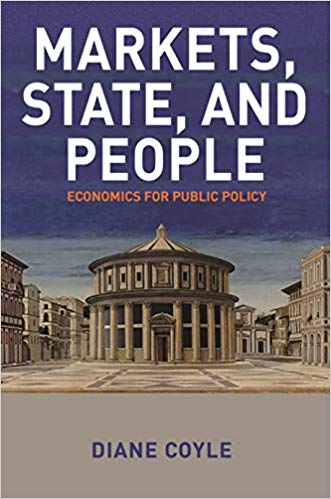
I haven’t posted much recently because I’ve been either on holiday or head down trying to (a) proof read my book Markets, State and People: Economics for Public Policy (out in early 2020!) or (b) catch up on writing various papers.

41tDMjIpEQL._SX329_BO1,204,203,200_But I have read *a lot*. Some excellent mysteries/thrillers: Mick Herron’s Joe Country, The Way of All Flesh by Ambrose Parry, The Divinities by Parker Bilal, Into the Woods by Tana French. Also the Sebastian Faulks novel Paris Echo.

Non-fiction: Last Witnesses by the incomparable Svetlana Alexeivich, Notes to Self by Emily Pine, Map of Another Town and Consider the Oyster by MFK Fisher, Why be Happy When You Could be Normal by Jeanette Winterson, Greetings from Bury Park by Sarfraz Manzoor, Chernobyl by Serhii Plokhy, Range by David Epstein and Extreme Economies by Richard Davies. I’ll review the last two here this week.

Finally I’ve read Capitalism, Alone by Brako Milanovic and Measuring What Counts by Joe Stiglitz, Jean-Paul Fitoussi and Martine Durand. I’ve been commissioned to review these along with the new book by George Soros.

And I have another week of holiday to come so have a pile of paperbacks (below) to take. But meanwhile am reading George Packer’s Our Man, which has started brilliantly.IMG_0540

The politics of depoliticisation

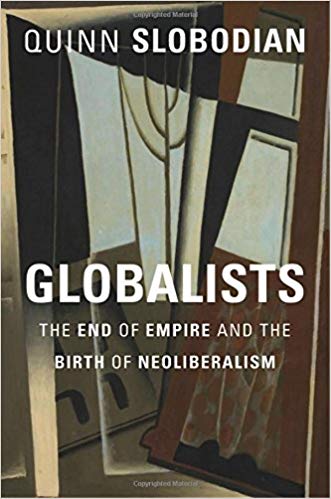
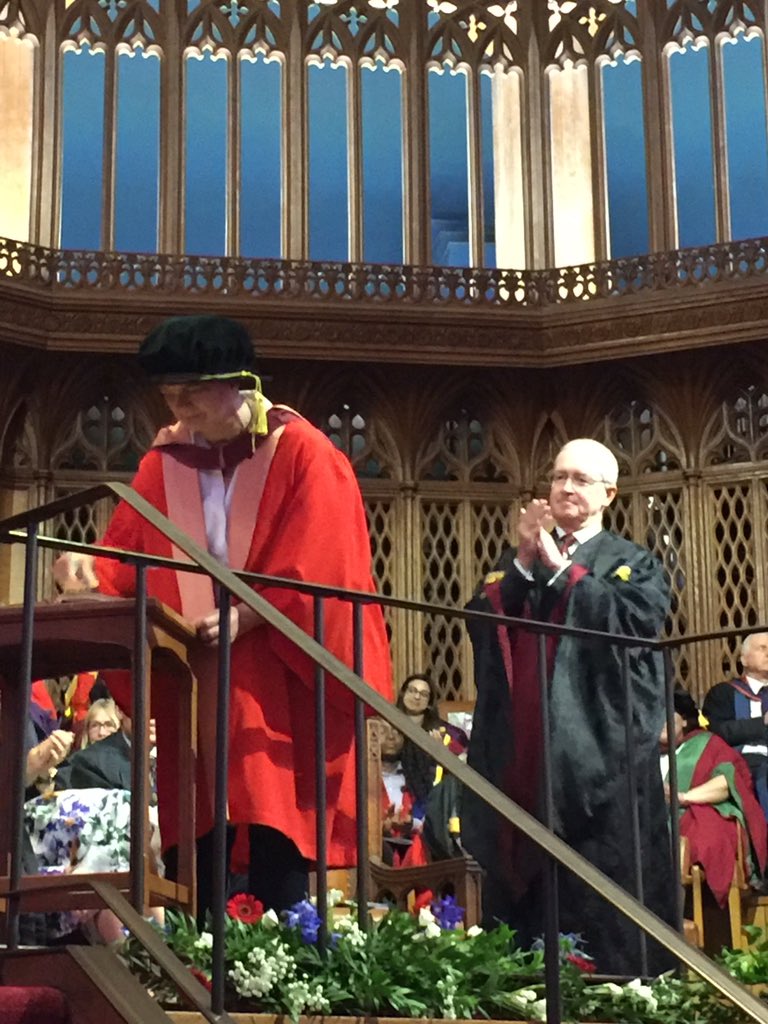
A while ago I had one of those brilliant dinners when you sit next to someone new and strike up a fascinating conversation. The occasion was the dinner celebrating honorary graduands of Bristol University (a boast – I had the honour of being awarded an honorary degree there this year), and Prof Paddy Ireland, my neighbour at the table, recommended in the course of a fab two-hour conversation, Globalists: The end of empire and the birth of neoliberalism by Quinn Slobodian.

It is indeed a deeply interesting book, a history of what Slobodian terms the Geneva neoliberals – those, including Hayek, who were globalists avant la lettre because they looked back with nostalgia to their youth in the Austro-Hungarian Empire. I hadn’t known that these folks, many based at the Graduate Institute in Geneva, named themselves neoliberals (at the Walter Lippmann Colloque in Paris in 1938) (although this makes it seem all the more absurd to me that some people now apply the n-term to  *all* economists.)

Slobodian emphasises that this school of neoliberals were by no means against a government role in the economy, seeing it however as a matter of setting the framework for a globalised economy. In particular, private property across borders was to be held sacred. The domain of the global economy had to triumph over the domain of national politics. Geneva neoliberalism was a “project of politics and law”, as the ambition was to create a system of governance that would “encase and protect the space of the world economy”. Individual rights, particular investors’ rights, would gain the protection of the courts against potential expropriation.”The ongoing depoliticization of the economic was a continual legal struggle, one that required continual innovation in the creation of institutions capable of safeguarding the space of competition.”

What I found particularly enlightening about this account is the way this particular strand of thought eventually got embedded in world trade rules in the form of the steady expansion of investment protections and third party arbitration. Economists tend to find, not necessarily the arguments against such aspects of trade agreements, but the emotion they arouse, a little hard to understand. I think the historical context helps us.

Another fascinating section covers Hayek’s interest in cybernetics – not so surprising when you think about his views on the role of markets as information-processing devices. Slobodian writes: “Radical in its own right, the neoliberals’ own dream of a new international economic order was a world economy of signals – a vast space of information transmitted in prices and laws.” It reminded me of Chile’s Project Cybersyn in the Allende years (described by Eden Medina in Cybernetic Revolutionaries), the same systemic vision from the left.

As Globalists makes clear, depoliticization – what I’ve termed in another context the ‘separation protocol’ – is a political project too. Its fortunes, having flourished during the mid-80s to mid-2000s, are clearly waning now. Politics is baaaaack, bigtime.

51kcoHzJqyL._SX329_BO1,204,203,200_[easyazon_link identifier=”0674979524″ locale=”UK” tag=”enlighteconom-21″]Globalists: The End of Empire and the Birth of Neoliberalism[/easyazon_link]

And for amusement, me in robes…..EAQsyhCXYAcgXcZ