How can financial services serve?

A 2010 book, Portfolios of the Poor, made a big impression on me because the researchers had taken great care to ask poor people (in Bangladesh, India and South Africa) in great detail how they managed their money and what their financial needs were. The answer was different from the enthusiasm at the time for micro-credit schemes. It turned out people with not much income need secure vehicles for saving and transactions; borrowing was a low priority, and few people will become entrepreneurs, micro or otherwise.

Jonathan Morduch, one of that team (with Daryl Collins), has now co-authored (with Rachel Schneider) a book taking a similar, detailed look at the finances of American families. They investigated (using the same method of detailed diary-keeping and interviews over an extended period) families in several parts of the country who ranged from single mothers living in poverty to nuclear families a notch or two above median income for their area. One could call them the ‘left behinds’. The results, written up in The Financial Diaries: how American families cope in a world of uncertainty, is just as illuminating.

The headline is that the volatility of income is a bigger problem for most of those interviewed than their level of income. This volatility is closely linked to the way the labour market in the US has moved toward less stable conditions, with employers shifting risks steadily onto employees. “Over half of all income volatility was due to changes in income from the same job.” Even the higher income households in the sample experienced significant earnings volatility.

When income is uncertain, or even when it isn’t but is only slightly higher than regular outgoings, then emergency expenses – healthcare above all (this is the US!), but also car repairs when the car is essential for work – mean it is difficult for people to save steadily. The juggling involved in managing their finances, and the fragility of financial security, also occupies so much mental bandwidth (as per Scarcity) that people find it hard to get off the financial treadmill by any long-term planning. Clipping coupons seems a high priority compared with saving up to pay for college, albeit there are some exceptional focused individuals.

Perhaps it isn’t surprising to learn that financial services do not serve most of these households (up to and beyind the median) at all well. Much financial advice is geared at long-term questions like retirement saving, which is an unimaginable luxury for this 50%-plus. Few products a geared at saving for short-term goals – such as saving enough for a deposit to rent a new apartment – and certainly not with a combination of commitment devices to encourage the saving but enough access or control to make the money accessible in a real emergency.

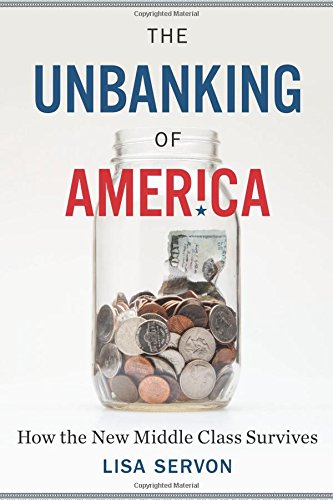
The same bias to the long term financial needs of the well-off colours comment about pay day loans or check cashing services – payday loans have ultra-high APRs but their customers are often looking at per week costs over the short term. Lisa Servon’s The Unbanking of America: How the New Middle Class Survives, which includes her experience working in a check cashing service, is a great companion volume to The Financial Diaries. (There’s an excellent NPR program about it.)

Servon’s book also includes some descriptions of tech-based financial products aiming to serve low-income customers better, as does this one. None has been a stellar success yet. Morduch and Schneider suggest legal limits on the total amount a lender can recover from a borrower, enabling short term lending to take place without it turning into a permanent, even increasing, debt burden. They write: “By pushing more of the consequences of underwriting decisions on to lenders – in the form of losing their money – they [ie total loan recovery caps] make lenders more cautious and selective in how much and to whom they lend.”

The book underlines how common is the experience of being on the edge financially, citing large-scale surveys to complement their detailed work. The latest US Census showed less than 4% of the population below the poverty line for the whole of 2008-2011, but 90 million (nearly one third) experiencing poverty for two months or more of the three years. In 2011 alone, 8.3% were below the line all year but about a quarter for two or more months.

Both The Financial Diaries and The Unbanking of America are illuminating reads, above all, for paying attention to what people say, rather than just theorising about them. Even before reading the latest rash of stories about the absymal behaviour of the banks, one can only conclude that unbanking will be a good thing as long as entrepreneurs – and the regulators who make or break them – can deliver at long last on the ‘service’ part of financial services.

41qunBbvzeL51Uoqi4MxpL

Actually existing capitalism

I read the D.M.Winch book I picked up, Analytical Welfare Economics, on the train yesterday. My overwhelming reaction was, “You could get away with teaching such arid material in 1971??” Still, there were a couple of nuggets I enjoyed.

“While perfect competition is sufficient for the achievement of a Pareto optimum, it is not necessary. It is quite possible theoretically to satisfy the necessary conditions in a controlled socialist state. ‘Perfect’ socialism is every bit as good as perfect competition when judged by this criterion. In te real world of course, socialism is far from perfect, but so is competition. Since bith systems are capable of achieving a Paretian optimum in their conceptually perfect forms, the proposition [the 1st welfare theorem] concerning perfect competition does not establish its superiority.”

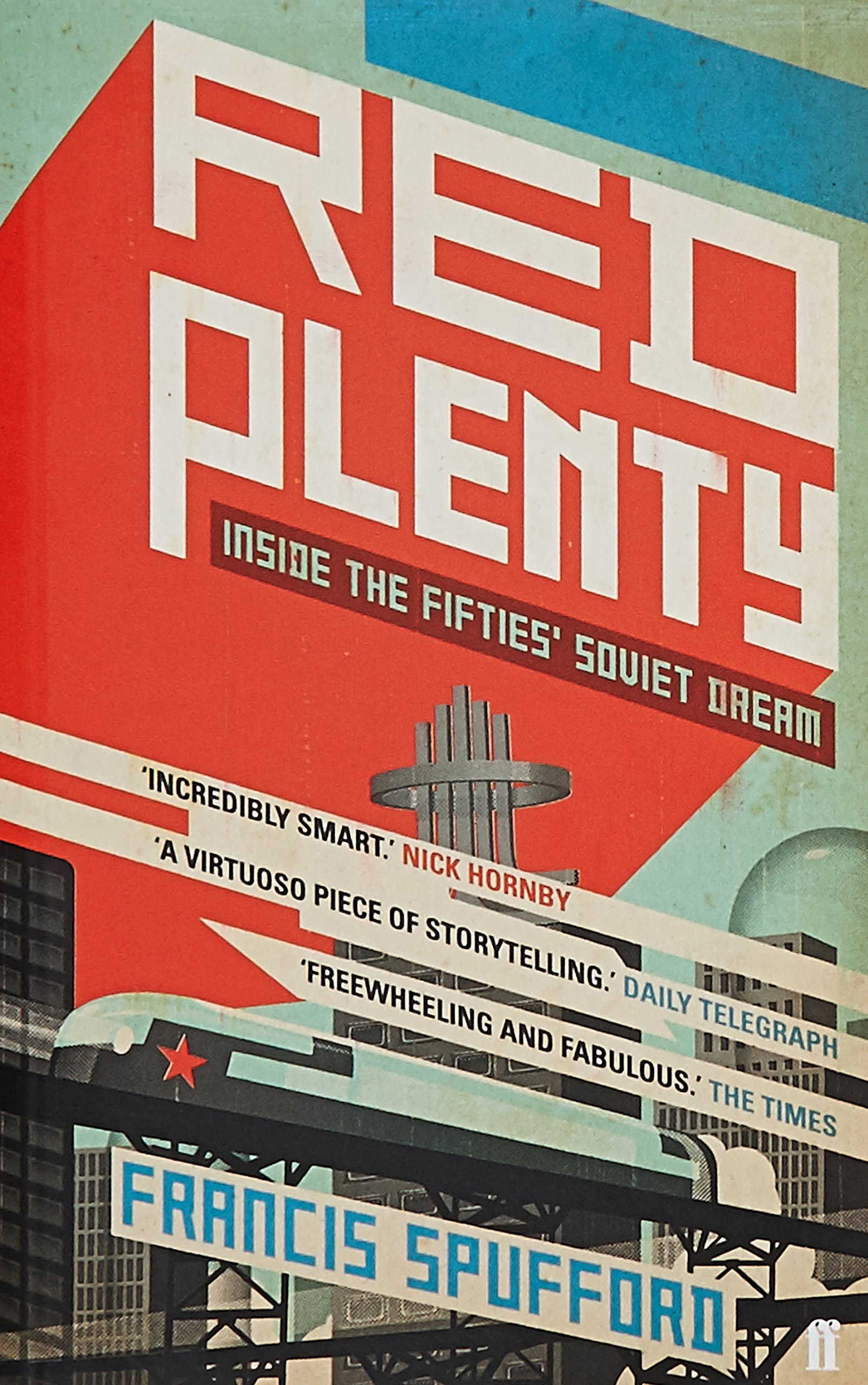
I liked the reminder about the formal equivalence between the ideal free market and the ideal centrally planned economy, its general equilibrium dual (an idea – as I’ve said before – brilliantly illustrated by Francis Spufford’s Red Plenty).918XzFk2GeLThere was also a nice link made between Scitovsky’s argument about welfare reversals, overturning the possibility of Hicks-Kaldor compensation and the difference between compensating and equivalent variation. Still, I won’t be troubling my students to get Prof Winch’s book out of the recesses of the library…


Enlightenment and anti-Enlightenment

Expectations matter a great deal in the way the economy evolves. When, how and why did this come about? It must have been linked to the capitalist growth take-off, because why would the future be relevant if nothing much ever changed? Emily Nacol’s An Age of Risk: Politics and Economy in Early Modern Britain links it to the British Enlightenment – specifically to the philosophy of Hobbes, Locke, Hume and Smith. She argues that they presented the future as a territory of risk in order to support their arguments about the political and economic order. What’s more, the book says, there were two sides to this: risk as a source of threat to manage and risk as an opportunity for previously unexploited profits. “When the cautious citizen acts with the future in mind, he transforms his social world in the process, now and in the future,” she writes. Hobbes created the fear, Locke introduced the tools of probabilistic calculation, Hume argues for calculated and prudent risk-taking as a path to profitable opportunities which will pay off in the long term, and Smith analyses how institutional structures can manage and mitigate – or exacerbate – risk, in Nacol’s schema.

The book is quite short but does presuppose familiarity with the four philosophers – my wider reading of their work dates back to the late 1970s and PPE, although I dip in reasonably often, so it was a bit heavy going. Having said that, the key insight about the Enlightenment as the moment when thinking about risk, an orientation toward the future, became important is interesting. Especially at what sometimes feels like a moment of anti-Enlightenment when nostalgia for an imagined (and imaginary) past has overtaken us. Time to re-read Paul Krugman’s brilliant 1991 QJE paper on history versus expectations.

51pMHyDBYEL

Welfare economics and octopus intelligence

It’s always a mistake to go on holiday, although we had brilliant sunshine for 3 days of walking in the Lake District (for those who know the Lakes, 3 days without rain at all is quite something). While there, I popped into Westwood Books in Sedbergh, a second hand book emporium with a small but high quality economics section. I picked up three titles, including D.M. Winch’s classic little (1971) Analytical Welfare Economics. My Public Policy Economics course has the basic welfare theorems as the scaffolding off which the material is hung; it’s non-technical but not easy. After all, these are hard problems. The Winch book (I think I read it once in the 1970s) is largely non-technical too, whereas many textbook treatments quickly become very technical. I think covering the materials without scary algebra is important for students who come from a range of economics, politics and other social science courses – with varying levels of technical/mathematical background –  and many of whom will go into policy-type jobs. However, the Winch book is also pretty abstract. As I’ve not found the ideal textbook to use in my undergraduate teaching, I’ve now decided to write it myself.

IMG_4086Meanwhile, I’ve also been reading the utterly brilliant Other Minds: The Octopus and the Evolution of Intelligent Life by Peter Godfrey-Smith. I’m interested in a dilettantish way in animal intelligence because of thinking about human economic decision-making. Pigeons and rats in some circumstances make the choices that would be predicted by economic constrained optimisation models (although as Cecelia Heyes has emphasised to me, this doesn’t mean they’re behaving like humans – the similarity stems from context not deep behavioural or genetic common factors). So do humans, of course, sometimes act like rational, optimizing homo economicus. Understanding the contextual determinants of how choices get made (by any creatures) seems crucial. Anyway, it turns out the octopus and the cuttlefish are pretty smart and – to anthropomorphise shamelessly – also rather human in their occasional stroppiness. Other Minds is simply superb, not just for its insights into the world of ‘cephalod-inclined hobbyists’. It’s lucid, thought-provoking, fascinating, funny. The key message I’ve taken so far is the importance of the feedback from actions to sense perceptions and hence to ‘consciousness’ or ‘intelligence’ – which, like any feedback loop, can reach a tipping point after which change becomes eponential. Best book of the year so far. And I say this having also read Thus Bad Begins by Javier Marias in the Lake District.

51s5POy6uOL

Financial crises, past, recent and future

Very late in the day, I’ve finally read Barry Eichengreen’s Hall of Mirrors: The Great Depression, The Great Recession and the Uses – and Misuses – of History. The subtitle is a concise capsule summary. The book does a neat job weaving between the 1920s/30s and the 2000s, underlining the similarities and the significant differences. There is some nice storytelling as well, particularly in the Great Depression chapters, using colourful figures and their exploits to draw in the reader, starting with the notorious Charles Ponzi but with many others too. In fact, there’s a 20 page Dramatis Personae, so this is no abstract text but a story of actual people doing actual (bad/stupid/short-sighted) things.

Given the number of books already available about both episodes, the added value of this one needs to be in the compare and contrast, and I think it succeeds in this. The common features (apart from human frailty) lie in the dynamics of bubbles, and their roots in periods of stability and optimism; in the global character of financial market reactions and the way decisions that seem either sensible or politically necessary in one country can have immense negative externalities for others; and in the interplay between politics and economics or between democracy and technocracy. Perhaps the most important difference emphasised here is the greater scale and complexity of financial markets now. Even when people are not trying to hide misdeeds, it is not easy to identify dangerous flows or accumulations of risk.

But the book also points to the difference in policy responses: in the Great Depression the answer was more government. Given the way politics has moved, it was not the answer to the Great Financial Crisis. Eichengreen – relatively gently – points to the under-regulation of big banks and other financial institutions in key dimensions, such as the only modestly higher capital ratios and lower leverage; or the failure to reform credit ratings agencies. This gently touch, he argues, reflects the success of the monetary and fiscal policy action to avert another Great Depression: “Thus the very success with which policy makers limited the damage from the worst financial crisis in eighty years means we are likely to see another such crisis in less than eighty years.

Much less, I’d say, given how little has changed.

Anyway, I enjoyed Hall of Mirrors. I think it helps to have read other books on both episodes, as in effect half a book on each of the Great Depression and the Financial Crisis is pretty compressed. A combination of Liaquat Ahamed’s Lords of Finance and John Lanchester’s Whoops! would be perfect preparation (the latter was IOU in the US).

51OzLma6gUL