
The people’s car

Who would have thought that a history of the VW Beetle could be such a good yarn? Bernhard Rieger’s [amazon_link id=”0674050916″ target=”_blank” ]The People’s Car[/amazon_link] (out on 5th April) has been ideal for a couple of days of travelling. It weaves together the separate strands contributing to the commercial and cultural success of this iconic automobile, bringing them together in a fascinating story spanning more than seven decades altogether.

[amazon_image id=”0674050916″ link=”true” target=”_blank” size=”medium” ]The People’s Car: A Global History of the Volkswagen Beetle: A Global History of the Volkswagen Bettle[/amazon_image]

One strand is the role of historical accident. The original design by Ferdinand Porsche was commissioned as a grand project by Hitler, the concept of the ‘people’s car’ playing both a populist role in embedding National Socialism and an ideological role, claiming modernity, much as the Italian Fascists did. However, Porsche put a higher priority on technical excellence than on cost, and the pre-war models were unaffordable. Very few Germans bought one. The brand new factory and city in Wolfsburg were turned to the production of military vehicles, using forced labour. After the war, the plant fell into the British occupied sector. Having considered removing the factory to Britain as a part of reparations, and rejecting the idea because it would pose too big a threat to incumbent UK car makers, the occupying forces instead put in a manager, Ivan Hirst, who was rather competent. The rocky process of ‘de-Nazification’ led to a German manager and, ultimately, a fresh start for VW and the Beetle as the symbol of the German post-war economic miracle and of Cold War ‘freedom’.

A second strand was the early introduction of Fordist production techniques, adopted after visits to Ford’s River Rouge factory before the war, and cemented by the appointment of ex-GM and Opel manager Heinrich Nordoff as VW’s post-war General Director. Although the huge success of the Beetle led to a failure to invest in new models through the 1960s, until that time the production techniques and management approach – mimicking Ford’s insistence on the importance of a well-paid workforce – allowed the cars to be produced at huge scale, so affordable price, and high quality. Britain’s auto-manufacturers never achieved that combination.

The third strand is the cultural. Rieger cites Roland Barthe’s wonderful essay in [amazon_link id=”0099529750″ target=”_blank” ]Mythologies [/amazon_link]on the Citroen DS, about the extraordinary cultural role of some cars. What’s interesting about the VW is how different it was in different countries, combining globalized production with distinct national experiences. The Beetle was the mass vehicle in Germany, was never very successful in the UK because of its Nazi origins, became a niche (often 2nd) vehicle for the American liberal suburbs and counterculture, and – news to me – was iconic and massively successful in Mexico and Brazil. VW was one of the main drivers of West Germany’s post-war export miracle. It was an export machine, and also an early example of a huge multinational producing in key markets. The book has a fascinating section on the part played by advertising agency Doyle Dane Bernach from 1959. The agency’s innovative campaigns contrasted with the macho boasting of the American Big 3, emphasising honesty and reliability by making (seemingly) modest claims about technical reliability and service quality, and successfully creating an image of a plucky, friendly, characterful little vehicle – the character picked up in the movie Herbie.

The Beetle now has an afterlife as a “postmodern retro” vehicle, as the Epilogue puts it: “Designed in California with the intention of reviving Volkswagen of America, developed in Wolfsburg, and produced in Puebla by workers on comparatively low wages,” the New Beetle was launched in 1998, although  production ended in 2003. The book ends with a hint – is it wishful thinking? – that this does not mark the end either. Another relaunch seems unlikely but even so, the Beetle certainly deserves to be labelled ‘iconic’.

Liberated by the Industrial Revolution

One of the most useful mental disciplines eight years on the Competition Commission taught me was to make assessments (of whether a merger would lead to a significant lessening of competition, in that context) against a specific counterfactual. In other words, compared to what, exactly? Often the answer was the status quo, but it was important to be explicit about that given people’s natural tendency to compare likely outcomes to an ideal world.

Emma Griffin’s fascinating book [amazon_link id=”0300151802″ target=”_blank” ]Liberty’s Dawn: A People’s History of the Industrial Revolution[/amazon_link] is explicit about her counterfactual. She uses her study of 350 19th century autobiographies (some published, some not, mainly by men, almost all born in poverty), supplemented with research in parish registers and other sources to ask: how did the lives of working people in Britain change between the late 18th and late 19th centuries? How did the misery of early industrial cities compare with the way these writers had lived in earlier decades?

The answer challenges the standard account of the impact of the Industrial Revolution on working people. As Griffin notes, there is an unbroken line from Friedrich Engels’ [amazon_link id=”0199555885″ target=”_blank” ]The Condition of the Working Class in England[/amazon_link] through Toynbee and the Webbs to E.P.Thompson’s [amazon_link id=”0140136037″ target=”_blank” ]The Making of the English Working Class[/amazon_link] painting the economic changes as an entirely immiserizing process. “Thompson produced an extraordinarily powerful restatement of the dark and bleak interpretation,” she writes. “The only difficulty is that the autobiographies, those rare and unique records in which the labouring poor retold their stories, refuse to co-operate.”

Their lives were complex and difficult, she notes. There are no standard narratives. They do not pretend their work to have been easy or enjoyable – on the contrary. “Yet repeatedly our writers tell is that work in cottage industries, factories, mines, warehouses, large cities and construction was better than the labour that had consumed their fathers’ energies, and often their own early labour as well.” The main message of the book’s exploration of the source material is the increase in opportunity brought by urbanisation and industrialisation. The first batch of chapters describe the various experiences of the autobiographers, the second set explore themes such as marriage and sex, and education.

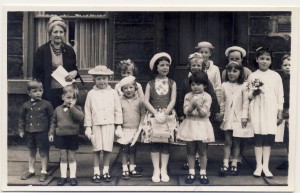
The education chapter emphasises the most the steady expansion of opportunity. At the start of the 19th century the only access any poor children had to education was in local dame schools, informal, paid for on occasional days when there was little farm work to be done, although for some of the individuals a powerful autodidactic drive was evident, and some were assisted by better off neighbours or employers who provided books or paper and pen. As the century progressed, education was gradually institutionalised and extended – Sunday schools, Mechanics’ Institutes, circulating libraries with cheaper subscriptions, and so on. This is the territory explored in Jonathan Rose’s wonderful book, [amazon_link id=”0300098081″ target=”_blank” ]The Intellectual Life of the British Working Classes[/amazon_link], but here told in terms of the impact on the lives of the autobiographers. Interestingly, a number gained status and confidence themselves through teaching – for example, as Sunday School teachers, in these voluntary schools. Griffin writes: “In working class eyes, the position of Sunday School teacher carried status.” This was still true in my childhood in the 1960s and 70s, in a Northern, largely non-conformist, mill town.

My Sunday School teacher, at the back, was a respected figure. Guess which child in this 1960s Whit Sunday church procession is me.

[amazon_link id=”0300151802″ target=”_blank” ]Liberty’s Dawn[/amazon_link] does a real service in reviving the voices of working class people who lived the Industrial Revolution. I’m sure it won’t overturn the traditional dismal account of misery – one can point out for example that people who succeeded to the point of being able to commit a memoir to paper were probably exceptional. But it’s a terrifically interesting read. My one quibble is that the author has a number of academic tics in her writing style, and it could have been an even more approachable book – but that’s to compare it to the wrong counterfactual.

[amazon_image id=”0300151802″ link=”true” target=”_blank” size=”medium” ]Liberty’s Dawn: A People’s History of the Industrial Revolution[/amazon_image]

Shooting star

I’ve spent a very interesting day talking to economists and others in Oxford today, a holiday as far as I’m concerned after a solid stretch of meetings, and revising the draft of my next book. The sun shone, after a few days so bitterly cold that the chill gets into the gaps between your bones. I spotted – for the first time in all the years I’ve been visiting/living there since my big brother was a student in the late 1960s – this chap:

Pan

On the train to and fro I read a short e-book, [amazon_link id=”B00BBJCUUW” target=”_blank” ]Shooting Star: The Brief and Brilliant Life of Frank Ramsey[/amazon_link] by Karl Sabbagh. It’s an absorbing biography of somebody I knew only because his name is attached to optimal taxation theory. He was evidently an extraordinary characted, who led a colourful life on the edge of the Bloomsbury Group, made profound contributions to mathematics and philosophy as well as, en passant, to economics, and translated Wittgenstein – correcting errors – in his spare time as an undergraduate student. He died at only 26, perhaps due to medical error.

The most telling paragraph describes his first two published papers:

“With ‘Universals’ and ‘The Foundations of Mathematics’, Ramsey had established a pattern of reasonably short, down-to-earth, clearly-written papers which said something fundamentally new. He had written only 16 such papers by the time he died, and each had ideas that were to resonate for the next 80 years.”

Only?!

If you know nothing much about Ramsey either, this book is well worth taking on a train or plane ride.

[amazon_image id=”B00BBJCUUW” link=”true” target=”_blank” size=”medium” ]Shooting Star (Kindle Single)[/amazon_image]

Austerity and the barbarian horde

Here’s a book that does what it says on the cover: [amazon_link id=”019982830X” target=”_blank” ]Austerity: The History of A Dangerous Idea[/amazon_link] by Mark Blyth.

[amazon_image id=”019982830X” link=”true” target=”_blank” size=”medium” ]Austerity: The History of a Dangerous Idea[/amazon_image]

Actually, the first few chapters start with the ‘dangerous idea’ part, with the author’s arguments about why austerity (ie. cutting the government’s budget deficits to reduce the level of its debt) is a bad thing in general, and a particularly bad thing when everyone tries to do so at the same time. This part will be somewhat familiar to readers of Paul Krugman’s blog, or Jonathan Portes on this side of the Atlantic. It overlooks some points I think are important – for example, glossing over the way tax increases and spending cuts will have different distributional implications; or ignoring the effects of inflation on real wages for low earners to focus on the redistribution from savers to borrowers. I also don’t agree with his argument about the specific causes of the financial crisis, which he pins on the securitised mortgages and the US repo market, but that’s not the heart of the book. Besides, Blyth is surely right to say morality tales about lazy Greeks and virtuous Germans, and other similar tropes of public debate about the crisis, do not amount to an economic analysis.

The main section is far more interesting, an account of the history of the idea that austerity is a good policy, that reducing the debt burden only requires reduced borrowing and less government. He traces the idea back to the late 17th century and ranges over the continent as well as the US and UK. Although there’s no mistaking this author’s political perspective, there is plenty of interesting material in this section. The book ends by asking whether or not current austerity policies will work. When the IMF has now said not, and a great majority of economists advocate bringing forward necessary infrastructure investment, Blyth’s answer will come as no surprise, albeit expressed more colourfully: “The deployment of austerity as an economic policy has been as effective in bringing us peace, prosperity and crucially a sustained reduction of debt as the Mongol Horde has been in furthering the development of dressage.”

The book will give opponents of the austerity strategy more ammunition, if they want it. I’m not sure it will change the mind of any proponents of the policy, however, given how obvious the conclusion is from page one. But then, as Blyth argues, this is not a rational economic debate. Austerity has a different kind of hold on its advocates.


Turing’s Cathedral, remarkable men and even more remarkable women

I’ve loved this book, [amazon_link id=”014101590X” target=”_blank” ]Turing’s Cathedral: The Origins of the Digital Universe[/amazon_link] by George Dyson. It’s a history of the days when computers were so new and rare that they had names – ENIAC, MANIAC, JOHNNIAC, Baby – and of the early history of the Institute for Advanced Studies at Princeton, and of bits of the career of John Von Neumann and other mathematicians and engineers. It’s the story of the days when the world had 53 kilobytes of random access memory altogether, a significant proportion of them in Princeton, New Jersey.

[amazon_image id=”014101590X” link=”true” target=”_blank” size=”medium” ]Turing’s Cathedral: The Origins of the Digital Universe (Penguin Press Science)[/amazon_image]

It’s also about the relationship between the Second World War, and subsequent military funding for Cold War atomic research, and digital innovation. Military needs so often drive major technological innovations. Part of the story concerns Norbert Wiener and Julian Bigelow, researching how to improve the trajectory of anti-aircraft fire during the war, as London was blitzed. My late mother, as she explains in this video, sat outside the gun emplacements in East London during the Blitz shouting instructions to gunners as they aimed at aircraft overhead – she could have done with the innovation a bit sooner. (It was lovely to have this excuse to watch it again and remember her on UK Mothers’ Day.)

One of the things I love about the story is the sense it gives of the atmosphere of the new research establishment and the personalities, and the way invention rests on both a collection of happenstances and a large number of individuals. Turing’s Cathedral has similarities to some other recent histories of innovation, such as Jenny Uglow’s outstanding [amazon_link id=”0571216102″ target=”_blank” ]The Lunar Men[/amazon_link].

Dyson is very good at describing the people involved, all extraordinary, from John von Neumann down. For example, a paragraph summing up Gödel’s famous incompleteness result (which I sometimes think I understand, if I concentrate hard – after all, I did read Douglas Hofstadter’s [amazon_link id=”0140289208″ target=”_blank” ]Gödel, Escher, Bach[/amazon_link] – twice) is followed by this:

“After retreating to the sanatorium at Purkersdorf, where he was diagnosed with nervous exhaustion, he returned to Princeton in September of 1935, where he fell into an even more severe depression, resigning his position and returning to Austria at the end of November. He readmitted himself to the sanatorium in Rekawinkel, and then recovered sufficiently to spend several weeks with his future wife, Adele Nimbursky (nee Porkert), a Viennese cabaret dancer.”

Whoah! Tell me more about the Viennese cabaret dancer! The IAS website tells me he had met her when he was 21, in the Vienna nightclub ‘The Moth’. It was his second relationship with an unsuitable older woman, to the annoyance of his parents.

I also like Bernetta Miller, an administrator at the IAS in its early days. She was the fifth woman to get a pilot’s licence in the US, received the Croix de Guerre in World War I for assisting the injured Allied troops and visiting the front lines to take cigarettes to the men, and then became bursar of the American School in Istanbul. After the war she settled with her partner Betty Faville, and stood between Albert Einstein and the world until fired by Robert Oppenheimer, who didn’t like her. He goes down in my estimation, I must say. Strong women – like Bernetta Miller and indeed Kathleen Coyle – not only helped win the war, but were vital to the far harder task of building post-war society.

Bernetta Miller

There’s so much more, most of it about the construction of the computers. Do, do read it. I’ve not quite finished yet, but this line from the Introduction sums up the book: “In answering the Entscheidungsproblem [David Hilbert’s ‘Decision problem’], Turing proved that there is no systematic way to tell, by looking at a code, what that code will do. That’s what makes the digital universe so interesting, and that’s what brings us here.” We don’t know where we’re going, but it helps to understand the origins.