
Banking the World

A Guest Review of [amazon_link id=”026201842X” target=”_blank” ]Banking the World: Empirical Foundations of Financial Inclusion[/amazon_link]

By Dave Birch, Consult Hyperion

Singapore has 600 bank branches per 1000 km² of land area whereas Ethiopia has less than one. So does Singapore have lots of banks because it is rich, or is it rich because it has lots of banks? You would think that the former clause explains everything, but it doesn’t and this book deals with that latter clause. Why? Because the availability of private credit leads to economic growth and with no access to private credit and the other financial tools necessary for entrepreneurship, the poor will remain so. To a technologist like me, there is no doubt about what to do. Having a mobile phone increases the chances of being banked, across-the-board, by around 12%. Therein lies optimism. So I know how to connect the excluded. But connect them to what?

Well, there are quite a few ideas in this terrifically interesting and useful collection of chapters – [amazon_link id=”026201842X” target=”_blank” ]Banking the World[/amazon_link], eds Cull, Demirgüç-kunt, Morduch –  written by a variety of experts that will be of interest to anyone working in the field. Do not make the mistake of imagining that this is only for those working in the developing world: I think there are a great many lessons we can draw from the examples here to help us deal with the difficult problem of excluded groups in the developed world right now.

[amazon_image id=”026201842X” link=”true” target=”_blank” size=”medium” ]Banking the World: Empirical Foundations of Financial Inclusion[/amazon_image]

If I were to be pedantic, I might spoilt the neat title by arguing that access to formal financial services is not the same things as being “banked”, which may be why I found the chapter on the role of social capital particularly interesting. I am very curious about the relationship between formal, informal and social institutions as providers of financial services into otherwise excluded groups because the new technology allows a great many possibilities beyond the “standard” bank account. The detailed statistical examination in this chapter distinguishes between the social capital of individuals and the generalised trust in a society and shows how the ability to build up social capital delivers access to both informal and semiformal capital. By contrast, access to formal capital depends more on generalised trust.

In fact the book contains a great many very detailed data tables and statistical analyses (e.g., on mortgage finances in Central and Eastern Europe) as well as high level commentary and these are a great strength. Having the data is vital. To take one example: Detailed longitudinal studies from sub-Saharan Africa dispel a number of myths about the link between financial and social inclusion as well as showing that access to financial services measurably increases income. One myth that I was surprised to see dispelled in this study was that there is a correlation with gender. This turns out not to be the case. We need to reach both men and women.

I have to say that the book made me even more convinced that electronic transaction networks, whether through mobile phones or agent networks or whatever, have a direct impact on the lives of the least well-off. I read, to give one example, that fertiliser use depends on the farmer having savings at the right time. Therefore the financial tools to overcome this problem contribute directly to alleviating hunger. This isn’t theoretical or esoteric work, it’s practical and vital work.

My favourite quote from the book was that “remittances may promote idleness on the part of recipients”. As the father of teenage son, I can attest to this, a phenomenon I have observed in my own home. Now that I have sound empirical foundations for doing so, I will be instituting my own economic revolution, starting this weekend.
What *is* the cost of inequality?

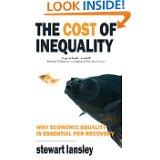
Anybody who is concerned about the gap between top and bottom incomes in our society will enjoy reading Stewart Lansley’s [amazon_link id=”1908096292″ target=”_blank” ]The Cost of Inequality: Why Economic Equality is Essential for Recovery.[/amazon_link] The book does a good job of joining the dots between different pre-crisis trends – the divergence of incomes and the ‘disappearing middle’ in the jobs market, the growing debt burden as people borrowed to consume as well as buy houses, the housing bubble itself, banking deregulation, the worship of shareholder value, mega-bonuses. While little of this is wholly new, it is assembled here in a way that makes it obvious why the pre-crisis economy was unsustainable.

Along the way are some thoroughly attention-grabbing points. For example, I knew that income inequality in the US and UK had returned to close to 1920s or 30s levels. Lansley adds this has occurred: “….despite much more mature democracies and regulated economies.” (p22) He’s quite right to raise the implicit question about how on earth this was able to happen. The book is also strong on the links between the emergence of the global mega-rich and the bubbles in asset markets and dysfunctional financial sector activity, and on the feedback effects between inequality and finance – not least the growth in household debt that Raghuram Rajan put centre stage in [amazon_link id=”0691152632″ target=”_blank” ]Fault Lines[/amazon_link].

[amazon_image id=”0691152632″ link=”true” target=”_blank” size=”medium” ]Fault Lines: How Hidden Fractures Still Threaten the World Economy (New in Paper)[/amazon_image]

I would disagree with Lansley’s assertion (p27) that economic orthodoxy says inequality is essential for growth. Conventional economics says there are two countervailing effects of inequality. To quote myself (ahem) in my Joseph Rowntree Foundation Lecture of last year: “Inequality could imply a large pool of savings to finance investment, entrepreneurship or a tax system that is not too progressive and so does not discourage work effort. These would boost growth. Alternatively, inequality could reduce the incentive of poor people to acquire education, or might increase social and political instability, either of which will reduce growth.”

I was surprised to read that in 1998 there had been a City debate on inequality, with George Cox of LIFFE arguing that rich City workers were good for the economy because of their spending, and Andrew Winckler, former CEO of the Securities and Investment Board, arguing that the City had become “smug and complacent” and that “the current bonus system encourages a degree of speculation that is not warranted and is rewarding failure.” (p78) Winckler was proved right. As the book points out, the original ‘robber barons’ at least built businesses; the current lot speculate and consume. They are rentiers.

The book’s main theme is the deathly, damaging embrace of inequality and finance, and Lansley’s solutions lie in the realm of financial regulation. Without a prosperous middle class, he argues, the economy can not recover. He will surely welcome the EU’s bonus cap, even if bankers are shocked (as the caption on a Banx cartoon had one banker saying to another: “Cap our bonuses? After everything we’ve done for the world?”).

However, I think this book –  although far, far better argued than the famous/notorious [amazon_link id=”0241954290″ target=”_blank” ]The Spirit Level: Why Equality is Better for Everyone[/amazon_link] in terms of establishing causality from inequality to wider economic damage – will also speak mainly to readers who already believe that argument before they start reading. This is partly just style, as it’s written in a colourful, polemical way that’s bound to have the converted cheering in the aisles. But it is also partly that there is a more complicated story. Inequality has many interacting causes; capping bank bonuses alone won’t fix it, welcome and essential as the cap is (even Martin Wolf in the FT says so!)

I’m certain there is also a strong argument to be made about the way high incomes are parlayed into political power which rigs regulation in favour of incumbents; they are then able to block competition and entry, which, over time, reduces the economy’s potential growth. The financial sector plays a central role in this too, through both its own oligopoly power and its encouragement of M&A through the economy, but the power grab extends to other sectors too. I just haven’t seen the argument set out anywhere in exactly this way.

Having said that, [amazon_link id=”1908096292″ target=”_blank” ]The Cost of Inequality[/amazon_link] gives an excellent birds-eye view of the malign consequences of the financial sector-driven, unsustainable increase in inequality, and of the damage that has caused the US and UK economies. The book concludes: “Allowing the fruits of growth to be so unevenly shared is the real cause of this crisis. If the distribution of national income had been maintained at its level of three decades ago, idle surpluses would now be being spent, and we would be well on our way out of this economic deadlock.”

The special relationship?

Laid low by a nasty cough all week, I’ve been paging through Benn Steil’s [amazon_link id=”0691149097″ target=”_blank” ]The Battle of Bretton Woods: John Maynard Keynes, Harry Dexter White and the Making of a New World Order.[/amazon_link] It’s a surprisingly gripping story, pitting the Americans against the British, and the Russians against the Americans. The Communist sympathies of White are fairly well known by now. Although this IMF Working Paper of 2000 (pdf) asserts that there’s some room for doubt, despite the confirmation provided by the [amazon_link id=”0140284877″ target=”_blank” ]Mitrokhin Archive[/amazon_link], by 2013 there is none. White was trying to further Soviet interests as he simultaneously – as this book shows – used the post-war financial architecture to crush any hope of a revival of British economic and geo-political power.

[amazon_image id=”0691149097″ link=”true” target=”_blank” size=”medium” ]The Battle of Bretton Woods: John Maynard Keynes, Harry Dexter White, and the Making of a New World Order[/amazon_image]

The book quotes a 1947 Economist editorial: “Not many people in this country believe the Communist thesis that it is the deliberate and conscious aim of American policy to ruin Britain and everything that Britain stands for in the world, but the evidence can certainly be read that way.” The new dollar-centric financial structures were, Steil shows convincingly, intended to force Britain to keep holding out the begging bowl for international loans. He writes: “The US used its control of the IMF to deny Britain the dollars it needed to counter a run on sterling and blocked its efforts to secure emergency oil supplies.” But where De Gaulle had no hesitation in criticising the Americans, the British clung to the centrality of the ‘special relationship’ – indeed, as we still talk of this in the UK, it would have been surprising if it hadn’t had great force in the late 1940s.

The book ends by asking what the lessons of post-war monetary nationalism, embodied in the framework that survived until 1973, hold for today’s US-China imbalance. I think the counterfactual is just as interesting a question: what would the alternative history have been had Roosevelt not been so keen to weaken the old colonial power, and Harry Dexter White not so eagerly encouraged by his Soviet correspondents to accomplish this? If Keynes had survived longer, or if Britain’s industrial base had not been so thoroughly damaged by the conflict?

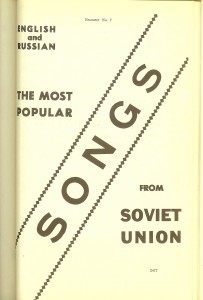
As for White, he almost became head of the IMF, but J Edgar Hoover – getting this one right – called him up before the House Un-American Activities Committee. White died of a heart attack soon after. I have a 1955 volume of the US Senate Judiciary Committee that reprints some of White’s papers, discovered at the summer home of the attorney general of New Hampshire – the volume is part of a study into ‘Interlocking subversion in government departments’. As the picture below suggests, the FBI’s suspicions of White was entirely understandable, even if it took some decades for KGB documents to confirm them.

How Harry Dexter White relaxed?

Here is the FT review of Benn Steil’s book.


Bernanke, banks and bugs

The dreaded flu going around has struck me, so I’ve been paging through a book it’s easy to hold while lying in bed feeling wan. It’s [amazon_link id=”0691158738″ target=”_blank” ]The Federal Reserve and the Financial Crisis[/amazon_link], some lectures given by Ben Bernanke at George Washington University last year.

[amazon_image id=”0691158738″ link=”true” target=”_blank” size=”medium” ]The Federal Reserve and the Financial Crisis[/amazon_image]

I won’t pretend to be alert enough to have absorbed every nuance, but the Fed Chairman’s overall message is clear: of course we might have got some details wrong but we did exactly what it says on the Fed tin in acting as a lender of last resort to the financial system and calming the panic. What’s more, if you look over the long span of history (he being the author of [amazon_link id=”0691118205″ target=”_blank” ]Essays on the Great Depression[/amazon_link]), the loss of output subsequent to the crisis is clear but the US economy will sooner or later get back on its long term growth trend.

[amazon_image id=”0691118205″ link=”true” target=”_blank” size=”medium” ]Essays on the Great Depression[/amazon_image]

No doubt it’s the combined effect of the bugs wreaking havoc on my well-being and the peculiarly horrible medicine I’ve been taking, but I’m much less sure the crisis is fixed. I’m not confident the same kind of crisis could not occur again tomorrow – the banks are still too big, too intertwined, too leveraged with – as Admati and Hellwig point out in their superb new book, [amazon_link id=”0691156840″ target=”_blank” ]The Bankers’ New Clothes[/amazon_link] – far too little equity capital. At any rate, I don’t want to rely entirely on the forces of history. I think the Fed has indeed done a decent job in the face of the imminent 2008 meltdown; but in making the comparison with the Fed’s historical role as lender of last resort, the lectures lack a sense of the really fundamental questions about the present financial system.

[amazon_image id=”0691156840″ link=”true” target=”_blank” size=”medium” ]The Bankers’ New Clothes: What’s Wrong with Banking and What to Do about It[/amazon_image]

Economists as heroes, continued…

I’m very much enjoying reading Jim Lacy’s [amazon_link id=”1591144914″ target=”_blank” ]Keep From All Thoughtful Men: How US Economists Won World War II[/amazon_link]. Although it’s a book written by an obsessive, it appeals to my magpie-like delight in trivia. The first chapter starts with a moan about military historians’ lack of interest in logistics and statistics rather than blood and machines. “After all,” the author writes, “Who really wants to read about how many trains it took to move ammunition to the front in 1916, or about the hay consumption rate of one of Murat’s cavalry divisions?” Me! I do! That’s exactly the kind of thing I want to know!

[amazon_image id=”1591144914″ link=”true” target=”_blank” size=”medium” ]Keep From All Thoughtful Men[/amazon_image]

It’s also possible to divine the plot of a stylish drama set in the Washington and London of 1941 as the Americans debated their strategy toward the European conflict and the potential Pacific threat. There is American statistician Stacy May travelling from London via Dublin back across the Atlantic with a huge 35lb volume containing a comprehensive set of accounts of the US and UK productive capacity at the time: “It was a German spy’s ultimate fantasy: a plump, fortyish, dignified, preoccupied American statistician, all alone and carrying what everyone who knew of its existence considered the most important document in the world.”

There is the debonair Frenchman Jean Monnet, later celebrated (or otherwise, according to taste) as the founding architect of the European Community, arriving in Washington in late 1940, urging the American administration to throw US resources into the war effort. While there he mingled with Washington society, including Phil and Katherine Graham of the Washington Post. He had an affair with Katherine Graham, or so she heavily hints in her superb memoir [amazon_link id=”1842126202″ target=”_blank” ]Personal History[/amazon_link]. She writes of Monnet: “The thrill for me of being with him never disappeared as long as he lived. He was energetic and interesting, and I can testify to his virility.”

[amazon_image id=”0375701044″ link=”true” target=”_blank” size=”medium” ]Personal History: Katharine Graham[/amazon_image]

Surely there’s the equivalent of an Alan Furst novel in these scenes, not [amazon_link id=”0753828987″ target=”_blank” ]Mission to Paris [/amazon_link]but Mission to Washington? All this, and I haven’t yet got to the section about Simon Kuznets and the national accounts. Fabulous.

[amazon_image id=”0753828987″ link=”true” target=”_blank” size=”medium” ]Mission to Paris[/amazon_image]