
How not to do economic forecasts

Every so often I come across a book that should be read by: (a) all economists; (b) all students; (c) everybody involved in politics and policy; and (d) everybody else with an interest in the world. Nate Silver’s [amazon_link id=”0141975652″ target=”_blank” ]The Signal and The Noise: The Art And Science of Prediction[/amazon_link] – which I’ve finally read shamefully long after publication – is one of those books. It should in fact be read by all macroeconomists who publish forecasts at least annually, as a condition of their continuing membership of the profession. If I were teaching, it would emphatically be a required item on the course reading list.

It is a wonderfully clear and engaging explanation of the challenges of making predictions in fields ranging from politics and elections to weather and earthquakes to economics and poker. Apart from a couple of sections on American sports, which might as well have been written in a foreign language, the examples illustrate how to, and how not to, make forecasts. You’ll be wiser for reading it, not to mention able to put Bayesian inference into practice. Silver makes a compelling case for adopting the Bayesian approach, rather than the standard (‘frequentist’) statistics descended from R.A.Fischer and universally taught to economists in their econometrics courses. The emerging new economics curricula should at least include Bayesian statistics in the modules covering empirical methods. As Silver writes:

“Essentially the frequentist approach toward statistics seeks to wash its hands of the reason that predictions most often go wrong: human error. It views uncertainty as something intrinsic to the experiment rather than something intrinsic to our ability to understand the real world.”

In other words, it is not true that collecting more and more data – although usually useful to a forecaster – will eliminate your uncertainty about the real world. The signal-noise problem is epistemologically unavoidable. What’s more the frequentist approach involves assumptions about the distribution of the population; we know about the (in-)validity of the normal curve assumption, and anyway, “What ‘sample population’ was the September 11 attack drawn from?”

The chapter on macroeconomic forecasting is a pretty devastating critique of economists who do that kind of thing. There is a demand for macro forecasts, and I’d rather economists supply them than anybody else. But we shouldn’t pretend they’re going to be accurate. Almost all forecasters, even if they publish standard errors, will give the impression of precision – is growth going to be 0.5% or 0.6%? – but it is inaccurate precision. Silver calculates that over the period 1993-2010, GDP growth fell outside the 90% confidence intervals of macro forecasts for the US economy a third of the time, and a half the time if you look back to 1968.

Macroeconomic data are very noisy, especially early estimates of GDP: in the US the margin of error on the initial quarterly estimate of GDP is plus or minus 4.3%. The initial estimate for the final quarter of 2008 was a decline of 3.8% – later revised to minus 9 per cent. Silver makes the comparison between economic forecasts and weather forecasts, similarly difficult problems. However, weather forecasting has improved over the decades, thanks to a better understanding of the causal links and a greater degree of disaggregation of data, made possible by more powerful computers. Economists have neither the improved understanding – on the contrary, important causal links notably finance were ignored until recently – not seemingly the appetite for better data (as I’ve pointed out before).

The book also makes the point that others (like [amazon_link id=”0465053564″ target=”_blank” ]Paul Ormerod[/amazon_link]) have emphasised, that the economy is a complex non-linear system so there is a lot of unavoidable uncertainty about forecasts more than a short period ahead. It also notes that although we know about the Lucas Critique and Goodhart’s Law – both pointing out that policy affects behaviour – economic forecasters typically ignore it in practice. Silver also underlines the rarely-resisted temptation to overfit the data – and microeconomists are just as guilty as macroeconomists here. The temptation is strong because an over-fitted model will seem to ‘explain’ more than a ‘true’ model when the data are noisy, so the usual tests for good fit will look better. [amazon_link id=”0472050079″ target=”_blank” ]Deirdre McCloskey and Stephen Ziliak[/amazon_link] have been pointing out the siren allure of ‘statistical significance’ for ages – it has almost nothing to do with economic meaning – and perhaps The Signal and the Noise will help broadcast the message further.

Finally, I learned a lot from the book. The chapter on how to approach the question of CO2 emissions and climate change is a model of clear thinking. My favourite new fact: members of Congress – with access to lots of company information via lobbyists and the ability to influence companies’ fortunes by legislation – see a profit on their investments that beats the market averages by 5 to 10 per cent a year, “a remarkable rate that would make even Bernie Madoff blush,” as Silver observes.

Anyway, if you haven’t yet read this, go and do so now. The new UK paperback also has a wonderful cover image!

[amazon_image id=”B0097JYVAU” link=”true” target=”_blank” size=”medium” ]The Signal and the Noise: The Art and Science of Prediction[/amazon_image]

Update: Dan Davies (@dsquareddigest) has gently rebuked me for the paragraph about Bayesian versus frequentist statistics. Via Twitter, he said: “Silver has a really annoying misintepretation of Bayesian vs frequentist which is now becoming commonplace… the paragraph you quote is really confused – NS is a good practical statistician but all over the place on theory & methodology. The (otherwise excellent) book gains nothing from taking a very strong position in someone else’s philosophical debate.” Needlesss to say, I know less than Dan about this debate. This doesn’t change my mind that econ students should be taught the Bayesian approach too, nor the conclusion that the book clearly explains how to do it in practice.
The shadow economy

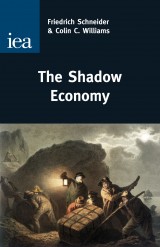
The focus of economic policy is the economy that is counted; little attention is paid to the shadow economy. The reason is partly that it’s obviously hard to direct what’s unmeasured, and partly embarrassment about the very existence of shadow work – policy is supposed to aim at eliminating it. Yet of course it forms a substantial proportion of economic activity, in fact a minimum of around 10% of official GDP (the UK is at 12.5%) and more than half of official GDP in some (mainly poor) economies. Indeed it is so much more prevalent in the developing world that it shades into activity with a different name there, the informal economy.

The measurement of the shadow economy has been almost a one man activity. That man, Friedrich Schneider, has a new book or pamphlet out with co-author Colin Williams, published by the IEA, The Shadow Economy. It sets out his most recent estimates and surveys very usefully the drivers of shadow activity and the possible policies to reduce its size. This publication is a useful summary of Schneider’s longer works on the subject, such as [amazon_link id=”1107034841″ target=”_blank” ]The Shadow Economy: An International Survey.[/amazon_link] It’s good to be reminded about what we don’t have measures of, as well as what we do.

The Shadow Economy

The book, which is short, looks entirely at the legal shadow economy, which is to miss the criminal activities. That’s another story I suppose, the parallel globalization by organised crime, and one that Misha Glenny looks at in his books [amazon_link id=”0099481251″ target=”_blank” ]McMafia[/amazon_link] and [amazon_link id=”0099546558″ target=”_blank” ]Dark Market[/amazon_link].

[amazon_image id=”0099481251″ link=”true” target=”_blank” size=”medium” ]McMafia: Seriously Organised Crime[/amazon_image]

Economists should take far more seriously this phenomenon. It impinges, with horrific results so often, on many people’s lives and is a part of 21st century globalization.

Schneider and Williams concentrate on labour market activities. Still, even with a relatively narrow focus, this is a very useful book for anybody interested in the issue.

Invisible wealth

Rebecca Solnit is one of my favourite writers. Her previous books include [amazon_link id=”1844675580″ target=”_blank” ]Wanderlust[/amazon_link], [amazon_link id=”1841957453″ target=”_blank” ]A Field Guide to Getting Lost[/amazon_link] and [amazon_link id=”0747568413″ target=”_blank” ]Motion Studies [/amazon_link]about Eadweard Muybridge. As this (rather lukewarm) Observer review of her new book, [amazon_link id=”1847085113″ target=”_blank” ]The Faraway Nearby[/amazon_link], notes, she ought to be far better known in the UK. I’ve nearly finished the book, best described as a memoir of illness, I suppose. I particularly liked this:

“Kindness sown among the meek is harvested in crisis, in fairy tales and sometimes in actuality. I know a man who lost a fortune suddenly and was penniless with a legal battle to fight and children to support. He found that he had another kind of wealth in the ties of affection and respect he had built up, wealth he would never otherwise have seen. Lawyers took on his case pro bono, the grocery store extended credit, the schools gave scholarships and he got by on wealth that was invisible before the money dried up.”

It’s what we economists would prosaically label ‘social capital’.

[amazon_image id=”1847085113″ link=”true” target=”_blank” size=”medium” ]The Faraway Nearby[/amazon_image]

Her writing is probably an acquired taste – I can understand why some readers would find it too, well, Californian. If you’ve not tried, though, I’d strongly recommend giving it a go, especially if you like the genre constituted by authors like W.G.Sebald (in [amazon_link id=”1860466095″ target=”_blank” ]The Rings of Saturn[/amazon_link]) and the Iain Sinclair of his John Clare book, [amazon_link id=”0141012757″ target=”_blank” ]Edge of the Orison[/amazon_link].

[amazon_image id=”1860463983″ link=”true” target=”_blank” size=”medium” ]The Rings of Saturn: An English Pilgrimage[/amazon_image]

[amazon_image id=”B002RI9WYS” link=”true” target=”_blank” size=”medium” ]Edge of the Orison: In the Traces of John Clare’s ‘Journey Out of Essex'[/amazon_image]

Economists, spies and imperialists

Many of you will have noticed already that I’m an anorak about economics, and I’ve read a lot of books about economics, not to mention history and politics. So I started Benn Steil’s [amazon_link id=”0691149097″ target=”_blank” ]The Battle of Bretton Woods[/amazon_link] expecting to find a re-telling of a familiar story. In fact, it’s not only full of things I hadn’t already known, but also serves as a great overview of the analytical issues in international monetary arrangements. The book works as a very well-written history, with lively personalities – even though many of them, especially the protagonists John Maynard Keynes and Harry Dexter White, come across as rather unlikeable in their arrogance. It also works as an excellent introduction (for students and others) to the specific history of the era and the general economic principles of the international monetary system.

[amazon_image id=”0691149097″ link=”true” target=”_blank” size=”medium” ]The Battle of Bretton Woods: John Maynard Keynes, Harry Dexter White, and the Making of a New World Order (Council on Foreign Relations Books (Princeton University Press))[/amazon_image]

One prominent sub-plot is, of course, White’s spying for the Soviet Union. He was questioned by J Edgar Hoover’s HUAC, but confirmation of his espionage came late, in the 1990s with the [amazon_link id=”0002570009″ target=”_blank” ]Venona[/amazon_link] and [amazon_link id=”0140284877″ target=”_blank” ]Mitrokhin[/amazon_link] archives. I hadn’t before realised that the FBI had not informed the President of the extent of they evidence they held on White by 1946, in order not to let the spy ring know its cover had been blown. Hence White continued to play such a prominent role in the new World Bank until his death. However, the FBI did ensure he wasn’t appointed as Managing Director of the IMF, as President Truman originally planned, this being the origin of the tradition that a European holds that post.

Nor had I appreciated how badly Keynes went down with the Americans before, during and after the war. Steil makes a strong case that Britain would have done better out of both Lend-Lease and the post-war arrangements if its government had sent somebody else as the British negotiator. Most of the Americans couldn’t abide his intellectual arrogance and smartypants manner. However, nobody in Britain could bring themselves to believe that the Americans didn’t have an innate loyalty to them, whereas the reality was that many on the US side were actively determined to bring about the end of the British Empire and the role of sterling. As this became a reality after the war, Ernest Bevin said plaintively to the US Ambassador, Lew Douglas, surely Britain should not be “lumped in” as if it were “merely another European country?”

The book ends with an interesting Epilogue on China. Although a surplus country, it is not in the same position as America in 1945, as an architect facing a blank page. Chinese officials are also aware – as White was not – of Triffin’s dilemma: the issuer of a reserve currency “cannot pursue different domestic and international objectives at the same time,” as central bank governor Zhou Xiaochuan expressed it. Still, the US-China trade imbalance has brewed monetary trouble and we can’t yet be sure that monetary nationalism won’t be the consequence. How does that old Chinese proverb go?


Look around in anger

It is a little known – and when known, usually ignored – fact that only about 13% of England’s land area is actually developed. (The figure is from Kate Barker’s 2006 report on Land Use Planning in England – summary here, with link to the report). There’s a quiet literature on those areas that are not deep countryside but not urban and developed either. Michael Symmons Roberts and Paul Farley called them [amazon_link id=”0224089021″ target=”_blank” ]Edgelands[/amazon_link] in their book. Richard Mabey also wrote about them in [amazon_link id=”0956254551″ target=”_blank” ]The Unofficial Countryside[/amazon_link].

[amazon_image id=”0224089021″ link=”true” target=”_blank” size=”medium” ]Edgelands: Journeys into England’s True Wilderness[/amazon_image]

[amazon_image id=”0956254551″ link=”true” target=”_blank” size=”medium” ]The Unofficial Countryside[/amazon_image]

Yet the firm impression of England (I’m referring to England, not Britain, specifically) is of a crowded, suburbanised, ugly place. Maybe the reason is the sheer ugliness of so many provincial towns and cities, so many made devastatingly horrible and unwalkable by post-war mis-planning, veneration of the car, rapacious property development using cheap design and cheaper materials. Owen Hatherley’s latest book, [amazon_link id=”1844678571″ target=”_blank” ]A New Kind of Bleak: Journeys Through Urban Britain[/amazon_link], documents the ruining of British towns (Belfast, Edinburgh, Cumbernauld and Aberdeen are included). Even readers who don’t share his ranty left-wing politics will recognise the ugliness he bemoans in his descriptions of towns such as Plymouth, Bristol and Preston. Similarly, he describes the parts of touristy places such as Oxford and Brighton where the tourists don’t go. The story is the same, anti-human (but always pro-car) planning, cheap and shoddy materials, designs that are bland at best.

[amazon_image id=”1781680752″ link=”true” target=”_blank” size=”medium” ]A New Kind of Bleak: Journeys Through Urban Britain[/amazon_image]

Hatherley’s previous book, [amazon_link id=”1844677001″ target=”_blank” ]A Guide to the New Ruins of Great Britain[/amazon_link], had in its sights what he sees as the continuation by the New Labour governments of a veneration for markets and neglect of public space. Aesthetically, he railed against the jolly colours and frippery of so many new buildings of the 2000s. This latest book takes in the long sweep of architecture and town planning since the end of the second world war. The blurb claims the author looks to a hopeful future, but I must say I couldn’t spot these notes of optimism. This is a bleak, angry book.

The thing is, its descriptions of our ugly provincial townscapes, the dreadful quality of so much modern architecture, the horrible conditions in which so many people have to live – not to mention the high prices they pay and shortage of homes – are accurate. The first chapter here is titled: “Thames Gateway: One of the Dark Places of the Earth.” Yep.

Hatherley projects his politics on to what he sees, but anybody can recognise his descriptions of dreary shopping malls, multi-lane highways cutting through town centres, bland blocks of flats or hutch-like houses made of cheap materials. This is what we’ve done to our land in recent decades. So although the ugly sprawl is, by the numbers, not that extensive, it scars our spirit and helps sustain the dream of a lovely and verdant English countryside in the popular imagination.

Hatherley ends with the argument that the Occupy movement, evidently camped outside St Paul’s cathedral when he published this, might augur a new approach to urbanism and planning. That’s obviously sheer romanticism, although it’s true that Occupy might well be one of the more obvious signs of the ending of the generation-long grip of reductionist market philosophy on public policy. There are signs in many domains of a revival of concern for public space. But I’m a boring pragmatist: Kate Barker’s two reports from 2004 and 2006 were full of sensible recommendations, a few of which were acted on. We need her to update us on what to do next.