Epic reading

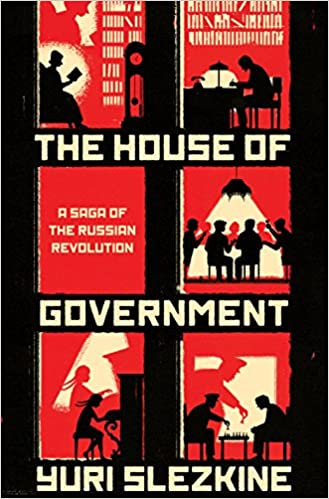
Well. It’s been a slow blogging start to March because I’ve been reading Yuri Slezkine’s 1000-page The House of Government. What an amazing book.

It’s an account of the Russian Revolution and the early years of Lenin and Stalin up to the second world war. The book is unlike anything I’ve read before, and is utterly compelling. It braids together an argument presenting early-Soviet Bolshevism as a millenarian religious sect, the sequence of events that led up to the Terror to a large degree as reflected in literature and literary debates, and the perspective of the families who lived in the House of Government, the huge mansion blocks opposite the Kremlin that housed the nomenklatura. The extent of the sources on which the book is based is simply staggering, from archival records to newspapers to personal letters and photographs, and evidently also many conversations with people who had been children at the time. The fact that throughout many hundreds of pages we have met and seen the wives and children makes the final section – parents arrested in the night and never seen again, young children sent to orphanages after their early years of privilege – incredibly affecting.

The device of using the building as the lens on history is what makes the personal thread so effective, but clearly also means this is – despite its length – an incomplete account of early Soviet history. Indeed, it assumes a lot of background knowledge, which I could more or less dredge up from 1st year comparative politics. Nor do I know what I think about Bolshevism as a sect of true believers: it seems plausible in some ways, but again is unlikely to be the whole story. At least, other forms of Marxism are available.

But you shouldn’t approach The House of Government as you would an ordinary history book, even though the people are real, and their words from letters and diaries are quoted at length. It’s obviously a very personal interpretation. I did end up thinking that along with Svetlana Alexeivich’s Second Hand Time, this book opened an emotional window on the USSR that help understand it current-day Russia: traumatic historical events cast a long shadow. Get ready to read an epic. And to read it with a table or pillow to prop it on.

51EQ6khSn-L._SX327_BO1,204,203,200_


Where *is* the internet?

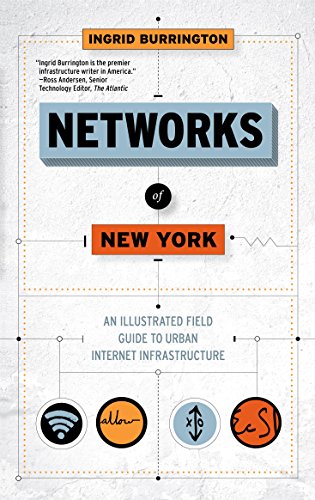
I’m not sure ‘read’ is the right verb for Networks of New York by Ingrid Burrington, but I looked at it this week. It’s a sketchbook of various bits of internet kit from cables below ground to antennae on rooftops, with notes about the physical kit that makes up the system getting people online, and about the ownership of the kit. I’ve been growing  slightly obsessed by how little is known about the physical internet. So far, James Ball’s The System and Andrew Blum’s Tubes are the only entries on my list of books about this. I was pleased to find out about Ingrid Burrington, who has a number of articles on this and related subjects. But if anybody knows of other books or papers about the physical infrastructure of the internet and the ownership of it (especially for the UK) I’d love to know.

51K1ob-y2IL


Railways and culture

The Europeans: Three Lives and the Making of a Cosmopolitan Culture by Orlando Figes is a history of the emergence of a common European culture in music, art and literature in the late 19th century, told mainly through a narrative about three people: leadingopera singer Pauline Viardot (no, me neither), her husband, manager and also expert on Spanish art and music Louis Viardot, and the Russian novelist Ivan Turgenev, who ended up in a menage a trois with the Viardots.

For me, though, rather than this domestic drama, the main attractions were the railways, the publishing techniques and business models, the intellectual property debates, the great exhibitions. All the splendid artistic creations rested on these physical and institutional structures. Some artists and novelists learned to market themselves effectively to ensure commercial success – Zola was one for example, while poor Turgenev was far less worldly. The book even tells of a 19th century superstar economics effect, driven by technology on the supply side and the emergence of mass demand on the demand side, Sherwin Rosen avant la lettre. The Franco-Prussian war started to break the shared culture, and of course the first half of the 20th century torpedoed it. The book is a cracking read.

51VeT22XOHL._SX324_BO1,204,203,200_

Big conversations

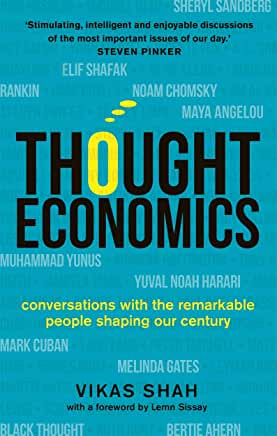
I met Vikas Shah when I was working at the University of Manchester (where he is an honorary prof in the business school) and among his many impressive characteristics was that in his spare time from being an entrepreneur and suporting voluntary organisations and engaging with the university, he had a website, Thought Economics, where he posted interviews he conducted with a huge range of people. What’s more, the interviews were always very thoughtful: he brought out the best in the many people he talked to. The list includes novelists (eg Elif Shafak), business people (eg Steve Ballmer), academics (eg Noam Chomsky), astronauts (Chris Hadfield), philanthropists (eg Melinda Gates), politicians (eg F W de Klerk) sportspeople, poets…. an amazing cast list. I was so impressed that Vikas had just started doing this out of interest simply by emailing people to ask if they’d take part.

Now he has brought out a book, Thought Economics, which pulls out themes from the interviews, such as identity, injustice, democracy, leadership. Each is divided into several questions posed to a number of respondents, such as ‘How does adversity shape who we are’, or ‘Are leaders born, not made?’ It’s a really interesting read, focused on the ideas not the personality, and giving the selected answers space to breathe. I commend the website – Nitin Sawhney and Nicola De Benedetti are recent interviewees, for instance – but the book is a great way of catching up with previous interviews.

61LqPnImlzL._AC_UY436_QL65_

Experts and values

What is the scientific method? How does science advance? Why did modern science emerge when it did about 300 years ago? Will it continue? All questions addressed by Michael Strevens’ interesting and enjoyable The Knowledge Machine: How an Unreasonable Idea Created Modern Science.

The book begins by setting out two competing theories about the scientific method: Popper’s claim that scientific knowledge progresses through falsfication of hypotheses and Kuhn’s even more famous claim that it occurs through revolutionary changes in paradigm. These are incompatible explanations – if falsfication happened, how could scientists hold on to an incorrect paradigm – and both wrong, the book argues. The falsfication hypothesis not states that ‘facts’ are only tentatively true, always vulnerable to falsification – so we can be no more confident that the sun will rise today (Hume’s induction problem) than that a human born today will live forever. The paradigm revolution hypothesis seems to rule out progress or at least doesn’t account for why the scientific community jumps from one paradigm to another with better predictive power. Strevens is even more critical, though, of the radical subjectivists who argue that there is no scientific method, that science is fundamentally all about the status of scientists, how they exercise power within the scientific institutions so that certain ideas come to dominate.

It is not that scientists are not subjective, he says; of course they have personal priors in evaluating evidence. However, the key point is that in the official public discourse in scientific publications and seminars is that there is an iron rule: only empirical evidence with predictive power counts. The evidence will often be microscopic or concern minute differences in measurement: much scientific endeavour is super-dull, detailed collection of measurement. Scientists have to be trained to have a high tolerance for this painstaking work, because it is the only way progress happens – much as in their private lives they are fascinated by the big philosophical theories or the beauty of the universe. In scientific debate, “Victory does not come through smooth rhetoric, metaphysical inquiry, moralizing, or any other sort of sweet talking or big thinking. To win, players must front up with meticulous observations.” The subjectivists, the book argues, overlook this actual scientific method – which was cemented as the way to do science by Newton.

Is this immensely successful scientific method secure? The book ends with a section on the need to retrain every genertion of scientists in this approach – dull meticulousness in disciplinary debate whatever their private philosophical flights of fancy. And on the need to sustain the institution of modern science in the face of the challenges facing humanity today, from covid to climate.

It’s a very enjoyable book, with plenty of stories of science past and present. The argument certainly persuaded me. Economics differs substantially in that the social processes we investigate do not generate data in the same way as physical or biological ones, but the ideal method is the same: of course we bring our own values to evaluating evidence but it is the evidence that wins the official disciplinary debate. We cannot ultimately be objective and impartial but we can and should set objectivity as the standard for evaluating claims. So I recognised the book’s description of the iron rule as the way researchers (try to) operate. And similarly, I reject the subjectivism of those who say economics should be pluralistic – can only be so – because there is no way of testing claims against each other.

419TbK7hZPL._SX323_BO1,204,203,200_My other reading this week has been Behold, America by Sarah Churchwell. Having been comforted by the arrival or President Biden, the book got me worried all over again about the long and strong roots of American fascism – shocking and startling photos of the swastika flying in Madison Square garden rallies. The book analyses the histories of the slogans America First and the American Dream – tracing the more-or-less constancy of the first (white supremacy) and the evolution of the second (from an evocation of equality and civic participation to a claim about material prosperity) through newspapers and other records. Along with this evidence about the persistence of populism, perhaps we should stay worried.

81Hii7xqlpL._AC_UY436_QL65_