
Capital!

London has had a capital summer. Not the weather, of course (4th wettest since 1752, according to my Twitter stream). Rather, the Olympics and Paralympics – the confident, cosmopolitan, clever and witty presentation of ourselves to ourselves in the opening ceremonies (both Olympics and Paralympics), and the truly extraordinary mood of good cheer on the streets. Plus the fact that, to our surprise, we turned out to be good at the organising and good at the sport.

So when I had to go on holiday for two weeks, I took with me John Lanchester’s [amazon_link id=”B0071LQMMG” target=”_blank” ]Capital[/amazon_link], the London novel of the financial crisis, and Craig Taylor’s [amazon_link id=”1847083293″ target=”_blank” ]Londoners[/amazon_link], a collection of interviews with a wide range of people. Both were excellent holiday reads.

Lanchester wrote one of the best non-fiction books about the crisis, in [amazon_link id=”014104571X” target=”_blank” ]Whoops![/amazon_link] He couldn’t have chosen a better title for his novel, shared of course with [amazon_link id=”0199535701″ target=”_blank” ]Karl Marx’s great work[/amazon_link]. The novel features the inhabitants of a gentrified South London street, Pepys Road, ranging from a dying old woman who has lived there for decades to an obnoxious banker and his spend, spend, spend wife, and including the Pakistani family running the corner shop and an African traffic warden working illegally. They start to receive postcards then videos and website links with the ominous message ‘We want what you have.’ The people and situations are instantly recognisable to any Londoners. The novel captures exactly the flavour of many aspects of life in the capital. However, for me it suffers from having characters who stand for types, and not very likeable ones at that. It was a pacy read without engaging my sympathy for anyone whose life it describes.

[amazon_image id=”B0071LQMMG” link=”true” target=”_blank” size=”medium” ]Capital[/amazon_image]

Craig Taylor’s interviewees do exactly the opposite. One can tell that they are real people with real flaws, but Taylor’s interest and empathy in them makes them interesting and attractive to us. What’s more, real people, unlike fictional characters, are surprising and inconsistent. The City trader featured in [amazon_link id=”1847083293″ target=”_blank” ]Londoners[/amazon_link] is a Pakistani immigrant, self-taught, who spent many years working in a fast-food restaurant. There’s a black female plumber who used to dance in musicals. A (white, Oxbridge) English teacher who is fiercely proud of her street-wise comprehensive girls who wipe the floor with posh public schoolboys in a debating contest: “Apart from getting your phone stolen every twelve weeks, this is the best job ever.” The antique clock restorer. The retired Guardsman. The airline pilot. And the crematorium technician who sums it up: “Londoners are weird.”

[amazon_image id=”1847083293″ link=”true” target=”_blank” size=”medium” ]Londoners: The Days and Nights of London Now – as Told by Those Who Love it, Hate it, Live it, Left it and Long for it[/amazon_image]

Well of course, the older you get, the more you realise that everyone is weird. But this summer, we know how brilliantly London does weird and we are well proud of it. I enjoyed reading about us in these two books.
Magic bullets, war and peace, and defeating metaphors

The books I chose for my recent holiday turned out to be uniformly excellent, which doesn’t always happen. Another cracker was Siddartha Mukherjee’s [amazon_link id=”0007250924″ target=”_blank” ]The Emperor of All Maladies: A Biography of Cancer[/amazon_link]. Although detailed and authoritative on the medicine and science, and quite a chunky book, it reads like a thriller and is packed with fascinating stuff.

[amazon_image id=”0007250924″ link=”true” target=”_blank” size=”medium” ]The Emperor of All Maladies[/amazon_image]

One of the most interesting strands concerns the importance of randomized control trials in testing both causes of different cancers and potential treatments for it. Medical trials are expensive, fraught with ethical dilemmas, and slooooow. But failure to carry them out can maim and kill. For many years women underwent massively radical mastectomies that made no beneficial difference to their health and mortality. The surgeons were carried along on the crest of their own certainty and self-esteem. (In fact, the disconnect between cancer researchers and surgeons who treat patients is another interesting theme.) The Doll and Hill test of the link from smoking to lung cancer was so decisive because it assigned subjects to trial groups randomly, before they had developed the disease.

However, as Mukherjee notes, the campaigning by activists for people with HIV and AIDS to receive new drugs and combinations of drugs before trials had been completed – on the entirely understandable grounds that the patients were dying and so anything, even anything unproven, was worth trying – changed the environment for rigorous trials. We see this all the time now with new cancer drugs. Desperate patients learn very quickly from online forums that an experimental treatment is available, and each of them faces the choice between certain early death and a whisper of uncertainty. See this recent example described in The Guardian – although the article doesn’t state whether the pioneering treatment available in the US has actually been trialled there either).

Thank goodness the stakes in economic policy, increasingly looking at the methodology of randomized control trials, are not so high. I think Mukherjee makes a strong case for sticking with the methodology, and resisting the activism, although it would make sense to ask whether formal trials need to take so long or cost so much. After all, apart from slowing down results, they form a massive barrier to entry in the pharmaceuticals industry.

I could pick out lots of other terrific sections. The book describes Vannevar Bush’s view of research at the wartime Office of Scientific Research and Development – namely, that the government had to fund research directly serving the needs of war. Programmatic research was a much higher priority than basic research. And also his change of mind as soon as the war was over, writing to the President in 1945: “The striking advances in medicine during the war have been possible only because we had a large backlog of scientific data accumulated through basic research in many scientific fields in the years before the war.”

What else? The heterogeneity of cancers. The fact that humans and cancer are in an arms race because tumours develop resistance, and that a “war on cancer” is, like all metaphorical wars, unlikely to be won. That as early as 1910 a researcher (a Paul Ehrlich, although not that one) declared (wrongly) that he had found a ‘magic bullet’, a metaphorical weapon in the metaphorical war. A highly recommended book.

PS I’d no sooner posted this than I found this THES review of two new books on the tobacco industry’s (ab)use of areas of scientific doubt.

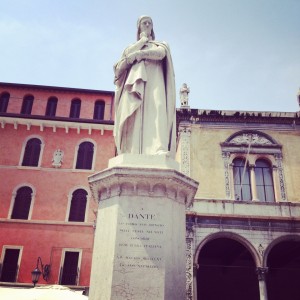
More Inferno than Paradiso

Bill Emmott’s new book [amazon_link id=”B008F86HBK” target=”_blank” ]Good Italy, Bad Italy: Why Italy Must Conquer Its Demons to Face the Future[/amazon_link] is a depressing read, and I’m not Italian. But I do appreciate better now why there are so many terrific Italian economists and other professionals working in London. One of my Italian friends, now well into what he intends to be a lifetime career in the UK, last night confirmed to me one of the claims in the book: appointment to jobs in Italy depends wholly on personal connections. Merit counts for nothing. While there are some good universities, most are poor quality because there is no return to having a good degree. Mediocrity and opportunism abound, not only in the south. Not only is the illegal economy worth 20-25% of GDP, there is widespread acceptance of “what needs to be paid, to whom and for what, almost as if a catalogue or guidebook had been drawn up.” (p47)

[amazon_image id=”B008F86HBK” link=”true” target=”_blank” size=”medium” ]Good Italy, Bad Italy[/amazon_image]

Emmott cites some terrifying figures. At a Fiat plant near Naples – one with reformed working practices despite the opposition of the national unions – 5,200 employees produced 36,000 cars in 2009, whereas 6,100 employees in Poland produce 600,000 cars a year, and 9,400 workers in Fiat’s Brazilian plant produce 730,000 cars a year. Not surprisingly, hearing about productivity under-performance on that operatic scale, Italy ranked 167th out of 179 countries in its average annual change in GDP per capita from 2001-2010, declining by almost half a percent a year. There was a worse performance only from countries like Haiti and Zimbabwe.

There’s a bit of a puzzle in this – anybody who travels to Italy will appreciate the quality of life and the affluence of at least the parts a tourist or business visitor sees. Last month I was in Trento, right in the north, where local government clearly functions well, civic life is vibrant, the people are affluent and the food is outstanding. The answer to the puzzle seems to lie partly in the high level of savings of older Italians, which they are now being forced to spend supporting the younger generation.

The book looks for specifically Italian reasons for slow growth and dismal productivity. Emmott argues that adverse demographic change and the financial crisis have been affecting many countries. Although true, this underplays Italy’s unusually rapid population ageing and shrinking – the central UN (‘medium fertility) estimate has the population 25% smaller than in 2000 by 2050. But there are plenty of special factors. Among them, as well as the clientilism described above, labour laws that discourage any business from hiring more than a handful of employees, a catastrophically slow judicial system, and the pervasive presence of organised crime.

I would have called this book, Bad Italy, Bad Italy. It is a business version of [amazon_link id=”057123593X” target=”_blank” ]The Dark Heart of Italy[/amazon_link] by Tobias Jones. Emmott tries valiantly to be positive, describing the achievements of the municipality of Turin in encouraging business, the Slow Food movement, and the brave Addiopizzo movement to resist extortion by the criminal enterprises that have carved up the country. But each anecdote – say, about a plucky little manufacturing firm managing to lead the world in some niche product even though the owner has had to have a carabiniere escort for refusing to pay protection money – only highlights the wider economic and cultural catastrophe. When NATO forces invaded Afghanistan, I heard a commentator on the radio say: “You’ve heard of state-sponsored terrorism, but this is a terrorist-sponsored state.” To read the courageous Roberto Saviano’s first book [amazon_link id=”0330450999″ target=”_blank” ]Gomorrah[/amazon_link] or his new book of essays, [amazon_link id=”0857050109″ target=”_blank” ]Beauty and the Inferno[/amazon_link], is to understand the the description could be applied to Italy without much exaggeration.

Bill Emmott’s book is a compelling read, a tour of Italy’s economic and business landscape by a thoroughly knowledgeable Virgil. He concludes that under Mario Monti’s technocratic government, trying to implement reforms, Italy’s future lies in the balance, in Purgatorio if you like. At the risk of offending Italian readers, by the time I got to the end, I thought that was far too optimistic a conclusion.

More Inferno than Paradiso