
Robots, floods and the Kobayashi Maru

The discussion at the core of [amazon_link id=”0393239357″ target=”_blank” ]The Second Machine Age: Work, Progress and Prosperity in a Time of Brilliant Technologies [/amazon_link]by Erik Brynjlofsson and Andrew McAfee is whether or not the benefits of the current wave of digital and digitally-enabled technologies will outweigh the costs – or not.

[amazon_image id=”0393239357″ link=”true” target=”_blank” size=”medium” ]The Second Machine Age: Work, Progress, and Prosperity in a Time of Brilliant Technologies[/amazon_image]

The book has three parts. The first describes digital technology, explains why it is only now that its consequences are becoming dramatic, and describes some of the impending technological advances. There is a useful survey of (mainly) robotics and AI advances, and a very clear explanation of ‘why now’ when computers and the Internet and even the web have now been around quite a while. The timing is partly due to the nature of exponential doubling. Moore’s law says computing power roughly doubles roughly every two years. If you start with one grain of rice on one square of a chess board and double it for every successive square, it isn’t until the second half of the chess board that the number of grains soars to an incomprehensible degree. It is also due to the need for organisational and infrastructure investments alongside technology investment. This section draws on the work of economic historian Paul David as well as Brynjolfsson’s own excellent work on how firms use the technology to increase productivity, by reshaping processes and work. In short, human institutions move far more slowly than technology progresses.

The second part of the book divides the consequences of technology into two types, which the authors call bounty and spread. Bounty is the potential for human progress, the almost science-fiction fruits of technology that are just starting to emerge in fields from medicine to driverless cars. By ‘spread’ they mean inequality or dispersion of outcomes. (I found this a counter-productive term as ‘spread’ to me carries the automatic word association of ‘evenly’, as in a million recipes I’ve used over the years: ‘Spread the icing evenly over the top of the cake.’) This section of the book has attracted much attention in reviews and articles. It discusses the well-known underlying economics – skill-biased technical change, Sherwin Rosen’s ‘superstar’ effect, and winner-take-all dynamics when there are high fixed costs and increasing returns.

There is an inevitable tension between progress for many humans and costs for a few humans. For example, IBM is getting its Watson computer to absorb all the world’s published medical information and use it to diagnose and recommend treatments. It would apparently take a human 160 hours of reading time every week just to keep up with the literature. The computer will produce far, far better patient outcomes. But what will happen to doctors’ careers? This is just one of many examples underlining the current angst about the ‘race’ between humans and robots. This is of course also the theme of Tyler Cowen’s excellent recent book, [amazon_link id=”0525953736″ target=”_blank” ]Average Is Over[/amazon_link].

The Second Machine Age has a chapter on measurement about which I want to get a bit picky, having just published my own book [amazon_link id=”0691156794″ target=”_blank” ]GDP: A Brief But Affectionate History[/amazon_link]. Brynjolfsson and McAfee rightly point out that GDP does not measure adequately the welfare benefits of innovation, and specifically the digital goods freely available. After all, if there’s no price, it isn’t part of economic activity at market prices. But they are unclear about the distinction between GDP and consumer surplus, the latter never having been measured. For example, to cite a Tim O’Reilly example, if you dry your clothes in a dryer, you’re contributing to GDP and if you hang them on the line in the sunshine (remember that?), you’re not. It is probably true that the wedge between GDP and consumer welfare has been increased significantly. The authors are also astonishingly uncritical of alternatives to GDP, even describing Bhutan’s cynical PR effort to emphasise Gross National Happiness in place of GDP as ‘promising’.

The third section of the book turns to policies that might minimise the costs of ‘spread’ while retaining the ‘bounty’. The recommendations could be summed up as more and better education, to ensure that humans and robots are complements rather than substitutes, and a minimum income or – better in their view – a negative income tax.

These are obviously valid and interesting suggestions. Do they really address the massive technology-driven structural change described in the first two thirds of the book? As so often, my mind turned to the Star Trek Kobayashi Maru example – a Star Fleet training exercise designed to test the character of a trainee captain in a situation where failure and death are inevitable. But Kirk reprograms the test in order to save the crew. This is where we’re at. We need to reprogram society’s institutions. To use a more topical metaphor, if it rains torrentially for two months, there’s going to be flood water – but the damage it does will depend on the landscape it washes over, the kinds of structures that have been built, river-management institutions.

As [amazon_link id=”0393239357″ target=”_blank” ]The Second Machine Age[/amazon_link] makes clear, rising inequality has occurred everywhere. It is indeed driven by the tidal waves of technology and globalisation. But these are interacting with economic and social institutions. Policy prescriptions will need to look at the minimum wage; at the ownership of assets especially the intangible kind – what are the intellectual property rights in a drug that has been tested on thousands of humans and draws on taxpayer-funded basic research?; at public service provision and the tax base to pay for it; and so on. The institutional revolution that meant the Industrial Revolution ultimately benefited everyone is little-studied ((Douglas Allen’s [amazon_link id=”0226014746″ target=”_blank” ]The institutional Revolution[/amazon_link] is an exception) but just as important.

Anybody interested in these questions will want to read [amazon_link id=”0393239357″ target=”_blank” ]The Second Machine Age[/amazon_link]. I wholly agree with the conclusion: “We need to think much more deeply about what it is we really want and what we value, both as individuals and as a society. Our generation has inherited more opportunities to transform the world than any other. That’s a cause for optimism but only if we’re mindful of our choices. Technology is not destiny. We shape our destiny.”
Dostoyevsky and the utilitarian calculus

I’ve just finished Robert Harris’s brilliant novel about the Dreyfus Affair, [amazon_link id=”0091944554″ target=”_blank” ]An Officer and A Spy.[/amazon_link]

[amazon_image id=”0091944554″ link=”true” target=”_blank” size=”medium” ]An Officer and a Spy[/amazon_image]

His hero, Colonel Picquart, quotes Dostoyevsky’s [amazon_link id=”048627053X” target=”_blank” ]Notes from Underground[/amazon_link], a quotation that sent me scurrying to the book.

“And why are you so firmly, so triumphantly, convinced that only the normal and the positive–in other words, only what is conducive to welfare–is for the advantage of man? Is not reason in error as regards advantage? Does not man, perhaps, love something besides well-being? Perhaps he is just as fond of suffering? Perhaps suffering is just as great a benefit to him as well-being? Man is sometimes extraordinarily, passionately, in love with suffering, and that is a fact. There is no need to appeal to universal history to prove that; only ask yourself, if you are a man and have lived at all. As far as my personal opinion is concerned, to care only for well-being seems to me positively ill-bred. Whether it’s good or bad, it is sometimes very pleasant, too, to smash things. I hold no brief for suffering nor for well-being either. I am standing for … my caprice, and for its being guaranteed to me when necessary.”

[amazon_image id=”048627053X” link=”true” target=”_blank” size=”medium” ]Notes from the Underground (Dover Thrift)[/amazon_image]

Indeed, the whole book is a spirited rant against rational economic man, and the ‘palace of crystal’ constructed by scientific rationalism. I don’t agree, but equally counting utils isn’t the answer to everything.

It’s outside the remit of this blog, but if you want a cracking page turner of a novel that is also illuminating about modern European history and some current issues about surveillance, I can’t recommend the Robert Harris book too highly. Fabulous.

Would Keynes see Fox News as progress?

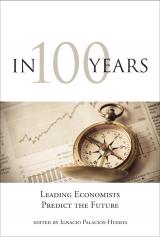
The economics profession has a less than stellar reputation for its forecasting ability, so asking some economists to make predictions for a hundred years from now is a bold move. Yet that’s what Ignacio Palacios-Huerta did for[amazon_link id=”0262026910″ target=”_blank” ] In 100 Years: Leading Economists Predict the Future.[/amazon_link]

One of the inspirations that led him to invite mainly US-based, highly eminent economists such as Daron Acemoglu, Robert Shiller and Robert Solow to think so far ahead was the famous 1930 Keynes Essay, [amazon_link id=”B00HRDZL5C” target=”_blank” ]Economic Possibilities for our Grandchildren[/amazon_link], and it is a starting point for several of the contributions. So, not surprisingly, a common theme is the likelihood of continuing technology-driven improvements in living standards, health and longevity in the long term – despite the clear short-term challenges. But another common theme to many of the essays is one not on Keynes’s horizon, namely the unknown but potentially catastrophic risks posed by climate change. I think many people who dismiss economics as not taking environmental issues seriously might be surprised about how many of these contributors address the question.

Overall, the tone of the essays is generally positive – Andreu Mas-Collel argues that economics should be called, not the ‘dismal science’ but the ‘cautiously optimistic science’. However, none of the economists ignores the reasons for pessimism. Apart from climate change and environmental pressures, they differ more in their pessimism than in their optimism. Daron Acemoglu focuses on ‘counter-Enlightenment’ fundamentalisms or other anti-modernist movements as a political force that will run counter to continuing progress.

In the most interesting essay in the book Ed Glaeser – an economist who has always worked creatively in the areas where economics borders the other social sciences – raises the possibility of social fragmentation in what he calls the ‘self-protection’ society. In addition to the fragilities that come with global interconnectedness – pandemics, terrorism and so on – he writes: “One recurring fear is that this prosperity will produce a self-protective society, more interested in keeping what it has than in creating change. Human kind has become wealthier precisely because we have taken risks.”

He also in this essay brings us the eye-opening fact that on average Americans spend almost as much time watching TV (2.83 hours a day) as working (3.2 hours a day) – as he comments wryly: “It seems quite possible that the recent technological change that has created the most benefit is the proliferation of cable channels.” Whether this is progress or not is another question. What would Keynes have made of Fox News or HBO?

History retweeting itself

Tom Standage’s latest book, [amazon_link id=”1408842068″ target=”_blank” ]Writing on the Wall: Social Media – the first 2000 years[/amazon_link], has kept me going through a week of travel and meetings. As you’d expect from such a consistently interesting and good writer, it’s a fabulous book. It combines storytelling with the point (similar to that in his equally terrific [amazon_link id=”162040592X” target=”_blank” ]The Victorian Internet[/amazon_link]) that there are some constant themes in the impact of communications technologies through the ages. Here, the point is that all media are social media: they are all means of communication, the defining feature of human societies. It’s what we do. What’s more, the characteristics of different media are complementary, and introducing a new means of communication will certainly change how the older methods are used but will not displace them.

[amazon_image id=”1408842068″ link=”true” target=”_blank” size=”medium” ]Writing on the Wall: Social Media – The First 2,000 Years[/amazon_image]

Writing on the Wall draws parallels (in a suitably subtle way) between innovations of the past and today’s social media – for example, English Civil War pamphleteering and blogging, or London’s 18th century coffee houses and Twitter. The examples range from Republican Rome to pre-Revolutionary France, Martin Luther and the printing press, and the dawn of modern mass media in 19th century newspapers. In every case, the innovation was enthusiastically used by the many, and condemned as a vehicle for dangerous – blasphemous, uncivilized, destabilizing – by the powerful few. Each technological innovation did disrupt existing political structures, the book suggests.

Some of the less well-known examples (to an English reader) are especially interesting. I liked the example of disrespectful songs about Louis XV circulating in late 18th century Paris – Robert Darnton’s terrific book [amazon_link id=”0674066049″ target=”_blank” ]Poetry and the Police: Communication Networks in 18th Century Paris[/amazon_link] covers this episode. People wrote rhymes on slips of paper they could hand out in the coffee house or leave lying around in the park. The ‘nodes’ of these networks were known as ‘nouvellistes’. The reason these handwritten slips circulated was because the French authorities restricted printing so tightly – they were the Chinese censors of their day. It’s interesting to see that French journalism is still rather respectful of authority. I attended a Franco-British conference last week, and our French counterparts assured us that ‘everyone’ had known about President Hollande’s affair (by word of mouth) for months – impossible to imagine that happening in British journalism.

[amazon_image id=”0674066049″ link=”true” target=”_blank” size=”medium” ]Poetry and the Police[/amazon_image]

Newspapers played an important role in the American colonies, in paving the way for the war of independence. Although also controlled by the British authorities, publishers successfully resisted the strictest measures, and papers circulated alongside letters in written correspondence. Tom Paine’s catalytic pamphlet [amazon_link id=”1448657113″ target=”_blank” ]Common Sense[/amazon_link] was serialized in many papers.

I loved the title of the Epilogue – ‘History Retweets Itself’. It argues that ‘old’ mass media were an anomaly, and prior to their emergence in the mid-19th century social media networks were the means of sharing information and ideas. There are some interesting thoughts on the future of ‘new’ social media – will they stay in their proprietary silos or not? The book concludes: “The rebirth of social media in the Internet age represents a profound shift – and a return, in many respects, to the way things used to be.


Pursuits, grand and lesser

Sylvia Nasar’s [amazon_link id=”1841154563″ target=”_blank” ]Grand Pursuit: The Story of the People who Made Modern Economics[/amazon_link] was published in 2011, but I only picked up the paperback in the holidays and have just finished. It’s a rattling good read, as you would expect from the author of [amazon_link id=”0571212921″ target=”_blank” ]A Beautiful Mind[/amazon_link], and also very thoroughly researched. But I was disappointed, perhaps due to overly-high expectations. Some of the chapters are simply excellent, but the book doesn’t add up quite to the sum of its parts.

[amazon_image id=”1841154563″ link=”true” target=”_blank” size=”medium” ]Grand Pursuit: The Story of the People Who Made Modern Economics: A Story of Economic Genius[/amazon_image]

I did pick up lots of delightful new facts, always a pleasure to my magpie mind:

– Alfred Marshall was a feminist, to the extent that he financed an essay competition for female students and contributed a significant sum of £60 to the construction of Newnham, one of the first women’s colleges in Cambridge;

– Beatrice Webb influenced Winston Churchill to say at one stage (1906): “I should like to see the State embark on various novel and adventuresome experiments,” and went on to advocate nationalisation of the railways, a job guarantee and a minimum standard of living;

– a visit to a Carnegie Steel plant persuaded Beatrice Webb that technology would replace human labour;

– Keynes did not like the Webbs, especially in their pro-Soviet phase. On being asked to contribute an essay celebrating Beatrice’s 80th birthday, he said: “The only sentence that came to my mind spontaneously was that, ‘Mrs Webb, not being a Soviet politician, has managed to survive to the age of 80.'”

– Joan Robinson does not emerge as a likeable character either, but this comment of hers is amusing: “We cannot be recommended to overthrow anything merely because economists have talked nonsense about it.”

– the number of economists working in Washington rose from 100 in 1930 to 5,000 in 1938;

– Isaiah Berlin was in the British Embassy in Washington during World War 2, writing dispatches on the various activities of Keynes, on the one hand, and Milton Friedman, on the other. One of Friedman’s policy innovations was introducing the withholding of income tax at source by employers. It was, wrote home Berlin, “A tax bill of unprecedented dimensions.”

There is a lot of interesting material here. I think the problem for me is that it doesn’t hang together to tell the story of modern economics as promised. This is partly due to the selection of characters: was it really for reasons of gender balance that Beatrice Webb and Joan Robinson feature so prominently? But the others are obvious – Marx, Marshall, Hayek and Schumpeter, Keynes and Samuelson. I think Mill and other Victorians are a big omission – the book leaps straight to Marshall.

There is also so much good storytelling about the individuals that the big picture on the ideas front is lost in detail. It never quite emerges as either a linear history of thought or a clash of ideas (which [amazon_link id=”0393343634″ target=”_blank” ]Keynes-Hayek: The Clash That Defined Modern Economics [/amazon_link]did very effectively). Nor do you get the sense of a whole intellectual milieu, as in the brilliant [amazon_link id=”0571216102″ target=”_blank” ]The Lunar Men[/amazon_link] by Jenny Uglow (one of my all-time favourite books); the individuals are too prominent. Nasar has much more on the historical context of the ideas than does Heilbroner’s [amazon_link id=”0140290060″ target=”_blank” ]Worldly Philosophers[/amazon_link] but the links between the personal experiences of her subjects and their work don’t quite come off.

This is picky because it’s a good read and would be informative for students or newcomers to the history of economics. Looking back at a few reviews, it was obviously very well received when first published. I was just hoping for something better than [amazon_link id=”068486214X” target=”_blank” ]The Worldly Philosophers[/amazon_link], and it doesn’t live up to my hopes. [amazon_link id=”0691148422″ target=”_blank” ]Economics Evolving[/amazon_link] by Agnar Sandmo is the best recent book I’ve read on the history of economics, a really excellent account but perhaps too hard for newbies. Put it down to Seasonal Affective Disorder.