Gold Medals and Macroeconomic Models

There is an epidemic of Olympics-related cheerfulness in the UK, for obvious reasons. The Post Office is painting a post box gold for every Team GB gold medal, London is full of cheerful (mainly non-athletic) people in athletic clothes, and the vast majority of people are (literally) watching the sport and chatting about it. There has been quite a lot of discussion about whether the Olympics will be positive for the economy or not; the weight of opinion is leaning towards not, because normal tourist and retail spending is significantly down on normal levels, and because there is a lot of surreptitious Olympics-watching going on at work.

I read this morning a recent paper by Roger Farmer of UCLA, The Evolution of Endogenous Business Cycles, and it set me wondering if the psychology of Olympic success might actually have a lasting positive effect on the economy. The paper describes the evolution of the way business cycles have been modelled in modern economics. In the late 1970s/early 1980s the Real Business Cycle models dressed old classical, equilibrium models of cycles driven by exogenous supply shocks in new mathematical costume. The economy doesn’t behave like this, however, so nominal wage rigidities were added to give us the workhorse Dynamic Stochastic General Equilibrium models, enriched by a number of complications over time. Farmer writes that a DSGE model, “Loaded up with enough frictions and multiple shocks, does a credible job of replicating the dynamics of post-war U.S. business cycles.”

In the mid-90s, Farmer and his co-authors introduced “sunspot” dynamics, self-fulfilling changes in expectations that could account for business cycle departures from full employment that would last for a time before the economy returns to normal. However, the disequilibrium could not last all that long or have a high welfare cost. In two recent books, [amazon_link id=”0195397916″ target=”_blank” ]How The Economy Works: Confidence, Crashes and Self-fulfilling Prophecies[/amazon_link] and [amazon_link id=”0195397908″ target=”_blank” ]Expectations, Employment and Prices[/amazon_link], Farmer introduces a labour market that cannot readily match workers to jobs because of the costs of searching. The latest version of these endogenous business cycle models therefore features self-fulfilling dynamics and unemployment that persists and can be large scale. He presents a rigorous (‘micro-founded’) Keynesian model that seems to explain the post-crisis behaviour of the economy. Farmer points out that macroeconomic data demonstrate strong persistence over time, something many models gloss over by the way they filter the data, whereas his model describes it explicitly.

I find this very interesting (not least for the personal reason that in my 1985 PhD thesis I tried and very much failed to marry search and efficiency wage labour market models with Real Business Cycle thinking in a way that fit the data!) This paper is the most persuasive I’ve read on the continuing usefulness of technical micro-founded DSGE-type models – and after all, central banks and governments continue to need macro models and forecasts. However, the absence of financial institutions – and the specific characteristics of banks and financial markets that explain why normal transmission mechanisms are failing –  still seems to me a glaring gap, given the experience of the crisis. I’m also interested in the contribution network/epidemic models can have to understanding changes in expectations and behaviour.

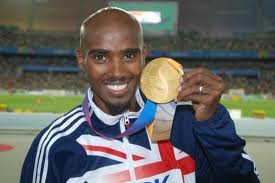
But the important role of self-fulfilling changes in expectations – another Keynesian insight – did also strike me as I read the paper. Hence, perhaps, a little ray of hope shed in the UK by our Gold medals at the Olympics.

An economic as well as athletic triumph?

The road not taken by macroeconomics

I spent a chunk of the weekend reading some of the classics of national accounting – or ‘social accounting’ as one of the pioneers, Richard Stone, preferred to call it.

It was amazing to find a section of his 1948 Newmarch Lectures, [amazon_link id=”0751201863″ target=”_blank” ]The Role of Measurement in Economics[/amazon_link], explaining that the accountancy presentation of the national economy we are so familiar with can equivalently be presented as a network structure: “The different forms of economic activity are nodes and the transactions are represented by directed branches passing from one node to another. The only formal property of such a system is that the sum of the flows at any node is equal to zero.”

A handful of economists such as Paul Ormerod (including in his new book [amazon_link id=”0571279201″ target=”_blank” ]Positive Linking [/amazon_link]- reviewed here by Anthony Painter at the weekend) and Alan Kirman have long been interested in network models of the aggregate economy. And the general degree of interest is on the increase, thanks in no small part to the interconnectedness paraded by the world’s banks during the past few years.

Reading Stone made me wonder how differently our thinking about the aggregate economy would have turned out if we had not gone down the path of the accounts presentation. That suited the econometric models being developed contemporaneously by Jan Tinbergen, also described in these lectures. Without quite saying so, Stone expresses some scepticism about the then-new macroeconometric models, cautioning about identification problems, structural change, standard errors, non-stationarity – in short, the illusory nature of the seemingly precise numerical projections they permitted. A network habit of thought instead would surely have focused macroeconomists on interconnectedness rather than consumption functions.

[amazon_image id=”0571279201″ link=”true” target=”_blank” size=”medium” ]Positive Linking: How Networks Can Revolutionise the World[/amazon_image]

The economists’ war

I’ve been re-reading Robert Skidelsky’s original biography of John Maynard Keynes (The [amazon_link id=”0142001678″ target=”_blank” ]Fighting for Britain 1937-46[/amazon_link] volume, not the recent [amazon_link id=”0141043601″ target=”_blank” ]Return of the Master[/amazon_link]). In particular, refreshing my more than 10-year-old memory of the origin of national income accounting at Keynes’s instigation. Since 1937, Keynes had been urging the government to collect the appropriate statistics. He wrote: “Every government since the last war has …regarded the collection of essential facts as a waste of money.”

But, as Skidelsky continues:

“What he omitted to point out was that such facts were essential only for the purposes of ‘demand management’ which the pre-war Treasury regarded as neither feasible nor desirable.”

According to Roy Harrod’s earlier (1951) [amazon_link id=”0393300242″ target=”_blank” ]Life of John Maynard Keynes[/amazon_link], soon after publication of [amazon_link id=”B005E8FUT4″ target=”_blank” ]How to Pay for the War[/amazon_link] in 1939 had introduced the concept to a wider public, Keynes circulated privately a pamphlet A Budget for National Resources. Subsequently Austin Robinson at the Treasury set Richard Stone and James Meade to work producing the UK’s first national accounts. This was published with the 1941 Budget. According to Harrod, it was: “A great revolution… This kind of accounting has come to be regarded as the essential tool of any economic planning, whether of an Individualist or a Socialist variety.

In their superb recent book on Keynes, [amazon_link id=”0674057759″ target=”_blank” ]Capitalist Revolutionary[/amazon_link], Roger Backhouse and Bradley Bateman note that Paul Samuelson, reflecting on the parallel work on national accounting in the US described the war as , not the physicists’ war, but ‘The economists’ war.’ They say: “Economics emerged from the Second World War with its reputation greatly enhanced.”

It is an interesting perspective on the current debate about measuring the economy. GDP was never intended as a measure of welfare or well-being, but as a measure of the nation’s productive capacity in wartime, for the purposes of government planning. The fashionable survey measures of ‘well-being’ are obviously a rubbish indicator for policy purposes. There is, though, a question about whether GDP, adapted so much over the years in successive new international standards, remains the right indicator for government policy. What war should economists be fighting now?

[amazon_image id=”0142001678″ link=”true” target=”_blank” size=”medium” ]John Maynard Keynes. Volume Three: Fighting for Freedom, 1937-1946: 003[/amazon_image]

Theory, measurement and joined-up social science

I’ve been reading this morning Richard Stone’s 1948/49 Newmarch Lectures, [amazon_link id=”0751201863″ target=”_blank” ]The Role of Measurement in Economics[/amazon_link]. There really, truly is nothing new under the sun. He writes in the conclusion about the ‘undue exclusiveness sometimes to be observed in economists’:

“The determination to deal only with the economic aspect of problems doubtless makes for tidy theories and all the pleasures of staying on home ground. But inasmuch as the economic aspect is only part of most actual problems, its single minded pursuit leads to distortion and incompleteness. This is particularly so at the present time when social influences are again coming to play a larger part in shaping the changes in society than they did in past eras… The moral seems to be not less specialization but more co-operation and understanding between economists and those who work in other branches of the social sciences.”

He also – as could be expected from such a leading figure in developing the modern system of national accounts – advocates the collection of adequate statistics for empirical understanding. (And the need to educate the general public in some fundamentals of statistics so that everyone understands there is a margin of error.)

Lastly, Stone strongly urges the need to combine empirical and theoretical approaches to economics. Theory versus measurement is a false dichotomy, and theory without measurement uninteresting.

British Economy, 1948

Needed: elasticity of mind

I just read for the first time since the late 1970s Keynes’s essay [amazon_link id=”B005E8FUT4″ target=”_blank” ]How to Pay for the War[/amazon_link], published in February 1940 on the basis of two Times articles of November 1939. (It’s included in my 1972 RES/Macmillan edition of [amazon_link id=”0230249574″ target=”_blank” ]Essays in Persuasion[/amazon_link].)

My immediate interest was the part this essay played in the development of official national output figures in order to measure the economy’s productive capacity: Keynes’s frustration at needing to rely on the private estimates recently published by [amazon_link id=”0714612162″ target=”_blank” ]Colin Clark[/amazon_link] is evident.

[amazon_image id=”0714612162″ link=”true” target=”_blank” size=”medium” ]National Income and Outlay[/amazon_image]

However, I’m struck – awed – by the clarity of Keynes’s overview of the way the war economy needed to be managed. The ability to step back from small parts of a problem to see the whole is rare. In this case, it involved understanding that a different way of thinking was required, so greatly had the context changed. Keynes wrote:

“We have become so accustomed to the problem of unemployment and excess resources that it requires some elasticity of mind to adapt our behaviour to the problem of full employment and of resources which are no longer adequate to supply our needs.”

Elasticity of mind – a lovely phrase for a capacity so few of us have.

This question of changed context is surely relevant to today’s macro policy questions. It often seems to me that the dispute between different camps is a matter of disagreement about context. In other words, they disagree about the nature of the most pressing problem. I’ve always been very taken with the way Edmond Malinvaud set this out explicitly in [amazon_link id=”063117690X” target=”_blank” ]The Theory of Unemployment Reconsidered[/amazon_link], although I don’t think his specific ’70s framework fits the kind of open economy and financialised world we have now.

[amazon_image id=”B005E8FUT4″ link=”true” target=”_blank” size=”medium” ]How to pay for the war : a radical plan for the chancellor of the exchequer / by John Maynard Keynes[/amazon_image]