Heroines of science

I *highly* recommend Vaxxers by Sarah Gilbert and Cath Green, two of the Oxford covid vaccine team. It’s a great read, explains the science really clearly, and is full of interesting detail about the process from the prior research, the realisation of need very early in 2020, all the way through to manufacturing and vaccination campaigns. The two authors have written alternating chapters. A few points will stick with me:

  • Plenty of people saw the pandemic coming but prior preparation to create a vaccine just wasn’t funded adequately. The book is brilliant on the soul-destroying processes of funding applications (oh how I empathised), and how little they are fit for the purpose of rapid development at scale of a new vaccine. Props to the University of Oxford for funding the early stages by putting its own money at risk.
  • Luckily, this team and others around the world did have a ton of prior science and manufacturing experience to draw on, hence the ability to move so quickly.
  • The experience of dealing with media and politics led Sarah Gilbert to write: “Certainly next time – and there will be a next time – we should add some political scientists to the team.” I had a committee-side seat on UKRI funding processes in 2020, and it was an eye-opener to me how few (read: none) of the big science applications included social scientists. It’s starting to change. But the same holds for climate science, or any science addressing big societal problems.
  • There needs to be more global regulatory co-operation, and better preparation over everything from travel to supply chains. It will cost money. But Covid19 was known (before it existed) as Disease X: “Disease Y is coming.” The money will be well spent.
  • The whole tearm worked heroically hard – there’s a nice profile in today’s Guardian.
  • The response from the public to the request for trial volunteers was also heroic. Most people in the UK have been not only pragmatic but in fact brilliant about the vaccine, despite the antics of a small but vocal minority.

I’ve now started on Jeremy Farrar’s Spike, which also looks like being a gripping read.

51v2D6hxZlL._SX323_BO1,204,203,200_

Taxation made fun

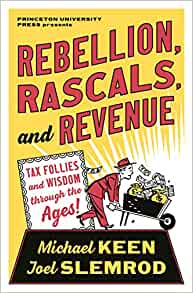
The other book I left half-finished before our holiday was Rebellion, Rascals and Revenue by Michael Keen and Joel Slemrod. Believe it or not this is a very jolly book about taxation – covering textbook issues such as tax design, tax burden, tax administration etc. The underlying message about the economics is: it’s complicated. Indeed, it isn’t just about economics, but tightly intertwined with politics and power. The implicit follow-on message: there cannot be an ideal tax system good for all time. Indeed the book ends with the challenges posed by globalisation and digitalisation, suggesting some possible solutions – even hinting at the prospect that land value tax is one of these.

The fun comes in through the many historical episodes of taxes going wrong. This makes it a kind of tax version of the wonderful Crewe and King Blunders of Our Governments, which I always put on my public policy economics reading list. The book takes us from medivaeval times to the present and around the world (albeit with a US-UK bias). The knowledge and range of the authors is impressively encyclopaedic, and the quality of the writing is superb.

So I greatly enjoyed reading the book with the slight reservation that it isn’t clear who the intended audience is. At 500 pages with detailed footnotes it is a bit long for the general reader, unlikely to get picked up in airport bookshops (remember those?) I could see recommending sections to students for a bit of light relief as well as a non-technical account of issues they are covering in their public finance courses; but it isn’t a text book. There isn’t a discernible narrative, chronological or analytical arc – it’s episodic and didn’t seem to suffer from my reading it in separate chunks. Having said that, the book will answer any question you might ever have had about taxation in principle or practice and is highly entertaining too. What a combination.

51Ob4XA107L._SY291_BO1,204,203,200_QL40_ML2_

Summer reading

It’s been the holidays, and I was part way through two books before we even left to go to the West Wales seaside. So this is a bit of a round-up.

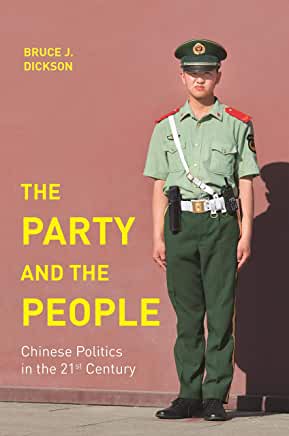
One of these was The Party and The People: Chinese Politics in the 21st Century by Bruce Dickson. For someone like me who knows so little – reading a bit, two trips to Beijing – this is a wonderfully informative book. There is a lot about the institutions and processes of government, including the importance of the regions, and post-Mao developments in politics. Each chapter addresses a question – for example, How are Leaders Chosen? Does China have a Civil Society? – with a mild inclination to debunk received wisdom (such as the trope that China is becoming more nationalistic over time – it is one of the most nationalistic countries along with the US but if anything that is diminishing over time). There’s very little on the economy, the focus is entirely politics. I took away two messages: the over-riding concern of the Communist Party with social stability and its own role; and the fact that Xi Jinping may have destabilised an unusually stable regime by undoing the system that was in place to limit leaders’ terms and have an orderly succession. Highly recommended. My sense is that even real China experts would find this interesting.

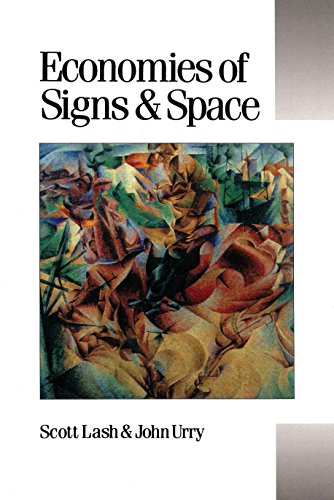
81HZVq2FS0L._AC_UY436_QL65_I’ve also re-read after many years Scott Lash and John Urry’s Economies of Signs and Space (1994), which I first read in 1997, just as my first book The Weightless World was published. They cover (from the sociological perspective) exactly the same territory as my book and I must say I think we were all equally prescient about the kinds of changes being brought about by digital technology and the subsequent structural changes. One way in which they were far ahead of me though was identifying the importance of environmental pressures – I’d forgotten it was in there. Another difference between them and me is in their conversation with the literature on post-Fordism, emphasising changes in consumption rather than production; economists are generally not all that familiar with that literature. Anyway, I went back to it because I have the honour of giving this year’s Urry Lecture at Lancaster University in late October.

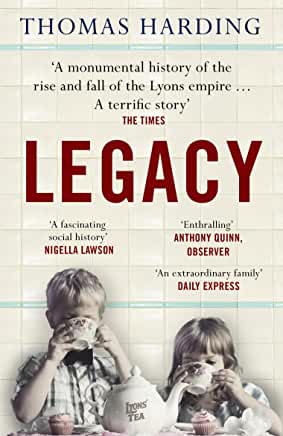
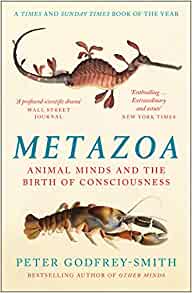
51jSbl9RTkLOther holiday reads: Peter Godfrey-Smith’s Metazoa, an absorbing account of what other creatures can feel and think (who knew fish can distinguish blues and classical music); Jean Rhys’s brilliant Wide Sargasso Sea; Eric Ambler’s Mask of Dimitrios with the frisson of the mood of the late 1930s and that sense of inevitable upheaval on the horizon; Legacy by Thomas Harding – a history of the Lyons commercial empire from a single immigrant entrepreneur in the late 19th century to one of the UK’s biggest food producers and retailers which en passant invented the LEO computer and was then broken up by the late 20th century.

81Bm457CmNL._AC_UY436_QL65_51yxOvmKj9L._SY291_BO1,204,203,200_QL40_ML2_41JB-2i0VBL._AC_UY436_QL65_71ZxbqT5VKL._AC_UY436_QL65_

The business of digital disruption

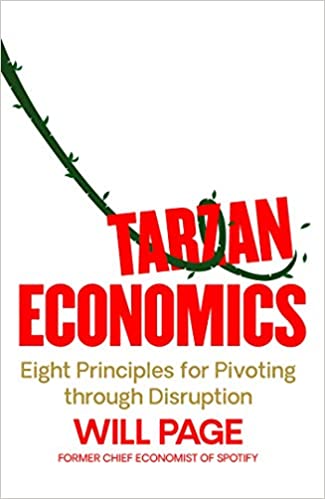
It has taken me a shamefully long time to read Will Page’s excellent book Tarzan Economics. Will was Spotify’s economist and before his move into the music business had worked for the Scottish Government. So he has the distinct advantage of being able to wear two pairs of spectacles to look at digital disruption, the policy lens and the lens of the disruptor. The term ‘Tarzan Economics’ refers to the leap businesses need to make from one vine in the business jungle as it descends, to another vine, in order not to crash to the ground. The book combines economic analysis of digitalisation with business advice, and carries off the combination. It isn’t in quite the same league as Shapiro and Varian’s now old classic (1998) Information Rules, but on the other hand is far more up to date and gives us a front row seat for what has happened in the music business.

It was always astonishing to me (see Sex, Drugs and Economics) that the music business reacted to the Napster et al threat by deciding it would be a good idea to prosecute their biggest fans (rather than responding to the demand for unbundling). As Will writes, “If piracy of a particular artist was increasing, the lawyers would be getting worried about intellectual property being stolen, whereas the promotion departments would recognise they had a hit on their hands.” The book identifies the real threat to any content business being the limited amount of time and attention we all have. There are nice examples of more sensible ways of responding (other thany trying to put your customers in prison). One is the Atlanta Falcons having made their stadium a pleasant environment with good, reasonably priced food and no rip-offs. Elasticity of demand is such that revenues per attendee have risen substantially, attending the game winning out for enough people over watching on TV from the La-Z-Boy recliner at home.

The book is structured around (as the subtitle has it) ‘eight principles for pivoting through disruption’. These include for instance tactics for working the dynamics of the long tail and how to price discriminate: voluntary donations can raise more than conventional pricing, for instance, the famous Radiohead experiment in voluntary payment for their album (followed later by release of a special boxed set) being one of the examples here. I found the chapter on the use of data, including Spotify examples, fascinating. There’s a lovely anecdote about Will visiting Richard Thaler, who came up with the answer after the company’s data scientists had failed to discover – despite intense data mining – exactly why Discover Weekly was such a success; I won’t spoil the story.

Will is one of the band of enlightened economists who can think more broadly than many. He gives the specific example here of the limitations of the cost-benefit analysis – for example in deciding whether to invest in a museum; the inspiration and education it provides need to be in the mix along with the visitor numbers and entry fees. Not surprisingly given his Spotify role, he argues that the music industry held on to its damaging old vine for a decade too long but things are looking rosy now – I’m not sure all of the music industry buys into this cheerful, new vine outlook. Nevertheless, it was one of the earliest industries to face profound digital disruption and the lessons are well worth pondering. As Will says, the aim of the eight principles and the examples in the book is not to proclaim answers but to help readers ask the right questions about their situation and pick the most appropriate strategies and tactics.

Whether you are involved in a disrupted business or just interested in digital economics, Tarzan Economics is a terrific read, very nicely written, and with the economic analysis sweetened with plenty of examples. Will will be appearing at the Bristol Festival of Economics talking about it in November.

41cVKl1KQCL._SX323_BO1,204,203,200_

Productivity and the pandemic

This is a collection of essays that does what it says in the title, Productivity and the Pandemic. The book has a UK focus and, as an output of the Productivity Insights Network, a strong interest in the geographic impact of the pandemic shock to the economy. The chapters range from the future of cities to mental health, from housing markets to entrepreneurship. As always with an edited volume the contributions vary, and few people will want to read cover to cover rather than picking out the chapters of interest to them. Another issue of course is that the pandemic isn’t over so it is quite early to be trying to evaluate its impact.

Nevertheless, there are some interesting chapters. I enjoyed the chapters on global supply chains and on firm strategies under uncertainty, although neither of them offer definitive answers about pandemic impacts. But clearly the questions of resilience and uncertainty will figure in policy debates from now on. Such tightly coupled production and distribution networks might not be the thing in future. (I write as food distribution seems to be in question again in the UK because of ‘pinged’ workers needing to isolate, and a threatened haulage strike, and Brexit.)

I also particularly liked a later chapter on ‘The Paradox of Efficiency’ by Ekkehard Ernst, about hedging risk in uncertain times. This is clearly a related issue but goes beyond supply chain issues to mention ‘over-provision’ of robust public services rather than running them hot. This is a conclusion I drew with some colleagues, looking at NHS hospital productivity in 2020. Ernst writes: “The countries that provided relatively abundant public services managed to fare significantly better in containing and managing the pandemic.”

This is an assertion – there is no evidence provided here to support it – but one well worth testing. More broadly, we need to start thinking about risk-adjusted productivity measures: what’s the climate risk impact on agricultural productivity for example?

514yCNkwx7L._SX324_BO1,204,203,200_