
Forbidden places

Bradley [amazon_link id=”1781685576″ target=”_blank” ]Garrett’s Explore Everything: place-hacking the city [/amazon_link] is an ethnographer’s account of his time as a member of a loose group of urban explorers, based in London but making forays into Paris and the US. Urban exploration means going into places you’re meant to keep out of – ruined buildings boarded up at the tame end, through construction sites, the roofs of skyscrapers, and the Underground and sewers at the more dangerous end. And it is dangerous. A few people die. There are arrests – especially in London, where surveillance is so extensive and official paranoia runs far higher than elsewhere. (This closure of urban space is the subject of Anna Minton’s [amazon_link id=”0241960908″ target=”_blank” ]Ground Control.[/amazon_link])

Now, there is nothing I’d like to do less than climbing out onto the arm of a crane at the top of a building like the Shard while it’s under construction – I am, after all, a middle aged economist with vertigo, not a young urban explorer. However, I found this book very interesting and understand the itch the activists have to ‘hack’ these forbidden places. It’s partly the comtrariness aroused by being told not to do something, partly the serious politics of challenging the authoritarian tendencies that have been installing CCTV all over and privatising urban public space.

The pictures in the book are amazing – vertigo-inducing in themselves, the socisl science jargon that creeps in only mildly irritating. Urban explorers are obviously people whose politics and experiences put them in a minority – which makes it all the more interesting to have a window into their attitudes and experiences. And it’s well worth reflecting on what the shutting away of so much space is going to do to our cities over the years.

As a fan of Victorian infrastructure, I especially enjoyed reading about the forays into Joseph Bazalgette’s sewers. The book claims the cost was equivalent to £234 billion now. I haven’t checked, but if true, it’s hard to believe they would get built these days.

[amazon_image id=”1781685576″ link=”true” target=”_blank” size=”medium” ]Explore Everything[/amazon_image]
Thinking, fast, slow, and other tempos

Any sentient economist these days is interested in how people make decisions, and how this differs in different contexts. It isn’t as simple as saying the old rationality assumptions are false and the new ‘behavioural’ rules of thumb apply.

For example, Paul Dolan of the LSE (whose new book is [amazon_link id=”0241003105″ target=”_blank” ]Happiness By Design[/amazon_link]) reports a trial to see what kinds of intervention were effective in getting consumers to reduce their electricity usage. A social comparison ‘nudge’ in the shape of a letter (but not an email) about what similar households were paying was very effective, but so was a financial incentive in the shape of money off the bill if certain target reductions were achieved. But the social nudge and the financial incentive when combined led to – zero reduction. So like all supposed silver bullets, nudge policies need to be fired with care and a single shot will rarely hit its target.

Anyway, the ur-books about the psychology behind how people make decisions are Daniel Kahneman’s [amazon_link id=”0141033576″ target=”_blank” ]Thinking Fast and Slow[/amazon_link] (thinking slow being rational calculation and thinking fast being mainly what we do), and Gerd Gigerenzer’s [amazon_link id=”0141015918″ target=”_blank” ]Gut Feelings: Short Cuts To Better Decision Making[/amazon_link] – the latter arguing that ‘thinking fast’ is actually rational because it economizes on energy- and effort-intensive calculation.

[amazon_image id=”0241003105″ link=”true” target=”_blank” size=”medium” ]Happiness by Design: Finding Pleasure and Purpose in Everyday Life[/amazon_image]  [amazon_image id=”0141033576″ link=”true” target=”_blank” size=”medium” ]Thinking, Fast and Slow[/amazon_image]  [amazon_image id=”0141015918″ link=”true” target=”_blank” size=”medium” ]Gut Feelings: Short Cuts to Better Decision Making[/amazon_image]

I just read another two books underlining how hard people find thinking. One is Ben Goldacre’s [amazon_link id=”000728487X” target=”_blank” ]Bad Science[/amazon_link], which I found on my iPad recently and clearly downloaded ages ago. It’s a terrific book for teaching some mildly numerate critical thinking, and very funny. It’s as good as my previous favourite in this category, Jamie Whyte’s [amazon_link id=”0954325532″ target=”_blank” ]Bad Thoughts: A Guide to Clear Thinking[/amazon_link].

[amazon_image id=”000728487X” link=”true” target=”_blank” size=”medium” ]Bad Science[/amazon_image]  [amazon_image id=”0954325532″ link=”true” target=”_blank” size=”medium” ]Bad Thoughts: A Guide to Clear Thinking[/amazon_image]  [amazon_image id=”006124189X” link=”true” target=”_blank” size=”medium” ]Influence: The Psychology of Persuasion[/amazon_image]

The other is the huge airport bestseller [amazon_link id=”006124189X” target=”_blank” ]Influence: The Psychology of Persuasion[/amazon_link] by Robert Cialdini. This irritated me enormously, partly because it drags out a long article to book length, with a mildly patronising tone throughout; and partly because it poses as a guide to empowering the reader to avoid being manipulated by salesmen but is actually clearly a handbook of sales techniques. Despite having been irritated by it, however, it does convincingly illustrate six psychological characteristics that make people open to persuasion: the compulsion to reciprocate, the desire to be consistent, the power of social ‘proof’ in the form of other people’s choices, the deference to authority, the urge to grab hold of anything in short supply, and our willingness to do things for people we like.

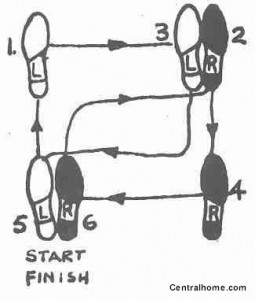
One especially powerful example in the ‘consistency’ for the world of policy, I thought, was that people whose self-image was made into one of ‘public spirited citizen’ through one experimental intervention then continued to act in a public spirited way in other contexts. While salesmen want to exploit quick thinking, so too might policy makers. And as Gigerenzer argues persuasively, thinking ‘slowly’ all the time would be inefficient. Maybe the thinking ideal is, like dancing a good foxtrot, getting a good mix of fast and slow.

Thinking, made simple

Read this book!

On the train yesterday I devoured [amazon_link id=”178022592X” target=”_blank” ]Do No Harm: Stories of Life, Death and Brain Surgery[/amazon_link] by Henry Marsh. I can’t recommend it highly enough. It is the author’s retrospective take on his career in neurosurgery, as he approaches retirement. From the start you share his sense of the strangeness of taking surgical instruments to people’s thoughts and emotions, memories and reason – as he puts it, too strange to think about really. He gets on with the delving into the jelly of the brain. This is a fascinating and utterly humane book.

[amazon_image id=”178022592X” link=”true” target=”_blank” size=”medium” ]Do No Harm: Stories of Life, Death and Brain Surgery[/amazon_image]

It does illustrate – as so many others have done – the strains on the NHS, due to demand growing faster than resources, but even more due to the madness of mediocre bureaucracy and constant reorganisation.

But the overwhelming message I took was the importance of the counterfactual in medicine. Marsh writes that as he grew more experienced as a surgeon, and older himself, the urge to operate always – because it’s what families and patients expect, and what surgeons do – began to ebb. Increasingly often, he concluded that the choice his patients often faced was between two different ways of dying, one of them involving painful and sometimes brutal surgery that gave false hope, a short extension of life at best. Given the strains on the NHS, the ageing population, the continuing advances in technology that make new interventions possible, this is going to be an important debate.

Anyway, as I get older too, getting the counterfactual right increasingly seems the key issue in any context. And one that it’s very hard for people to get to grips with, because seeing the realistic alternative course of events requires reason, experience, judgement and imagination.

On the medical theme, I’m also keen to read Atul Gawande’s [amazon_link id=”1846685818″ target=”_blank” ]Being Mortal: Illness, Medicine and What Matters in the End[/amazon_link]. I loved the other books by him I’ve read, [amazon_link id=”1846681324″ target=”_blank” ]Complications: A Surgeon’s Notes on an Imperfect Science[/amazon_link] and [amazon_link id=”1861976577″ target=”_blank” ]Better: A Surgeon’s Notes on Performance[/amazon_link].

[amazon_image id=”1846685818″ link=”true” target=”_blank” size=”medium” ]Being Mortal: Illness, Medicine and What Matters in the End[/amazon_image]

World cities

Notice of a new title to join the literature on the economies of cities, [amazon_link id=”1118609743″ target=”_blank” ]The Making of A World City: London 1991 to 2021 by Greg Clark[/amazon_link]. He writes:

“In [amazon_link id=”1118609743″ target=”_blank” ]The Making of a World City: London 1991 – 2021[/amazon_link] I have sought to draw on over 25 years of experience working within London policy and economic development organisations, and on interviews with around 100 leading thinkers about the past, present and future of London, including commentators and leaders in New York, Tokyo, Hong Kong, Paris, Singapore, and São Paulo.

London’s path to becoming a leading world city is not well understood. The assumption is that the Big Bang, London Docklands, the EU, or global finance is the key explanatory factor. The reality is richer and more surprising. The book sets out in clear detail both the catalysts that have enabled London to succeed and also the qualities and underlying values that are at play: London’s open-ness and self-confidence, its inventiveness, influence, and its entrepreneurial zeal. London’s organic, unplanned, incremental character, without a ruling design code or guiding master plan proves to be more flexible than any planned city can be.”

[amazon_image id=”1118609743″ link=”true” target=”_blank” size=”medium” ]The Making of a World City: London 1991 to 2021[/amazon_image]

I’m looking forward to reading it, especially having commissioned relatively recently Bridget Rosewell’s [amazon_link id=”1907994149″ target=”_blank” ]Reinventing London[/amazon_link].

[amazon_image id=”1907994149″ link=”true” target=”_blank” size=”medium” ]Reinventing London (Perspectives)[/amazon_image]

A while ago I posted a list of books on urban economics, and this literature keeps growing (no doubt there were many omissions from the list too). It is a subject whose time has come – the politics is slowly catching up with the economics. Recent days have brought news of an impending significant devolution of powers from Whitehall/Westminster to Manchester. It’s a first step in decentralising one of the most centralised OECD economies, and part of the global relocation of economic activity as a network around key urban hubs. Perhaps I’m biased, but among all the UK cities other than London, I think Manchester has the best shot at growing into a world city.

A couple of sessions at the upcoming Festival of Economics in Bristol touch on this broad theme – as do other Festival of Ideas events this autumn.

Investment and values

Normally I don’t read books about investment, but I know and like Guy Spier, author of [amazon_link id=”1137278811″ target=”_blank” ]The Education of a Value Investor[/amazon_link], so obviously I was going to buy it. And, once I started, I devoured the book in a couple of train journeys. It is a thoroughly enjoyable and enlightening read.

[amazon_image id=”1137278811″ link=”true” target=”_blank” size=”medium” ]The Education of a Value Investor[/amazon_image]

The investment advice is actually pretty straightforward: be a value investor. Guy is a *huge* admirer of Warren Buffett.

What’s far more interesting, and perhaps even practically useful, in the book is the advice about how to build into your life the capability to be a value investor. Guy does this through recounting his own career, intellectual and psychological trajectory, from ambitious ex-Oxford and HBS financier living the high life in New York to well-grounded, Zurich-based investment fund manager and family man. The personal story carries the underlying message about the psychology and morality of investing in a very appealing narrative.

For the difficulty in actually being a value investor, as Guy explains it, is human psychology – the strength of social pressure, of ‘everybody’s doing it’, the buzz of responding to the latest information, the imperatives created by rivalry and status. He cites the literature on behavioural economics and finance, and also explains how he has put it into practice in his own life. For example, he checks Bloomberg screens and stock prices only occasionally and has the terminal in a separate room from the place he reads and thinks; never places orders during trading hours; has an investment checklist before acting on a decision; has a group of like-minded people to discuss issues with; moved out of New York to run his fund, Aquamarine – whose returns look impressive. I’m not an investor but made a few notes about habits that seem very sensible.

One very interesting chapter is an early one in which he describes his first job at a cut-throat and unscrupulous New York investment bank, D.H.Blair. He had ignored warnings about its reputation on joining the bank as a ‘vice president’, but quickly found that the only way to survive in the Wall Street game was to play by the rules of the game, unpalatable as they are. It reinforced my view that the problem with so much of finance is not that there are some ‘bad apples’ but that it’s systemic – the structure of the barrel turns all the apples bad. So punishing some individuals, or working on bankers’ ethics, will make no difference at all.

Maybe it’s because he and I had the same intellectual formation, having been first taught economics by the wonderful and brilliant Peter Sinclair at Brasenose College, Oxford (albeit some years apart, as Guy is younger than me) that I find the philosophy behind [amazon_link id=”1137278811″ target=”_blank” ]The Education of a Value Investor[/amazon_link] so appealing. Guy & I met and became friends relatively recently, but a teacher who catches you at the right stage of your life is of course a uniquely powerful influence on your life. Interestingly, Guy questions his elite education, though, suggesting it was a good grounding for conventional, worldly success but taught the habits of reductionism and intellectual arrogance. However, in his case at least, a modest and wise man seems to have been forged by it.