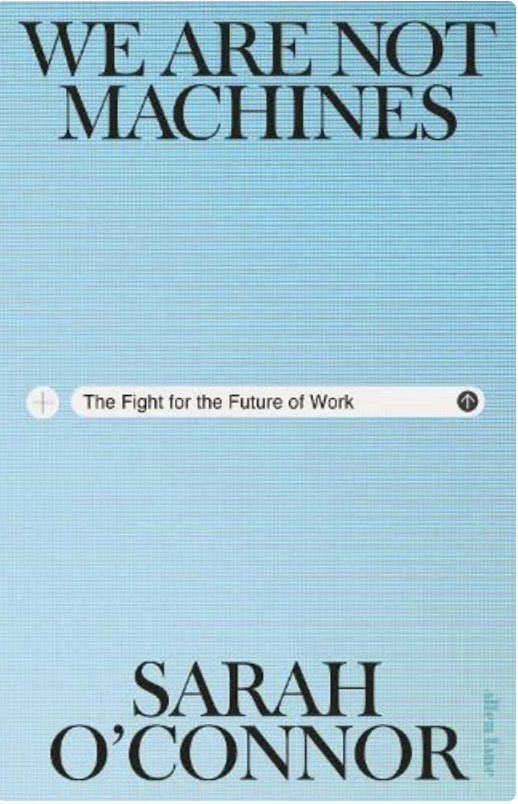
I have really enjoyed reading Sarah O’Connor’s new book We Are Not Machines: The Fight for the Future of Work. It weaves dispatches from the frontline of how AI and other digital tech is changing people’s jobs – from screenwriting and translating to truck driving, mining and working in an Amazon warehouse – into broader reflections on the nature of work. Some of the most powerful sections are about decisions not to work to the rhythm of machines but rather to find alternative ways of finding satisfaction and doing work that other humans value.
Readers of Sarah’s articles in the Financial Times – the only newspaper worth reading regularly any more – will be aware that she (& fellow journalist John Burn-Murdoch) keep up heroically with the vast amount of academic work on AI and labour markets, so the book is very well-informed about those debates. Combining that with reportage brings the issues to life, but also raises questions the academic literature rarely surfaces.
The one that stands out in my mind is why on earth our societies and politicians are going along with the use of AI to dehumanise the humans, to make people work to the rhythm of the machines. Truck drivers have long and unhealthy shifts because of the requirements imposed by the tachygraphs that regulate driving hours – the maximum becomes the target – and the answer to their risk of dozing off in the cab is still more machines to monitor them. In warehouse jobs, as the AI gets faster, the demands on the people serving the logistic robots become more relentless.
To some extent the answer is collective organisation – the Hollywood writers strike being one example, the Dutch Buurtzorg home care nursing organisation another. But of course there are bigger issues about the course modern capitalism has taken, making it seem inevitable that we will end up with lower-quality but cheaper AI-inflected services.The positive stories here of humans being able to make machines work for them are encouraging, but are also small victories in the bigger conflict.
The book has a wonderful quote from Lewis Mumford: “The purpose of art has never been labor-saving but labor-loving, a deliberate examination of function, form and symbolic ornament to enhance the interest of life itself.” Public opinion studies show that substituting for creative endeavour was the last thing people want AI to do, but it has ended up being the first thing. As the book concludes, “The future of work can be more worthy of the human mind, more careful of the human body, more satisfying to the human soul. But not without a fight.”
Technology will be the means to achieve a better future of work; the fight (as it always has been) is against the institutions using it to enrich and empower themselves at the expense of the common good.