
More bankers needed?

“Half the world is unbanked,” is the title of an early chapter of a new book, [amazon_link id=”026201842X” target=”_blank” ]Banking the World[/amazon_link], edited by Robert Cull and others. Counterintuitive as it seems, for those of us living in countries with too much banking, too little banking is a big problem. For a long time the best, indeed one of the only, books on the issue of financial services for the truly poor has been [amazon_link id=”0691148198″ target=”_blank” ]Portfolios of the Poor,[/amazon_link] edited by Daryl Collins and others (see also the terrific Portfolios of the Poor website for additional material).

[amazon_image id=”026201842X” link=”true” target=”_blank” size=”medium” ]Banking the World: Empirical Foundations of Financial Inclusion[/amazon_image]

Collins has a chapter in this new book, on measuring what financial services poor people use. It starts with an example about how important basic financial services can be in helping people earn more – a study of fertilizer use in western Kenya, where the biggest barrier to using fertilizer is timing savings in order to have enough money available to buy the fertilizer at the right time. I think access to secure means of savings is fundamental – far more important than microcredit, which has been so much the focus of research and policy debate so far.

Although I’ve not yet read all the chapters in this book, it collects together a number of empirical studies piecing together the evidence that will be needed to help develop inclusive financial services. It includes a number of intriguing ones – such as using biometrics for identification and security purposes. This is interesting because – although the chapter doesn’t address this issue – global anti-money laundering and ‘know your customer’ regulations – are wholly paper-based, which excludes people with no fixed address, no bills addressed to them, few formal documents at all, and no access to photocopiers. It is worth asking whether alternative approaches ID schemes could offer adequate security to serve the real purposes of such regulations. (I think the digital money guru Dave Birch has written about this although I can’t track down the link at present.)

I also like it that the book has a section called ‘Cautionary Tales’, included as a warning against ‘silver bullet’ thinking (“All we need to do is X and we will end poverty”). Not all financial services boost growth or encourage entrepreneurship, and some can be harmful. The examples here are the disappointing effect of remittance flows into Vietnam and the damage done by easy access to mortgages in some of the lower income Eastern European economies.

The final chapter, by the editors, lists ten unanswered questions, the first of which is the need for much more evidence on whether and how access to financial services has a beneficial impact for people on low incomes; which financial services are most valuable; why do ‘micro’ services struggle to scale up; and does growing access to financial services increase the risk of financial instability? As this list indicates, there is much that we don’t know, and the answers are relevant to financial inclusion within the rich economies as well as in low income countries. However, this book is a welcome addition to our present state of knowledge and will be of great interest to people working on this aspect of development.
The economics of poverty

I’ve been looking through the new [amazon_link id=”0195393783″ target=”_blank” ]Oxford Handbook of the Economics of Poverty[/amazon_link], edited by Philip Jefferson. It isn’t a book to read from cover to cover and review, as a handbook, and I’ve only read two of the chapters. Still, this looks like a useful resource for economists interested in two fields, development economics and income dynamics. In fact, this is something I particularly like about the book, that it includes some research on developing countries alongside the US (although a shortcoming is that its developed world focus is very US-centric). Surely, to the extent that we think economics should aspire to any universality, the economics of poverty must have some application to poverty in any country? So there are chapters by Martin Ravallion (about global patterns) and by Gary Fields (about low earnings in the developing world – he wrote the excellent [amazon_link id=”0199794642″ target=”_blank” ]Working Hard, Working Poor[/amazon_link], which I reviewed here) and by Juliet Elu & Gregory Price about gender inequality in sub-Saharan Africa.

The overlap between development economics and the economics of poverty in western societies is surely fruitful territory. One of my favourite books is [amazon_link id=”0691148198″ target=”_blank” ]Portfolios of the Poor[/amazon_link], a sort of ethnographic, diary-based study of how poor people in India and South Africa actually handle money. A study of this kind would be most helpful in assessing concerns about payday lending in the UK; these short-term lenders are clearly satisfying an otherwise unmet demand. What financial needs of people on low incomes, exactly, are conventional financial services unable to address and is there really a policy or regulatory gap, or is payday lending actually a market solution?

The Handbook also has some cross-cutting chapters that look interesting, on subjects like obesity, healthcare, housing and place-based policies. I read and liked the chapter on the need to get the best from both economics (analytical & empirical rigour) and sociology (illuminating detail and understanding of social networks/capital) in studying poverty.

[amazon_image id=”0195393783″ link=”true” target=”_blank” size=”medium” ]The Oxford Handbook of the Economics of Poverty (Oxford Handbooks in Economics)[/amazon_image]

No limit to markets in the slum

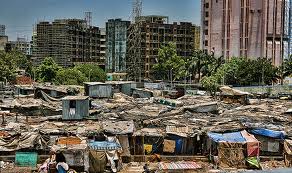
Katherine Boo’s [amazon_link id=”1846274494″ target=”_blank” ]Behind the Beautiful Forevers: Life, Death and Hope in a Mumbai Slum[/amazon_link] is a wonderful read. It recounts a series of  dramatic events that occur in Annawadi, a slum next to Mumbai Airport, where she spent months meeting residents and observing their lives. Like all good reportage, it gives the reader a vivid impression of place, and Boo has a novelist’s ability to convey character. In fact, my one complaint about the book is that she uses the novelistic device of voicing the characters’ inner thoughts – for me, this undermined the authenticity of the detailed reporting of the physical conditions, the work, the danger, the smell and dirt and noise, and so forth. On the other hand, the focus on character makes it a very enjoyable book.

[amazon_image id=”1846274494″ link=”true” target=”_blank” size=”medium” ]Behind the Beautiful Forevers: Life, Death and Hope in a Mumbai Slum[/amazon_image]

The business at the centre of the tale is recycling rubbish, which also featured in the episode of Welcome to India I watched last week. I won’t spoil it by giving away the ‘plot’. However, I was particularly struck by the absolutely central role monetary transactions play in everyday life. It is a commonplace to say corruption helps trap countries like India in poverty. I suddenly realised that there is a vicious circle, because poverty also traps people in corruption. The sort of favours and kindnesses that people in my society wouldn’t dream of demanding payment for all require handing over cash in the slum. Money is so short that nobody will do something for nothing. Besides, there is a chain of transactions to sustain. Policemen are paid so little that they demand bribes, a slum entrepreneur needing to pay the bribe to keep the police from closing her business as it lacks a permit therefore has to ask for cash to help out a neighbour, and so on.

Anyway, it was thought-provoking to realise how monetised all these relationships were in the light of having read recently Michael Sandel’s [amazon_link id=”184614471X” target=”_blank” ]What Money Can’t Buy: The Moral Limits of Markets[/amazon_link]. Behind the Beautiful Forevers makes it brutally clear that these moral limits are income-contingent: a very poor community has far less scope for scruples than a wealthy western one with a social safety net.I think Sandel’s widely cited example of the immorality of paying people to hold your place in a queue would be met with simple bemusement in Annawadi.

Worth reading alongside this book: Sukhetu Mehta’s [amazon_link id=”0747259690″ target=”_blank” ]Maximum City: Bombay Lost and Found[/amazon_link]; [amazon_link id=”0199794642″ target=”_blank” ]Working Hard, Working Poor[/amazon_link] by Gary Fields; and [amazon_link id=”0691148198″ target=”_blank” ]Portfolios of the Poor[/amazon_link], which uses diaries to record how people with almost no money use what they have. There are some good background features on Katherine Boo like this one in The Daily Telegraph and this New Yorker video.

Annawadi