The special relationship?

Laid low by a nasty cough all week, I’ve been paging through Benn Steil’s [amazon_link id=”0691149097″ target=”_blank” ]The Battle of Bretton Woods: John Maynard Keynes, Harry Dexter White and the Making of a New World Order.[/amazon_link] It’s a surprisingly gripping story, pitting the Americans against the British, and the Russians against the Americans. The Communist sympathies of White are fairly well known by now. Although this IMF Working Paper of 2000 (pdf) asserts that there’s some room for doubt, despite the confirmation provided by the [amazon_link id=”0140284877″ target=”_blank” ]Mitrokhin Archive[/amazon_link], by 2013 there is none. White was trying to further Soviet interests as he simultaneously – as this book shows – used the post-war financial architecture to crush any hope of a revival of British economic and geo-political power.

[amazon_image id=”0691149097″ link=”true” target=”_blank” size=”medium” ]The Battle of Bretton Woods: John Maynard Keynes, Harry Dexter White, and the Making of a New World Order[/amazon_image]

The book quotes a 1947 Economist editorial: “Not many people in this country believe the Communist thesis that it is the deliberate and conscious aim of American policy to ruin Britain and everything that Britain stands for in the world, but the evidence can certainly be read that way.” The new dollar-centric financial structures were, Steil shows convincingly, intended to force Britain to keep holding out the begging bowl for international loans. He writes: “The US used its control of the IMF to deny Britain the dollars it needed to counter a run on sterling and blocked its efforts to secure emergency oil supplies.” But where De Gaulle had no hesitation in criticising the Americans, the British clung to the centrality of the ‘special relationship’ – indeed, as we still talk of this in the UK, it would have been surprising if it hadn’t had great force in the late 1940s.

The book ends by asking what the lessons of post-war monetary nationalism, embodied in the framework that survived until 1973, hold for today’s US-China imbalance. I think the counterfactual is just as interesting a question: what would the alternative history have been had Roosevelt not been so keen to weaken the old colonial power, and Harry Dexter White not so eagerly encouraged by his Soviet correspondents to accomplish this? If Keynes had survived longer, or if Britain’s industrial base had not been so thoroughly damaged by the conflict?

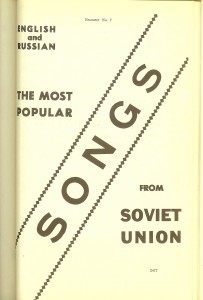
As for White, he almost became head of the IMF, but J Edgar Hoover – getting this one right – called him up before the House Un-American Activities Committee. White died of a heart attack soon after. I have a 1955 volume of the US Senate Judiciary Committee that reprints some of White’s papers, discovered at the summer home of the attorney general of New Hampshire – the volume is part of a study into ‘Interlocking subversion in government departments’. As the picture below suggests, the FBI’s suspicions of White was entirely understandable, even if it took some decades for KGB documents to confirm them.

How Harry Dexter White relaxed?

Here is the FT review of Benn Steil’s book.


Bernanke, banks and bugs

The dreaded flu going around has struck me, so I’ve been paging through a book it’s easy to hold while lying in bed feeling wan. It’s [amazon_link id=”0691158738″ target=”_blank” ]The Federal Reserve and the Financial Crisis[/amazon_link], some lectures given by Ben Bernanke at George Washington University last year.

[amazon_image id=”0691158738″ link=”true” target=”_blank” size=”medium” ]The Federal Reserve and the Financial Crisis[/amazon_image]

I won’t pretend to be alert enough to have absorbed every nuance, but the Fed Chairman’s overall message is clear: of course we might have got some details wrong but we did exactly what it says on the Fed tin in acting as a lender of last resort to the financial system and calming the panic. What’s more, if you look over the long span of history (he being the author of [amazon_link id=”0691118205″ target=”_blank” ]Essays on the Great Depression[/amazon_link]), the loss of output subsequent to the crisis is clear but the US economy will sooner or later get back on its long term growth trend.

[amazon_image id=”0691118205″ link=”true” target=”_blank” size=”medium” ]Essays on the Great Depression[/amazon_image]

No doubt it’s the combined effect of the bugs wreaking havoc on my well-being and the peculiarly horrible medicine I’ve been taking, but I’m much less sure the crisis is fixed. I’m not confident the same kind of crisis could not occur again tomorrow – the banks are still too big, too intertwined, too leveraged with – as Admati and Hellwig point out in their superb new book, [amazon_link id=”0691156840″ target=”_blank” ]The Bankers’ New Clothes[/amazon_link] – far too little equity capital. At any rate, I don’t want to rely entirely on the forces of history. I think the Fed has indeed done a decent job in the face of the imminent 2008 meltdown; but in making the comparison with the Fed’s historical role as lender of last resort, the lectures lack a sense of the really fundamental questions about the present financial system.

[amazon_image id=”0691156840″ link=”true” target=”_blank” size=”medium” ]The Bankers’ New Clothes: What’s Wrong with Banking and What to Do about It[/amazon_image]

A modest proposal (involving digital market dynamics)

One of the best books about the effect of digital technology on business dates from 1999. [amazon_link id=”087584863X” target=”_blank” ]It’s Information Rules: A Strategic Guide to the Network Economy[/amazon_link] by Carl Shapiro and Hal Varian (now chief economist at Google). Until recently, I’ve thought it didn’t need updating, for although the examples are obviously dated, the principles are not.

[amazon_image id=”087584863X” link=”true” target=”_blank” size=”medium” ]Information Rules: A Strategic Guide to the Network Economy[/amazon_image]

However, a couple of excellent recent books on the telecommunications and media sector have made me start to wish for an update of Information Rules. They are Timothy Wu’s [amazon_link id=”1848879865″ target=”_blank” ]The Master Switch: The Rise and Fall of Information Empires[/amazon_link] and Susan Crawford’s new book, [amazon_link id=”0300153139″ target=”_blank” ]Captive Audience: The Telecom Industry and Monopoly Power in the New Gilded Age.[/amazon_link] Telecoms is obviously a network industry, with the characteristic kind of increasing returns to scale you get with networks.

[amazon_image id=”1848879865″ link=”true” target=”_blank” size=”medium” ]The Master Switch: The Rise and Fall of Information Empires[/amazon_image]

[amazon_image id=”0300153139″ link=”true” target=”_blank” size=”medium” ]Captive Audience: The Telecom Industry and Monopoly Power in the New Gilded Age[/amazon_image]

Both these newer books are excellent on the sector. What I’d like is an update – beyond the one chapter in the 1999 edition of Shapiro and Varian – on business strategy and market dynamics (including two-sided aspects) in network markets. For digital connectivity is making the network aspect more prominent in other sectors. Finance is obviously one, but there are more sectors where digital technologies are enabling new forms of intermediation as well as disintermediating old forms, where there are information asymmetries or experience goods, and where access to new platforms is becoming vital. Consider publishing, or indeed even retailing – say a new fashion designer facing a declining physical high street.

So here’s a modest proposal: please will somebody write about these new market dynamics (and the competition and distributional implications) where we need two-sided market models, increasing returns and non-linearities, and the experience good/public good characteristics taken into account?!

Digital jobs – or not?

As always, John Naughton’s weekend column was very interesting – this week’s theme was Digital capitalism produces few winners. It contrasts the profit of the digital titans – Apple, Amazon, Google – with the relatively few jobs and poor working conditions they offer. Amazon in the UK (where the digital companies are already in the public stocks over their tax practices) was the subject of an eye-opening FT feature recently, Amazon unpacked.

John Naughton’s column starts: “Need a crash course in digital capitalism? Easy: you just need to understand four concepts – margins, volume, inequality and employment. And if you need more detail, just add the following adjectives: thin, vast, huge and poor.” This is in the same vein as Brynjolfsson and McAfee’s [amazon_link id=”0984725113″ target=”_blank” ]Race Against the Machine[/amazon_link] which argues that the new technologies are economising on human labour, and Paul Krugman’s recent Rise of the robots column, noting that manufacturers are investing in capital-intensive facilities, so productivity is high and the need for labour low.

[amazon_image id=”0984725113″ link=”true” target=”_blank” size=”medium” ]Race Against the Machine: How the Digital Revolution is Accelerating Innovation, Driving Productivity, and Irreversibly Transforming Employment and the Economy[/amazon_image]

I would sound some notes of caution about this ‘the robots are eating all the jobs’ trope. One, this is the stage of the business cycle when jobs gloom is at its most intense – remember the New York Times special book, [amazon_link id=”0812928504″ target=”_blank” ]The Downsizing of America[/amazon_link], published in 1992 just ahead of the long upturn and employment boom? Two, the only way to assess the impact of new technologies is to look at aggregate data, not just a few firms – the distribution of income data suggest there is indeed something in the story about capital intensity and productivity, but the US employment ratio has been rising gently, albeit well below pre-crisis levels still. Three, there is a question about how informative existing data are – Mike Mandel’s work on the data-driven economy is suggestive of significant gaps in our knowledge.

[amazon_image id=”0812928504″ link=”true” target=”_blank” size=”medium” ]The Downsizing of America[/amazon_image]

Finally, the most productive sectors of the economy are always making jobs disappear, and there is a period of uncomfortable adjustment, including in the wage distribution, until jobs reappear in less productive sectors of the economy. Nobody has yet convinced me there’s anything different about the digital economy in this regard, although Krugman’s second ‘robots’ column on oligopoly power, Robots and Robber Barons, certainly flags up a serious issue. For me, the best book on the impact of digital on jobs remains Levy and Murnane’s [amazon_link id=”0691124027″ target=”_blank” ]The New Division of Labour: How Computers Are Creating the Next Job Market[/amazon_link], although it’s a few years old now.

[amazon_image id=”0691124027″ link=”true” target=”_blank” size=”medium” ]The New Division of Labor: How Computers Are Creating the Next Job Market[/amazon_image]

Economists as heroes, continued…

I’m very much enjoying reading Jim Lacy’s [amazon_link id=”1591144914″ target=”_blank” ]Keep From All Thoughtful Men: How US Economists Won World War II[/amazon_link]. Although it’s a book written by an obsessive, it appeals to my magpie-like delight in trivia. The first chapter starts with a moan about military historians’ lack of interest in logistics and statistics rather than blood and machines. “After all,” the author writes, “Who really wants to read about how many trains it took to move ammunition to the front in 1916, or about the hay consumption rate of one of Murat’s cavalry divisions?” Me! I do! That’s exactly the kind of thing I want to know!

[amazon_image id=”1591144914″ link=”true” target=”_blank” size=”medium” ]Keep From All Thoughtful Men[/amazon_image]

It’s also possible to divine the plot of a stylish drama set in the Washington and London of 1941 as the Americans debated their strategy toward the European conflict and the potential Pacific threat. There is American statistician Stacy May travelling from London via Dublin back across the Atlantic with a huge 35lb volume containing a comprehensive set of accounts of the US and UK productive capacity at the time: “It was a German spy’s ultimate fantasy: a plump, fortyish, dignified, preoccupied American statistician, all alone and carrying what everyone who knew of its existence considered the most important document in the world.”

There is the debonair Frenchman Jean Monnet, later celebrated (or otherwise, according to taste) as the founding architect of the European Community, arriving in Washington in late 1940, urging the American administration to throw US resources into the war effort. While there he mingled with Washington society, including Phil and Katherine Graham of the Washington Post. He had an affair with Katherine Graham, or so she heavily hints in her superb memoir [amazon_link id=”1842126202″ target=”_blank” ]Personal History[/amazon_link]. She writes of Monnet: “The thrill for me of being with him never disappeared as long as he lived. He was energetic and interesting, and I can testify to his virility.”

[amazon_image id=”0375701044″ link=”true” target=”_blank” size=”medium” ]Personal History: Katharine Graham[/amazon_image]

Surely there’s the equivalent of an Alan Furst novel in these scenes, not [amazon_link id=”0753828987″ target=”_blank” ]Mission to Paris [/amazon_link]but Mission to Washington? All this, and I haven’t yet got to the section about Simon Kuznets and the national accounts. Fabulous.

[amazon_image id=”0753828987″ link=”true” target=”_blank” size=”medium” ]Mission to Paris[/amazon_image]