The economics of shelfies

Digital technologies have obviously disrupted the publishing business as they have music and film and will do higher education. The record business was first to experience the shock and in its response offered plentiful examples of what not to do. To my mind, publishing has done much better, both in terms of the incumbents safeguarding their position and in terms of innovation with new formats and new creative options.

This is not to say that everything is ideal. There are new, damaging concentrations of market power in e-book distribution. There are too many celeb biographies and cookbooks due to the winner-takes-all dynamics – dynamics that Anita Elberse’s recent book [amazon_link id=”0571309224″ target=”_blank” ]Blockbusters[/amazon_link] explains.

[amazon_image id=”0571309224″ link=”true” target=”_blank” size=”medium” ]Blockbusters: Why Big Hits – and Big Risks – are the Future of the Entertainment Business[/amazon_image]

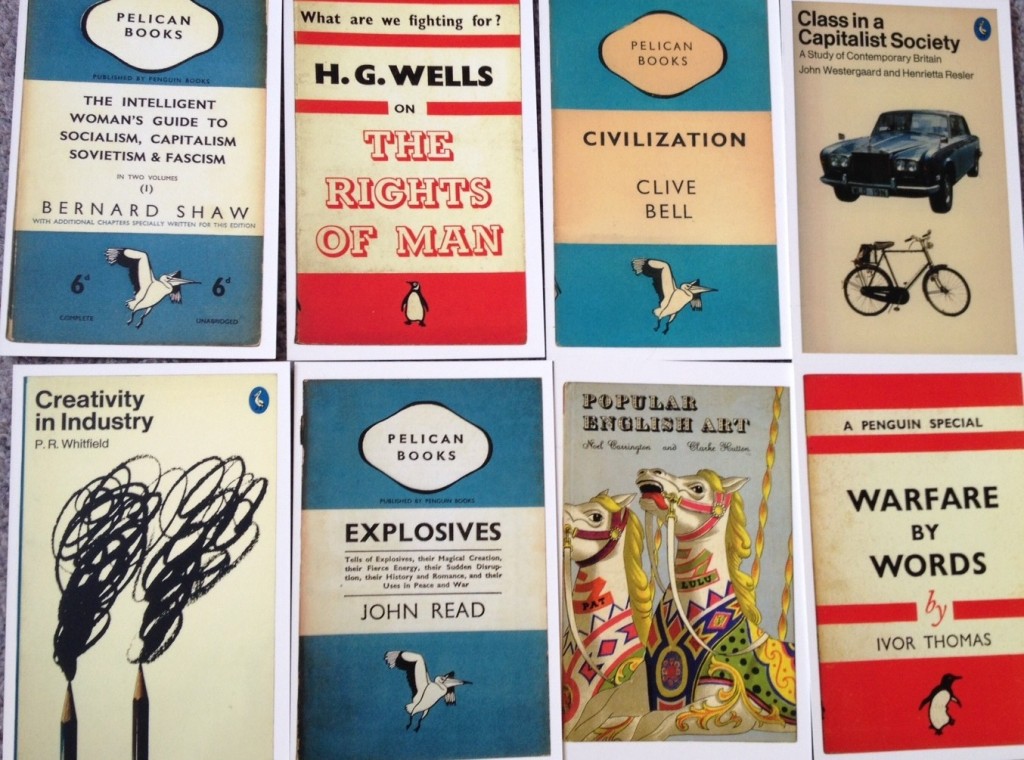
Still, as I’ve said a few times, the balance is positive in terms of innovation, and also number of titles available and book sales. This weekend I read this post about the ‘book porn’ phenomenon, the growth in websites like Bookshelf Porn and Explain Yourshelf, the ‘#shelfie‘ vogue on Twitter. The author of the post explains it in terms of the physical pleasure, turning pages, feeling the heft of the book, seeing the spines on the shelf.

There’s an economic account, too, namely that reading online and reading offline are complements, not substitutes. Many people made the assumption that e-books would substitute for physical books. But the sales numbers don’t bear that out, as physical book sales have not declined much (during an economic downturn) while e-book sales have soared (from a low base).

It’s the same mistake that was made when people predicted the paperless office; in fact, access to more information led to more printing of documents, not less. Or when it was predicted that telephones, or social media, would reduce face-to-face contact, when all the evidence is that they increase it (see Ed Glaeser on this).

Generally, forms of communication and vehicles for ideas are complements, not substitutes.

Top reading

It’s always interesting to see what books and thinkers are cited at conferences. I’m just back from a Franco-British one where the following all featured – it wasn’t as pretentious as the list makes it seem!

Montesquieu’s [amazon_link id=”0521369746″ target=”_blank” ]Spirit of the Laws[/amazon_link]

Beaumarchais (author of [amazon_link id=”0199539979″ target=”_blank” ]Le Mariage de Figaro[/amazon_link] and the first publisher of Voltaire)

John Stuart Mill [amazon_link id=”1492893226″ target=”_blank” ]On Liberty[/amazon_link]

[amazon_link id=”0007489625″ target=”_blank” ]Edmund Burke[/amazon_link] by Jesse Norman

and Helmuth Van Molthke on [amazon_link id=”0891415750″ target=”_blank” ]The Art of War[/amazon_link] (“No plan survives contact with the enemy.”) The last was updated with a quotation from the well-known modern philosopher Mike Tyson: “Everybody has a plan until they get punched in the face.”

Progress and the greatest irony

This being 2014, I picked up my copy of Paul Fussell’s brilliant 1975 book [amazon_link id=”0195133323″ target=”_blank” ]The Great War and Modern Memory[/amazon_link]. Although I very much want to read Margaret Macmillan’s new book, [amazon_link id=”184668272X” target=”_blank” ]The War that Ended Peace[/amazon_link], I’m tempted to say that if you only read one thing this centenary year, make it the Fussell. This early passage caught my eye:

“Every war is ironic because every war is worse than expected. Every war constitutes an irony of situation because its means are so dramatically disproportionate to its presumed ends. … But the Great War was more ironic than any before or since. It was a hideous embarrassment to the prevailing Meliorist myth which had dominated public consciousness for a century. It reversed the Idea of Progress.”

I, like many economists I would guess, incline toward meliorism. A hundred years on from Fussell’s Greatest Irony, it’s probably right to reflect on Progress, though.

[amazon_image id=”0195133323″ link=”true” target=”_blank” size=”medium” ]The Great War and Modern Memory[/amazon_image]


Pursuits, grand and lesser

Sylvia Nasar’s [amazon_link id=”1841154563″ target=”_blank” ]Grand Pursuit: The Story of the People who Made Modern Economics[/amazon_link] was published in 2011, but I only picked up the paperback in the holidays and have just finished. It’s a rattling good read, as you would expect from the author of [amazon_link id=”0571212921″ target=”_blank” ]A Beautiful Mind[/amazon_link], and also very thoroughly researched. But I was disappointed, perhaps due to overly-high expectations. Some of the chapters are simply excellent, but the book doesn’t add up quite to the sum of its parts.

[amazon_image id=”1841154563″ link=”true” target=”_blank” size=”medium” ]Grand Pursuit: The Story of the People Who Made Modern Economics: A Story of Economic Genius[/amazon_image]

I did pick up lots of delightful new facts, always a pleasure to my magpie mind:

– Alfred Marshall was a feminist, to the extent that he financed an essay competition for female students and contributed a significant sum of £60 to the construction of Newnham, one of the first women’s colleges in Cambridge;

– Beatrice Webb influenced Winston Churchill to say at one stage (1906): “I should like to see the State embark on various novel and adventuresome experiments,” and went on to advocate nationalisation of the railways, a job guarantee and a minimum standard of living;

– a visit to a Carnegie Steel plant persuaded Beatrice Webb that technology would replace human labour;

– Keynes did not like the Webbs, especially in their pro-Soviet phase. On being asked to contribute an essay celebrating Beatrice’s 80th birthday, he said: “The only sentence that came to my mind spontaneously was that, ‘Mrs Webb, not being a Soviet politician, has managed to survive to the age of 80.'”

– Joan Robinson does not emerge as a likeable character either, but this comment of hers is amusing: “We cannot be recommended to overthrow anything merely because economists have talked nonsense about it.”

– the number of economists working in Washington rose from 100 in 1930 to 5,000 in 1938;

– Isaiah Berlin was in the British Embassy in Washington during World War 2, writing dispatches on the various activities of Keynes, on the one hand, and Milton Friedman, on the other. One of Friedman’s policy innovations was introducing the withholding of income tax at source by employers. It was, wrote home Berlin, “A tax bill of unprecedented dimensions.”

There is a lot of interesting material here. I think the problem for me is that it doesn’t hang together to tell the story of modern economics as promised. This is partly due to the selection of characters: was it really for reasons of gender balance that Beatrice Webb and Joan Robinson feature so prominently? But the others are obvious – Marx, Marshall, Hayek and Schumpeter, Keynes and Samuelson. I think Mill and other Victorians are a big omission – the book leaps straight to Marshall.

There is also so much good storytelling about the individuals that the big picture on the ideas front is lost in detail. It never quite emerges as either a linear history of thought or a clash of ideas (which [amazon_link id=”0393343634″ target=”_blank” ]Keynes-Hayek: The Clash That Defined Modern Economics [/amazon_link]did very effectively). Nor do you get the sense of a whole intellectual milieu, as in the brilliant [amazon_link id=”0571216102″ target=”_blank” ]The Lunar Men[/amazon_link] by Jenny Uglow (one of my all-time favourite books); the individuals are too prominent. Nasar has much more on the historical context of the ideas than does Heilbroner’s [amazon_link id=”0140290060″ target=”_blank” ]Worldly Philosophers[/amazon_link] but the links between the personal experiences of her subjects and their work don’t quite come off.

This is picky because it’s a good read and would be informative for students or newcomers to the history of economics. Looking back at a few reviews, it was obviously very well received when first published. I was just hoping for something better than [amazon_link id=”068486214X” target=”_blank” ]The Worldly Philosophers[/amazon_link], and it doesn’t live up to my hopes. [amazon_link id=”0691148422″ target=”_blank” ]Economics Evolving[/amazon_link] by Agnar Sandmo is the best recent book I’ve read on the history of economics, a really excellent account but perhaps too hard for newbies. Put it down to Seasonal Affective Disorder.


Reasons to be cheerful – even if American

A few days ago I reviewed Josef Joffe’s new book, [amazon_link id=”0871404494″ target=”_blank” ]The Myth of America’s Decline[/amazon_link]. It’s partly a history of declinism in the US and partly an argument about the near future based on a compare and contrast between the US and (mainly) China. The new insight I took from it was about the way the threat of decline is used as a promise of political redemption in election campaigns.

In a mildly random way, I followed it up with Charles Kenny’s [amazon_link id=”0465064736″ target=”_blank” ]The Upside of Down: Why the Rise of the Rest is Good for the West[/amazon_link]. I thoroughly enjoyed his previous book, [amazon_link id=”0465020151″ target=”_blank” ]Getting Better[/amazon_link], a cheerful survey of the many ways and many places things (life expectancy, incomes, access to technologies, women’s emancipation….) have improved in many countries in recent decades. There is a similar chapter in the new book, and it made for equally uplifting reading.

[amazon_image id=”0465064736″ link=”true” target=”_blank” size=”medium” ]Upside of Down[/amazon_image]

One of the most telling sections looks at the Democratic Republic of Congo. As Kenny reminds us, it was the setting for Conrad’s [amazon_link id=”1853262404″ target=”_blank” ]Heart of Darkness[/amazon_link], having suffered the depredations of Belgian colonial rule (now there’s a real example of decline from imperial might!). DRC suffered through Mobutu’s rule and a decade-long civil war that killed millions of people. Rape was rife, HIV infection ran amok. This is not a good news story. Even in DRC, though, infant and maternal mortality rates of declined, as has the prevalence of HIV. Two-thirds of children have been vaccinated against diptheria, pertussis and tetanus, and about 40% with symptoms of malaria or pneumonia get medication. School enrollment has risen to match the 1980s level in Kuwait or Honduras. All this on public spending on health and education of $9 per person per year.

The rest of the book moves from the evidence of progress around the world to consider its implications, especially for “us” in the old west. Kenny wants to persuade others that the march of progress is a positive sum game, not least because of the self-fulfilling nature of global economic relations – the belief that flows of goods, capital and people are mutually beneficial is part of what makes them so. I for one agree that we need to think about the global economy in this dynamic, interlinked, increasing returns, non-linear manner, where the choice is broadly speaking between joint contraction and joint expansion over time. So it wasn’t hard for the book to persuade me that western economies will benefit from growth in emerging markets or BRICs, or of the “Folly of Fortress Thinking”, to cite one chapter title. No doubt other readers will be nore inclined to stick with the global race metaphor, where your country is a winner or loser.

I had the most doubts about the chapter on the environmental impact of global growth. The conclusion is upbeat: “With bold but plausible and affordable action, the planet can enjoy continued global growth, convergence in living standards, and two billion more people, all while preserving the global commons.” The chapter ticks off one by one potential environmental limits, and some are less worrying than others. The depletion of minerals for instance, or the scope for agricultural productivity gains and cutting meat consumption. But, thinking back to Mark Lynas’s [amazon_link id=”0007375220″ target=”_blank” ]The God Species[/amazon_link], I think Kenny skates over the question of water too quickly, and is just a bit too cheerful about climate change risks. Of all the environmental questions economics needs to address, the interaction between energy and growth is surely the key one. One aspect of this chapter I did enjoy, though, was the mischievous characterisation of environmentalists: “Once you’ve convinced yourself that the world is on an inevitable course to disaster if … India builds another car factory, then the only logical thing to do … is to sit back, put your TOMS-shod feet up on the couch, and drink microbrewed herbal tea until civilisation collapses.” Fun – but maybe too dismissive of some genuine concern.

Will either this book or Joffe’s persuade Americans and other westerners not to be pessimistic? Doubtful. The emotional power of the narrative, and perhaps its political usefulness as Joffe argues, will sustain the declinists. I’m sure people will read [amazon_link id=”0465064736″ target=”_blank” ]The Upside of Down[/amazon_link] but often to argue with it – the narrative of Anglo-Saxon cheerfulness when the dynamism in the world has moved to Asia has an uphill struggle.