
March reading

Another month, another quick catch-up post. And actually I’ve read very few books by my normal standards.

One was a re-read, The Infinite Alphabet by Cesar Hidalgo, as I was ‘in conversation’ with him at Waterstones in Cambridge. It’s a very clear and readable explanation of complexity economics, with loads of vivid examples. I like the complexity approach: it has strong explanatory power empirically, and Cesar has got a long way in developing the underpinning theory. He and I also did a Crossing Channels podcast on the book a little while ago. I’d recommend this as a complement to current debates about industrial policy and the supply side of the economy.

Another work(ish) read was Everything Was Forever, Until it Was No More by Alexei Yurchak. I’d been looking forward to this. It’s about the paradox that Soviet citizens did not expect the end of communism and fall of the USSR but were not surprised when it happened. There are great chapters describing what it was like being a member of Komsomol, for example, living the doublespeak. Unfortunately the core of the book is bookended with critical theory/linguistics, which is so hard for me to read.

Non-work reading:

Suspicion by Seichi Matsumoto – rather dark.

Flesh by David Szalay. Don’t bother. This one got me (internally) ranting about why the Booker Prize winners have become so terrible. I couldn’t finish Orbital because it was soooooo dull, and didn’t bother finishing this one either because I didn’t care at all about what happened to anyone. Prophet Song was the only recent Booker winner I rated – couldn’t put it down. Meanwhile recent Nobel prizewinners have been fantastic – Han Kang, Olga Tokarczuk, Abdulrzak Gurnah, Laszlo Krasznahorkai etc.

Perspectives by Laurent Binet. Wonderful. An epistolary novel featuring 16th century Florentine painters and the murder of a fresco-painter. Very clever. Yes, the solution depends on a shift in perspective.

Hopefully, back to normal reading now as term is over. I’m also going to be reviewing a trio of books about the UK economy for the FT so need to crack on with those.

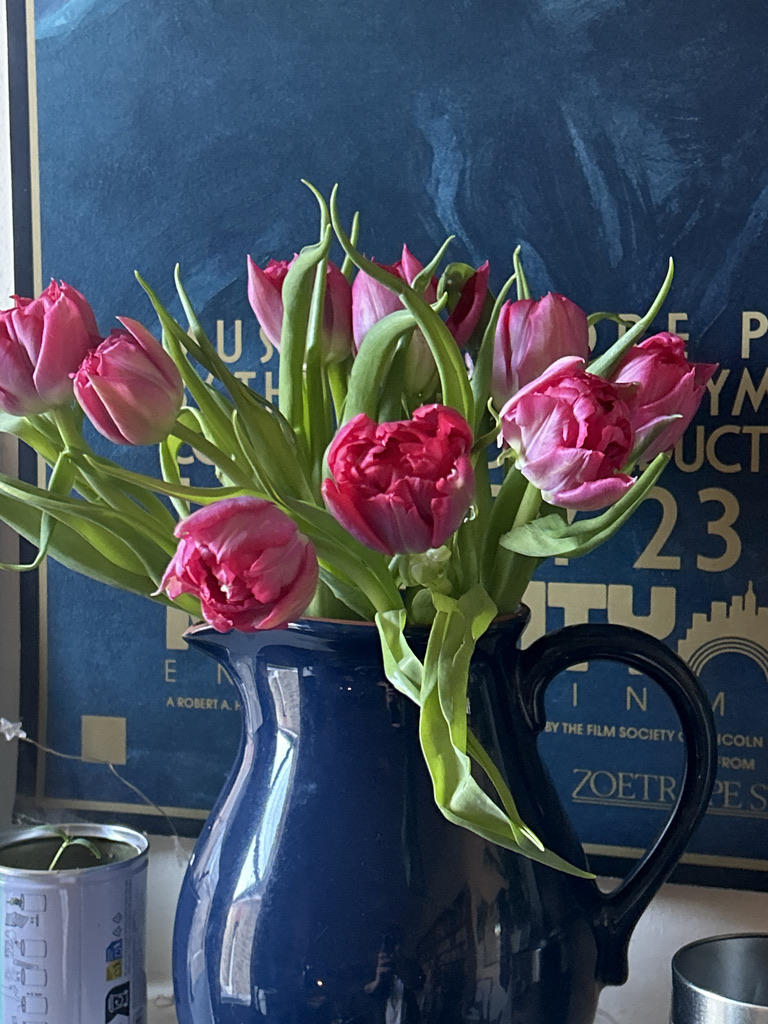
Meanwhile, here are some beautiful spring tulips.
C1217EC2-989D-40D6-9327-EAAFF8C9AD62_1_105_c

February catch-up

Somehow a whole month scooted by, so this is another round-up post. I read a lot as I was travelling a lot, but wrote little as I also had a big end of month deadline (met just in time).

When the Clock Broke by John Ganz – a good, sobering, read about the deep roots (in Reaganite economic policies as well as loder traditions of white supremacy) of the polarisation of American politics. It tells the tale through a focus on the growing extremist politics of characters like David Duke, Pat Buchanan and Ross Perot.

War and Power by Phillips O’Brien – sent to me by an historian friend. A persuasive framework for understanding how (not to) win wars. My main takeaway was that planning and logistics matter above all else, along with the capacity of the domestic economy to produce what’s needed. Battles – not so much. Mr Hegseth has obviously not read this book.

What Is Intelligence? by Blaise Aguera Y Arcas. I read this very quickly when it first came out and have just re-read it, having picked up a copy at Social Science FOO in Mountain View. Super-interesting, ranging from quantum physics through neuroscience to AI. Lots of great facts I didn’t know (who knew bees could recognise human faces?). But also a thought-provoking argument about the unity of how intelligence evolves across the universe – including AI. I don’t know if I’m completely persuaded, but it has made me pause.

Accounting for Capitalism by Michael Zakim. This is an enjoyable history mainly about the growth of the clerical class in 19th and early 20th century America. It also touches on the technologies of book-keeping and the growth of statistics.

How Data Happened by Chris Wiggins & Matthew Jones. This would be a good introduction for students to the history of statistics from Quetelet on, and to the role of data today and the ethical issues raised by its use. For me, not a lot new here.

I also re-read How Reason Almost Lost Its Mind: The Strange Career of Postwar Rationality, written by a group of academics out of a workshop on the postwar elevation of rational calculation as the basis for policy. It’s interesting but rather superseded by Elizabeth Popp Berman’s Thinking Like An Economist and Jill Lepore’s If Then.

Non work reads:

Nonesuch by Francis Spufford – a new novel by Francis Spufford is always an occasion. I enjoyed it, but it’s a bit odd.

Telling Tales Ann Cleves – one of the excellent Vera series.

The Lost Man of Bombay and City of Destruction Vaseem Khan – two of his detective novels featuring a unique female detective in 1950s Bombay.

Sybil & Cyril by Jenny Uglow – I love her writing but didn’t care much about these two characters in the end

The Afghans by Asne Seierstadt and The Finest Hotel in Kabul by Lyse Doucet – accidentally ended up reading two histories of Afghanistan, both a bit grim. I much preferred the Lyse Doucet one except for the quirk that she refers to herself in the third person – but one could trust that she knows the people she writes about.

In Extremis by Tim Parks – no, don’t bother. Unlikeable main character, not at all funny despite its billing. A shame, as I’ve enjoyed other books by him.

The Garden Against Time by Olivia Laing – a lovely read, about creating a garden in a new home in covid-times and in the face of environmental change.